The Fleet Air Arm's ungainly but effective successor to the Swordfish, the Barracuda led the carrier-launched dive-bombing raids of Operation Tungsten against the battleship Tirpitz in her Norwegian fjord anchorage in April 1944, scoring multiple hits though failing to sink her.
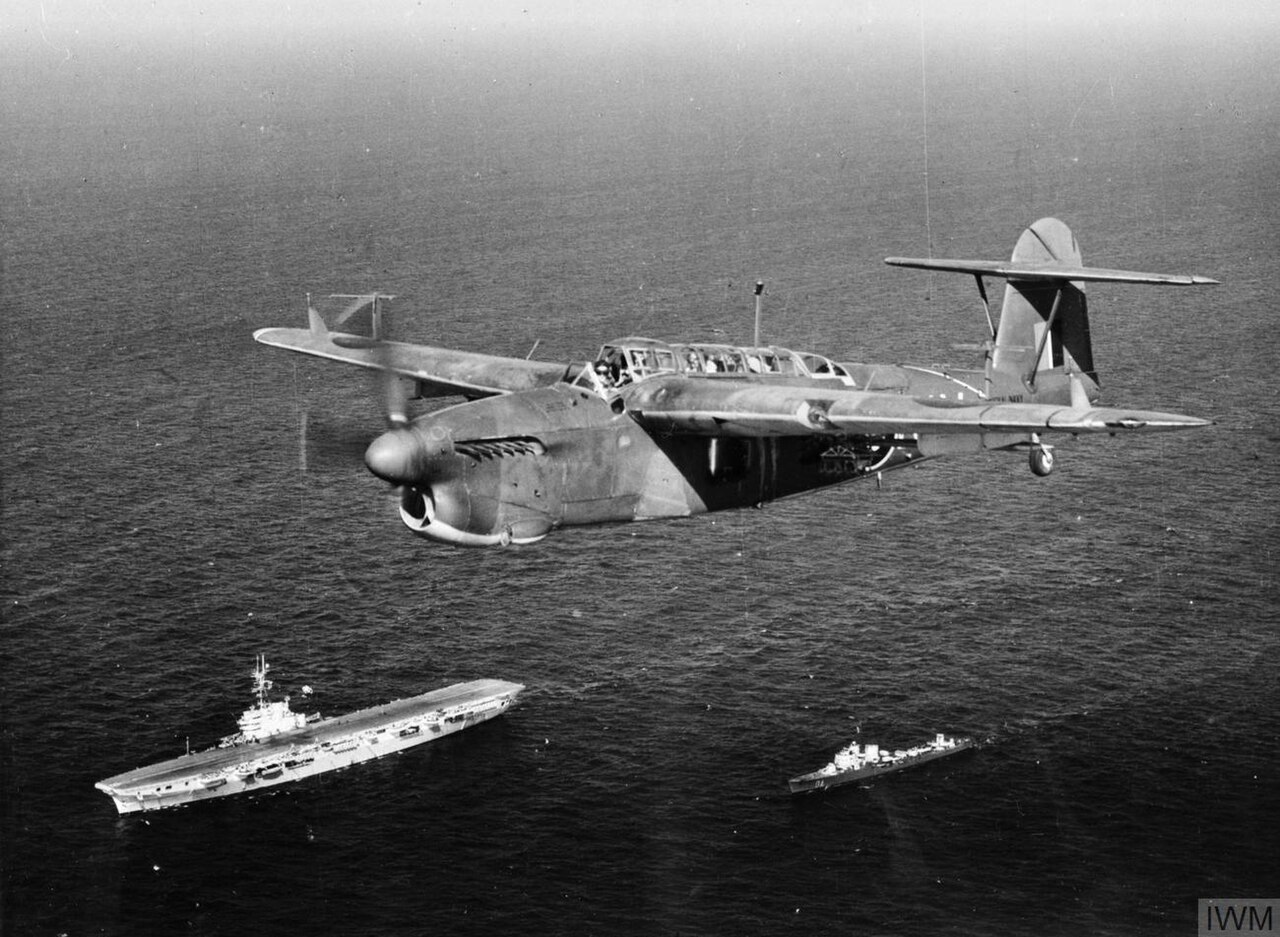
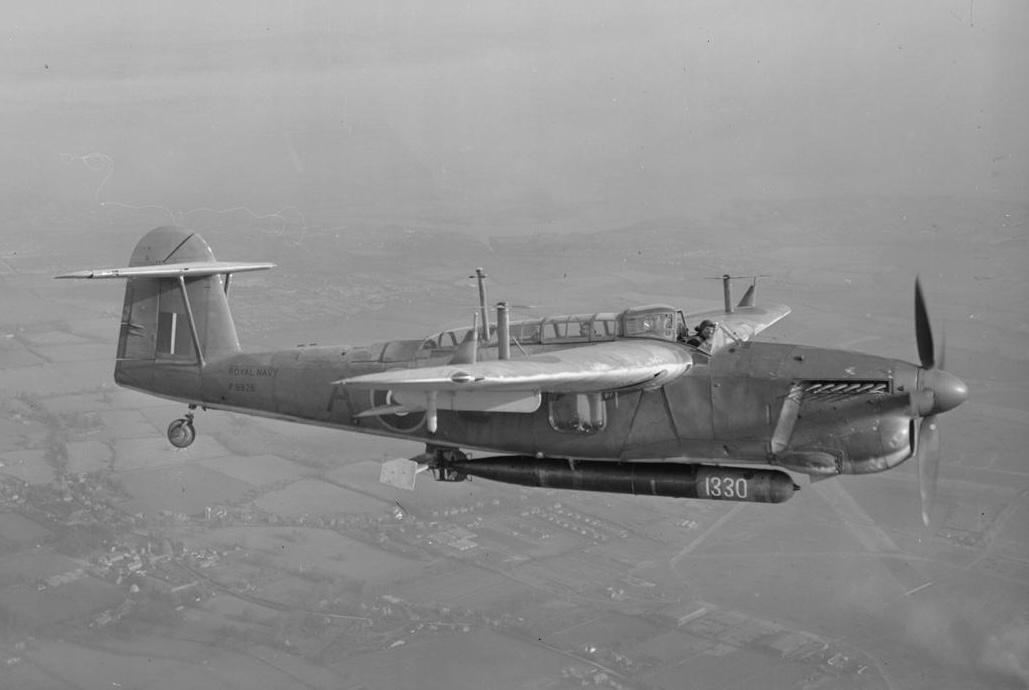
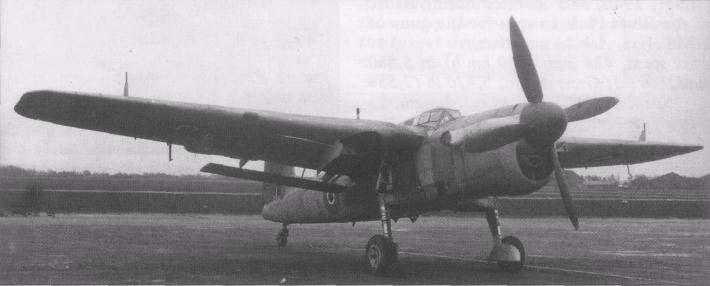
A Fairey Barracuda II of 814 Squadron, Fleet Air Arm flying over HMS Venerable and an attendant destroyer, the Italian ALFREDO ORIANI.Royal Navy official photographer · Public domain · sourceA Royal Navy Fairey Barracuda II (s/n P9926) from Lee-on-Solent Fleet Air Arm Station, Hampshire (UK), with torpedo, in flight. The wooden plane that steadied the torpedo before it struck the water and broke off can be cLt. S.J. Beadell, Royal Navy official photographer · Public domain · sourceFairey Barracuda Mk. V torpedo- and dive bomber around 1943 - the caption says Mark III, but this is a Mark V for the following reasons; - squared off wing tips - fillet at the bottom of the vertical fin can just be seenUnknown airman of Fleet Air Arm of tghe Royal Navy · Public domain · source