Weapons · United Kingdom · 1939-1944
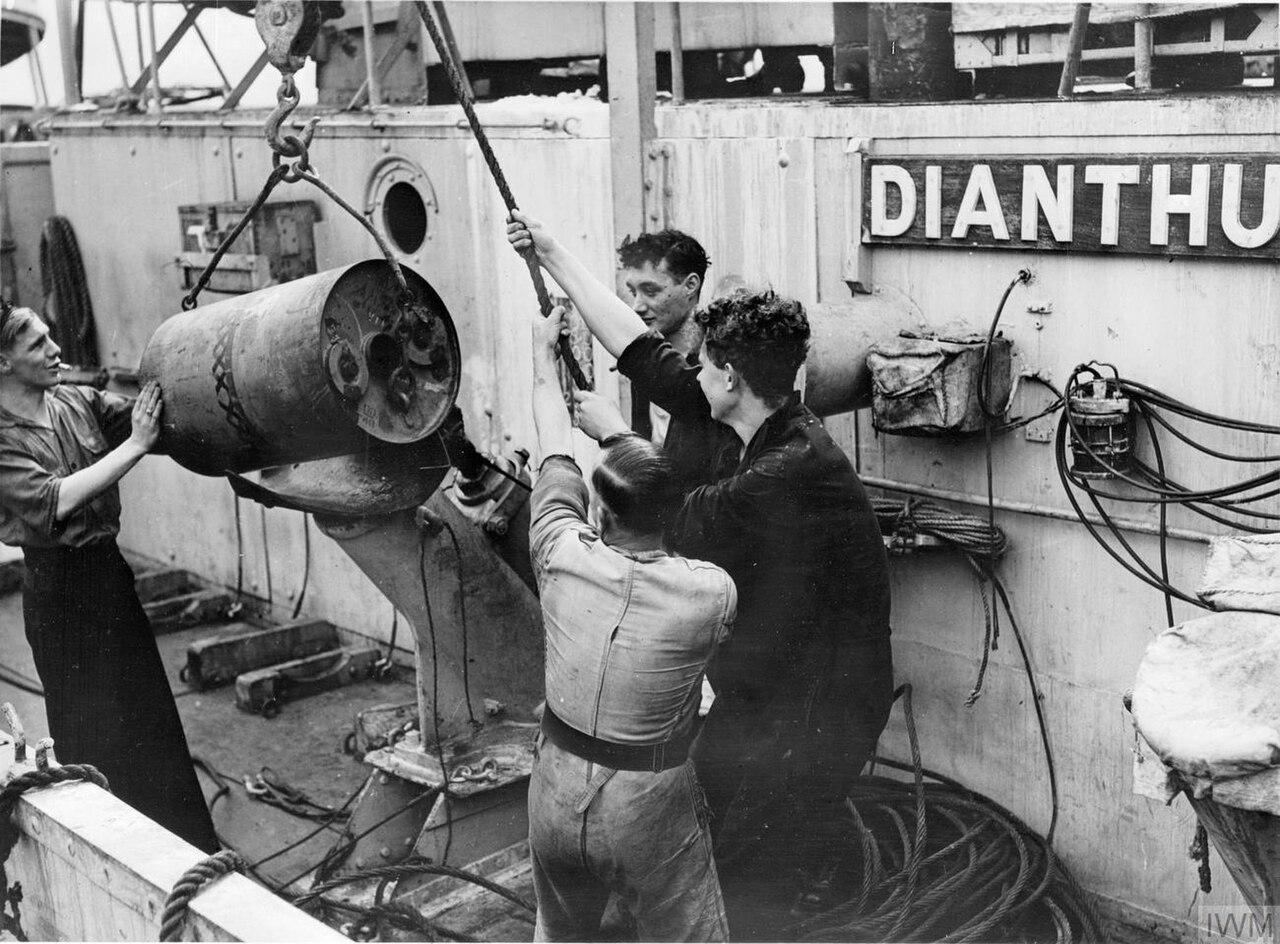
Mark VII depth charge
anti-submarine depth charge
The Mark VII was the standard depth charge of the Royal Navy and Commonwealth forces for the first years of World War II, entering service in 1939. It carried about 290 lb (130 kg) of TNT explosive in a 420 lb (190 kg) drum-shaped canister, set off by a hydrostatic pistol at a chosen depth, and was rolled off stern racks or fired to the side from throwers such as the Mk IV to spread a pattern across a suspected U-boat's position. Sinking speed was increased in 1940 by adding cast-iron collar weights, and it remained the primary British anti-submarine weapon through the worst years of the Battle of the Atlantic before being supplemented from 1942-44 by the ahead-throwing Hedgehog and Squid mortars.
| total weight | 420 lb (190 kg) |
|---|---|
| explosive charge | 290 lb (130 kg) TNT |
| sink rate | ~7 ft/s baseline, up to ~16.8 ft/s with 1940 added weights |
| depth setting | hydrostatic pistol, adjustable; later marks to ~900 ft (270 m) |
| delivery | stern racks and Mk IV depth charge throwers |
Battle of the Atlantic, Mediterranean and North Africa