2194days

Weapons · United Kingdom · 1936-1945

Ordnance ML 3-inch mortar

infantry mortar

The Ordnance ML 3-inch mortar was the standard muzzle-loaded, drop-fired support mortar of British and Commonwealth infantry battalions in the Second World War, a Stokes-pattern design adopted in the early 1930s and in service from 1936. Despite its '3-inch' designation, carried over from its Stokes mortar ancestry, its actual bore was closer to 3.2 inches. Early war models had a range of only about 1,600 yards, which limited their effectiveness against German mortars with greater reach; improved bombs and later marks (including the Mark V, produced in the thousands for airborne and Far East use) extended range to roughly 2,800 yards. It served with British and Commonwealth forces in North Africa, Italy, North-West Europe, and Burma.

Wikipedia

caliber3.2 inch (81 mm)
weight52.4 kg (115.5 lb)
range1,463-2,560 m (1,600-2,800 yd) depending on mark
producedunknown overall total; approximately 5,000 Mark V variants

Western Europe, Mediterranean and North Africa, Pacific, China, Burma and India
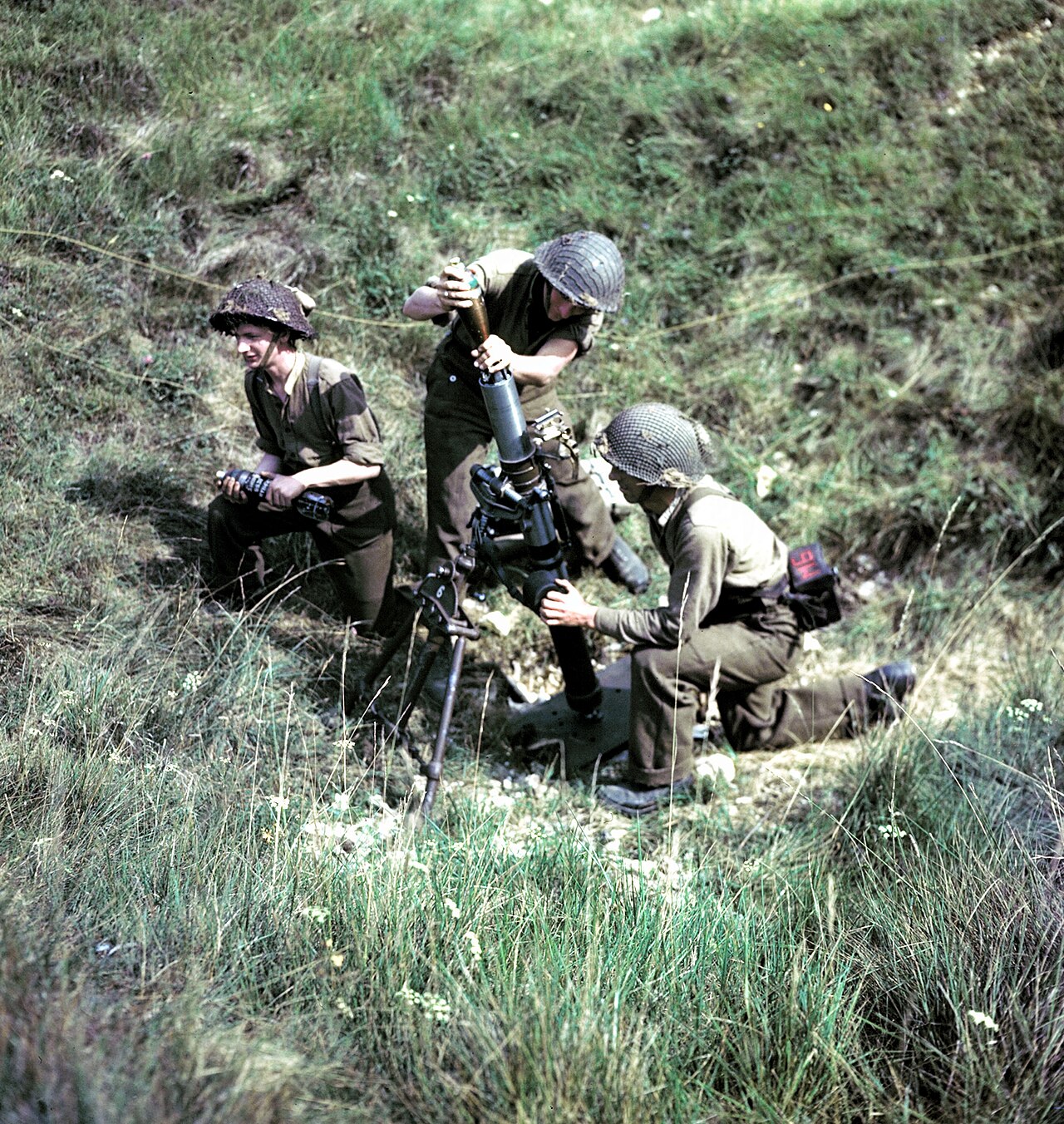
Canadian mortar team in action in France
Canadian mortar team in action in FranceLibrary and Archives Canada does not allow free use of its copyrighted works. See Category:Images from Library and Archi · Public domain · source
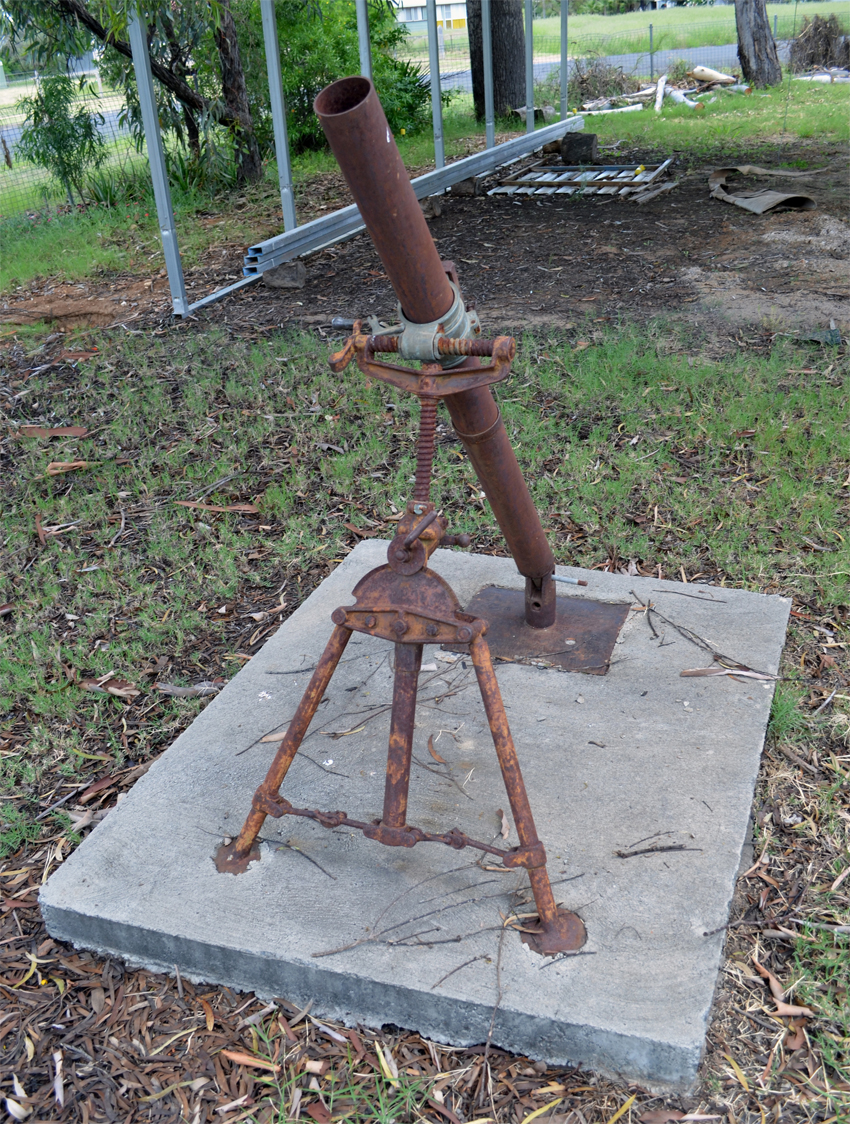
Displayed at the Returned & Services League building, Roma, Queensland.
Displayed at the Returned & Services League building, Roma, Queensland.Bauple58 · CC BY-SA 3.0 · source
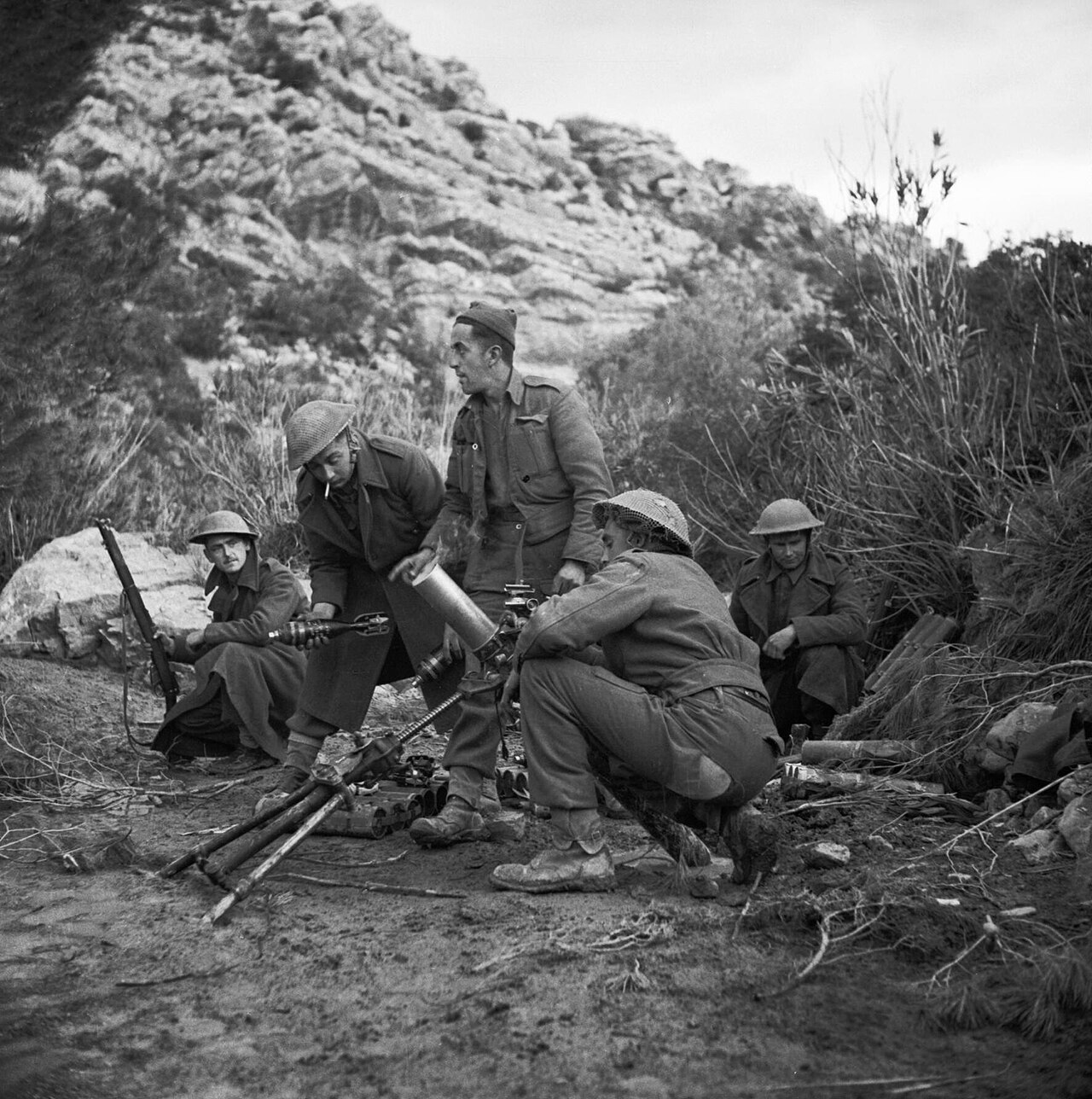
A 3-inch mortar crew from the Queens's Own Royal West Kents in action in Tunisia, 31 January 1943. A 3-inch mortar crew from the Queens's Own Royal West Kents in action, 31 Kanuary 1943.
A 3-inch mortar crew from the Queens's Own Royal West Kents in action in Tunisia, 31 January 1943. A 3-inch mortar crew from the Queens's Own Royal West Kents in action, 31 Kanuary 1943.Bowman (Sgt), No 2 Army Film & Photographic Unit · Public domain · source
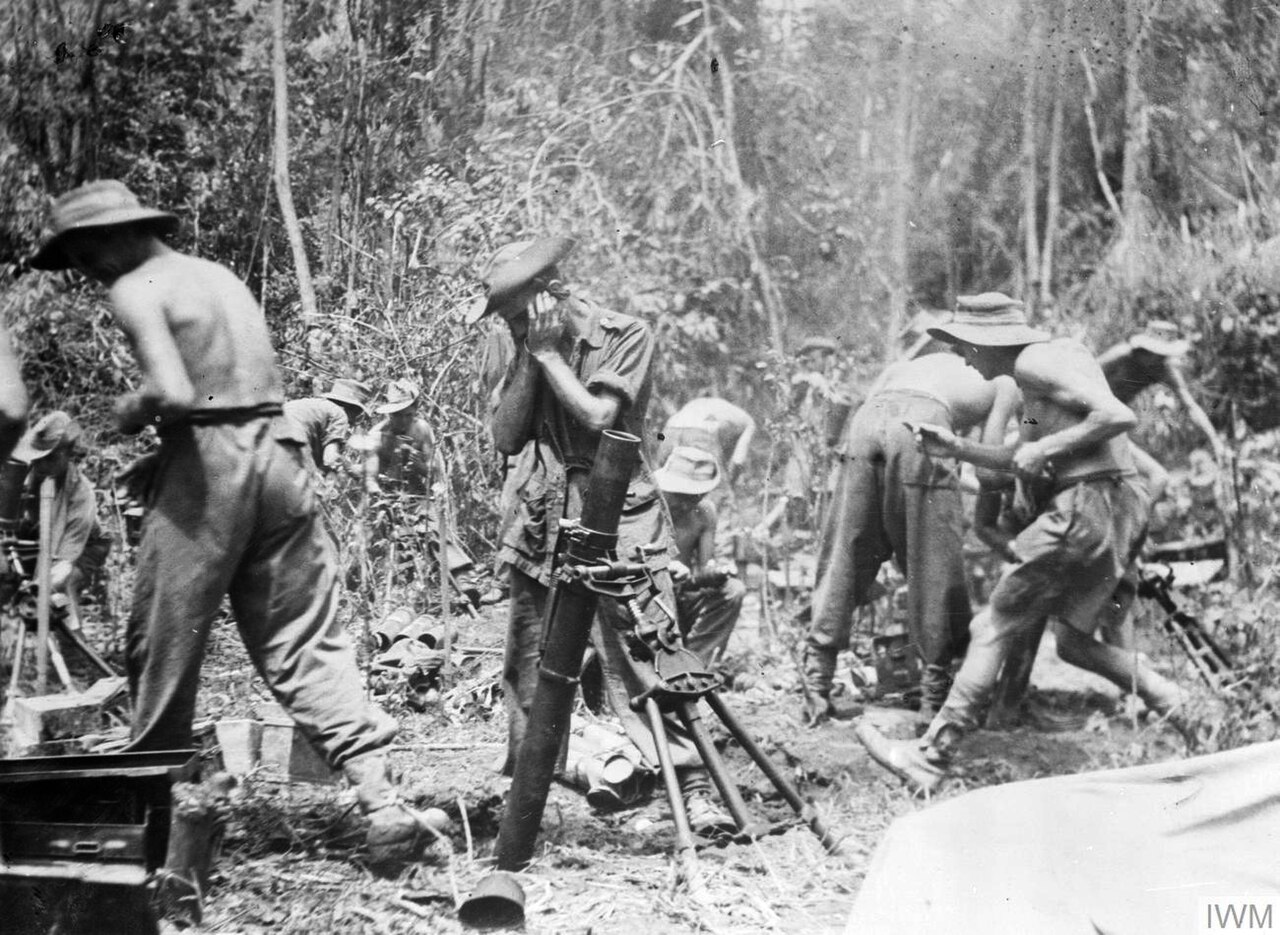
British 3-inch mortars supporting the 19th Indian Division's advance along the Mawchi Road, east of Toungoo in Burma, 1944. The Battle of Imphal-Kohima March - July 1944: British 3-inch mortar detachments support the 19t
British 3-inch mortars supporting the 19th Indian Division's advance along the Mawchi Road, east of Toungoo in Burma, 1944. The Battle of Imphal-Kohima March - July 1944: British 3-inch mortar detachments support the 19tNo 9 Army Film & Photographic Unit · Public domain · source