Weapons · Soviet Union · 1939-1945
Molotov Cocktail
improvised anti-tank incendiary
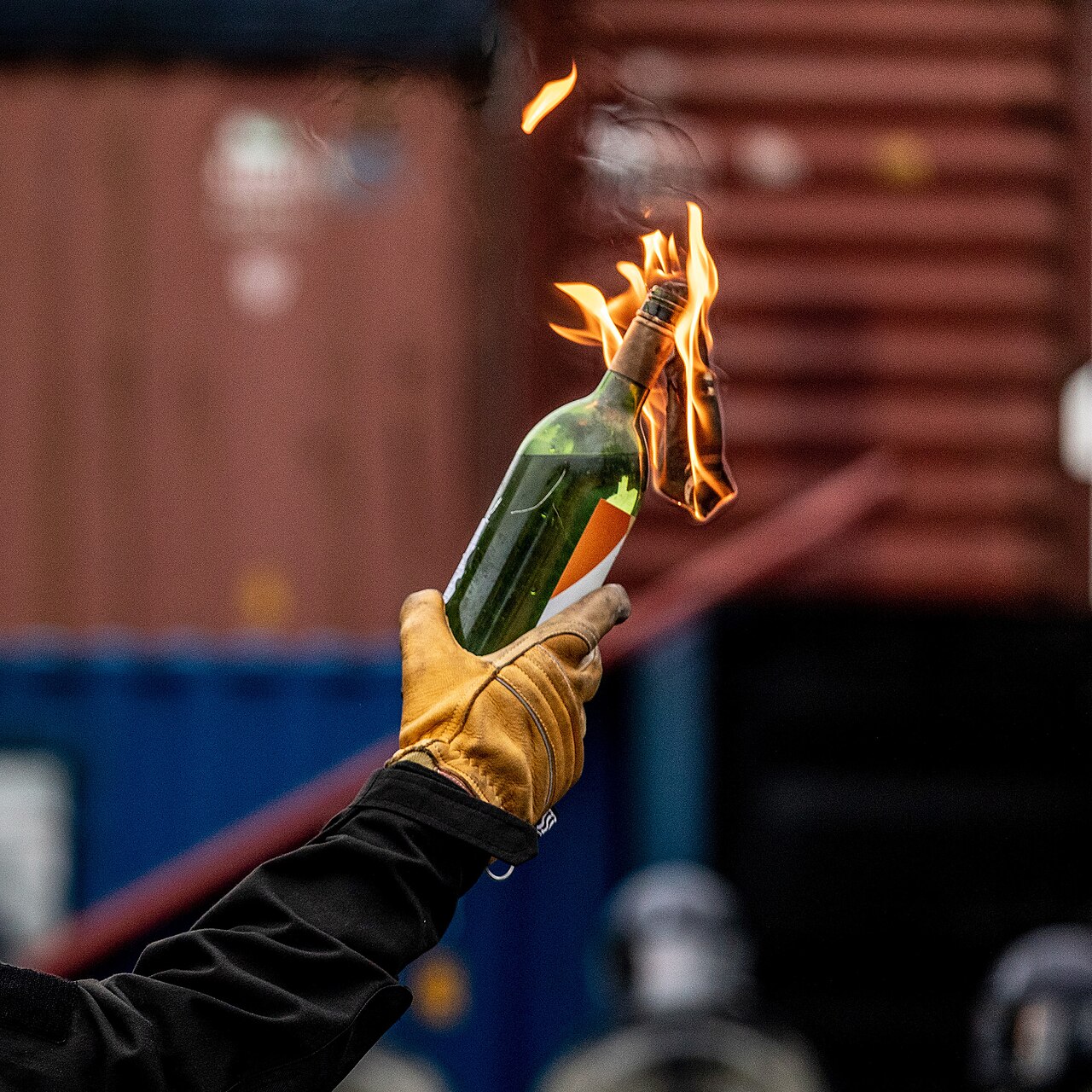
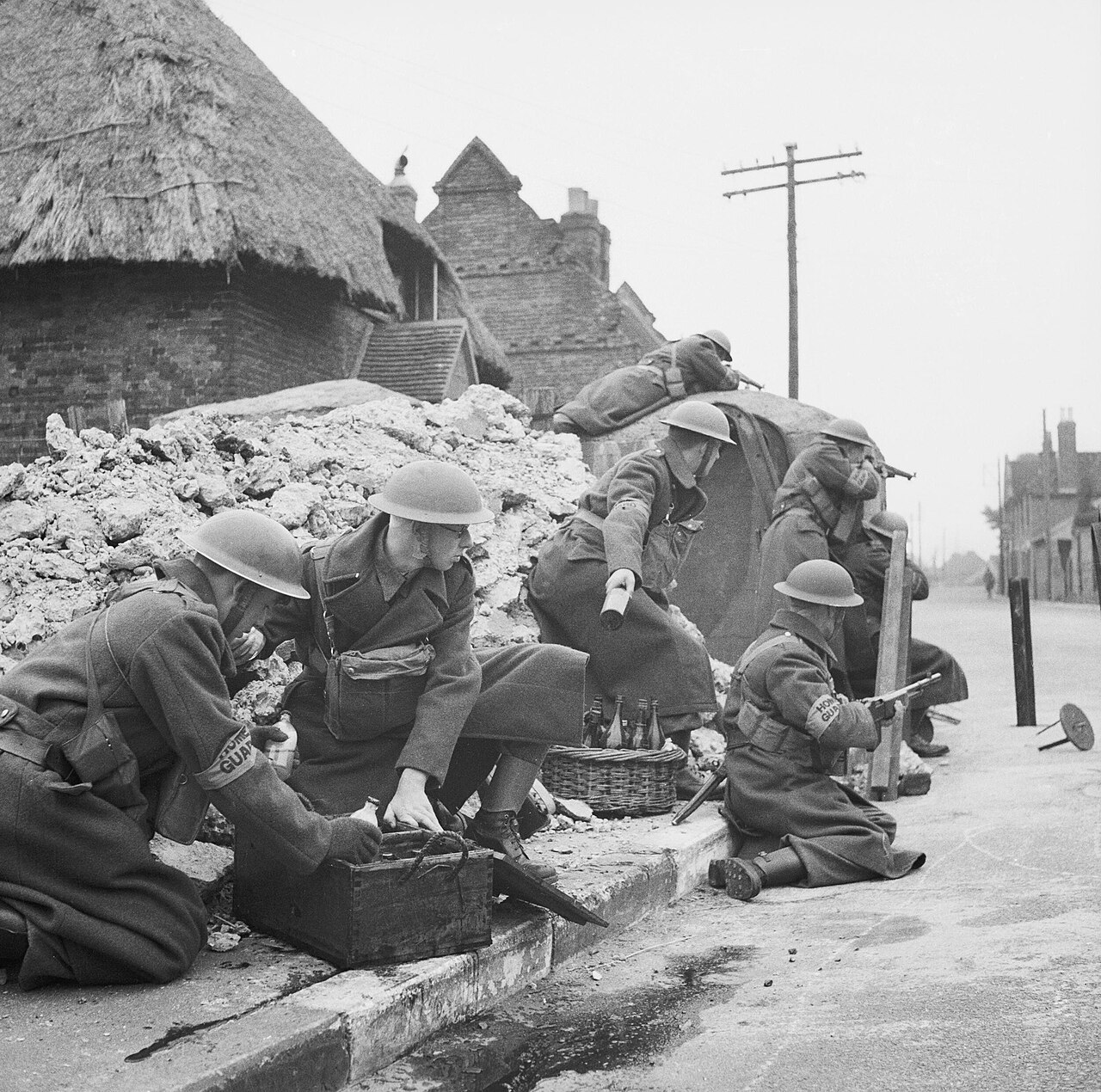
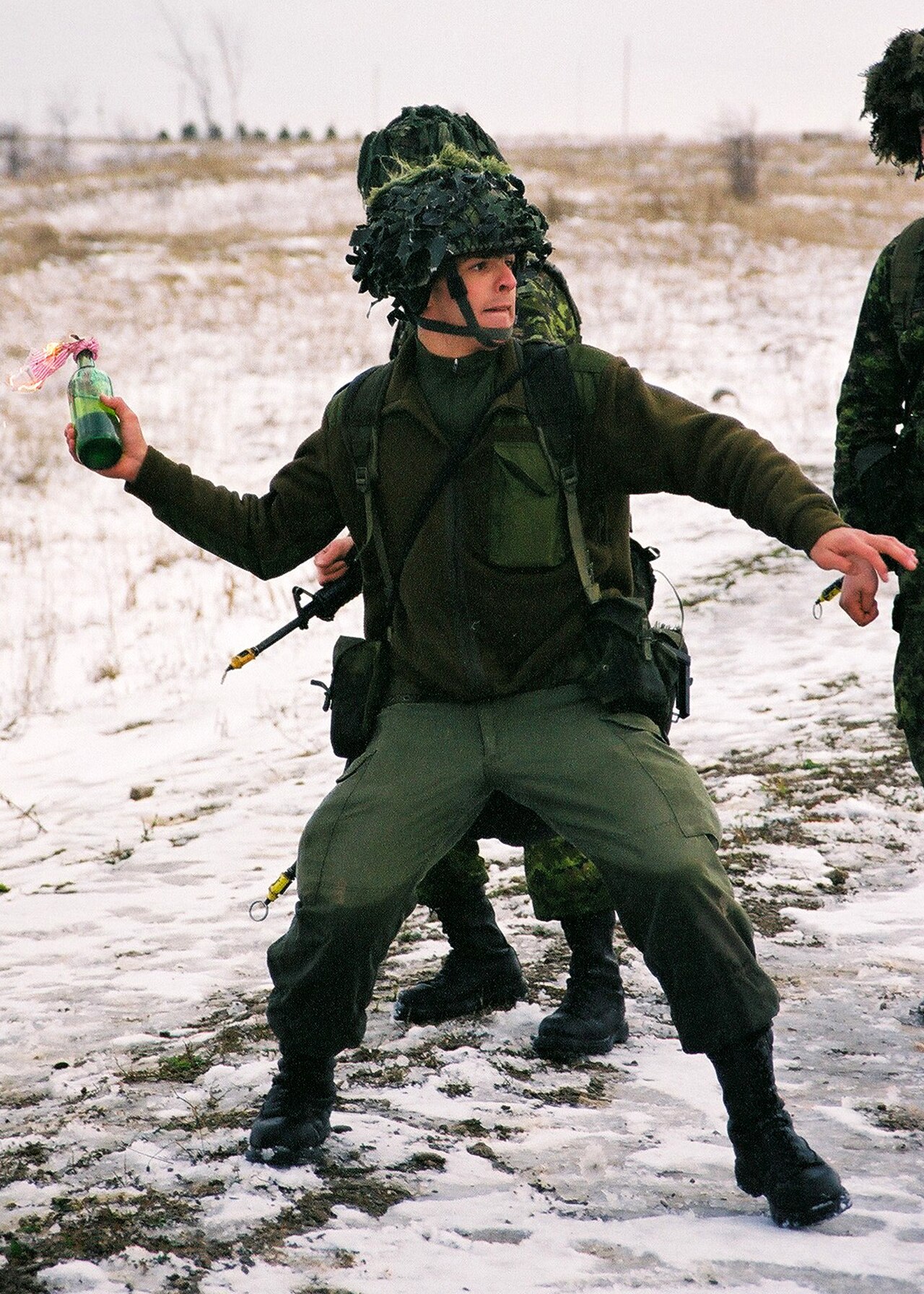
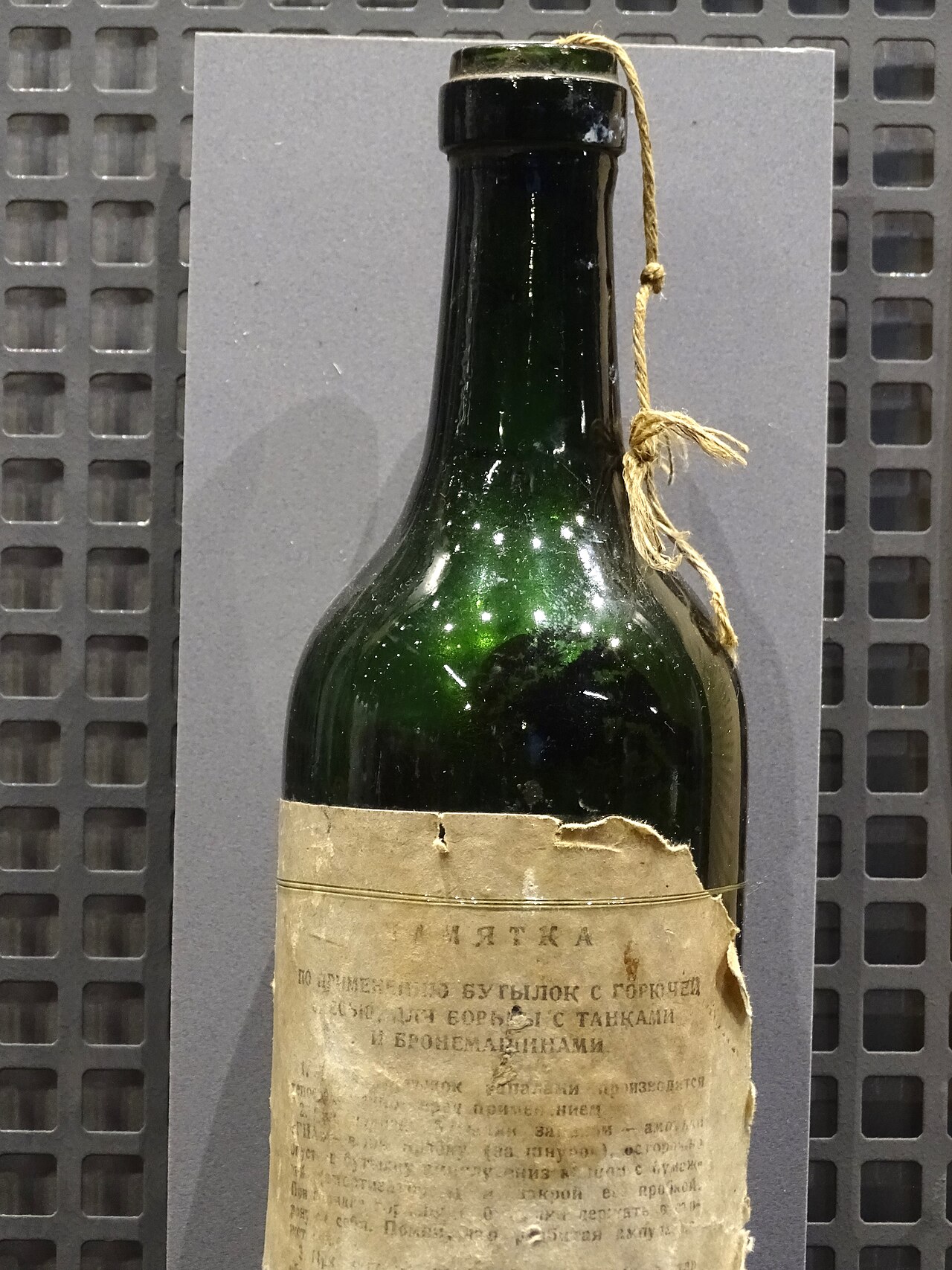
A hand-thrown incendiary of a glass bottle filled with flammable liquid and a cloth wick, named by Finnish troops in the 1939-40 Winter War as a sarcastic jab at Soviet foreign minister Vyacheslav Molotov. The Red Army adopted the weapon itself from 1941, when tank losses and a shortage of anti-tank guns forced militia and regular infantry to close with German armour by hand; the standardised Soviet KS variant used a self-igniting phosphorus-sulphur mixture that burned for up to three minutes at temperatures near 1,000°C. It was never reliably lethal against well-armoured tanks, but against thinner-skinned vehicles, engine decks and vision slits it was cheap, plentiful, and a real psychological deterrent, and it became emblematic of Soviet urban defence at Moscow, Leningrad and Stalingrad.
| type | glass bottle incendiary |
|---|---|
| filling | petrol, or KS self-igniting phosphorus-sulphur mixture |
| ignition | cloth wick or storm-match strip |
| burn temperature | up to ~1,000°C (KS type) |
| target | engine decks, vision slits, soft-skinned vehicles |
.jpg)


.jpg)