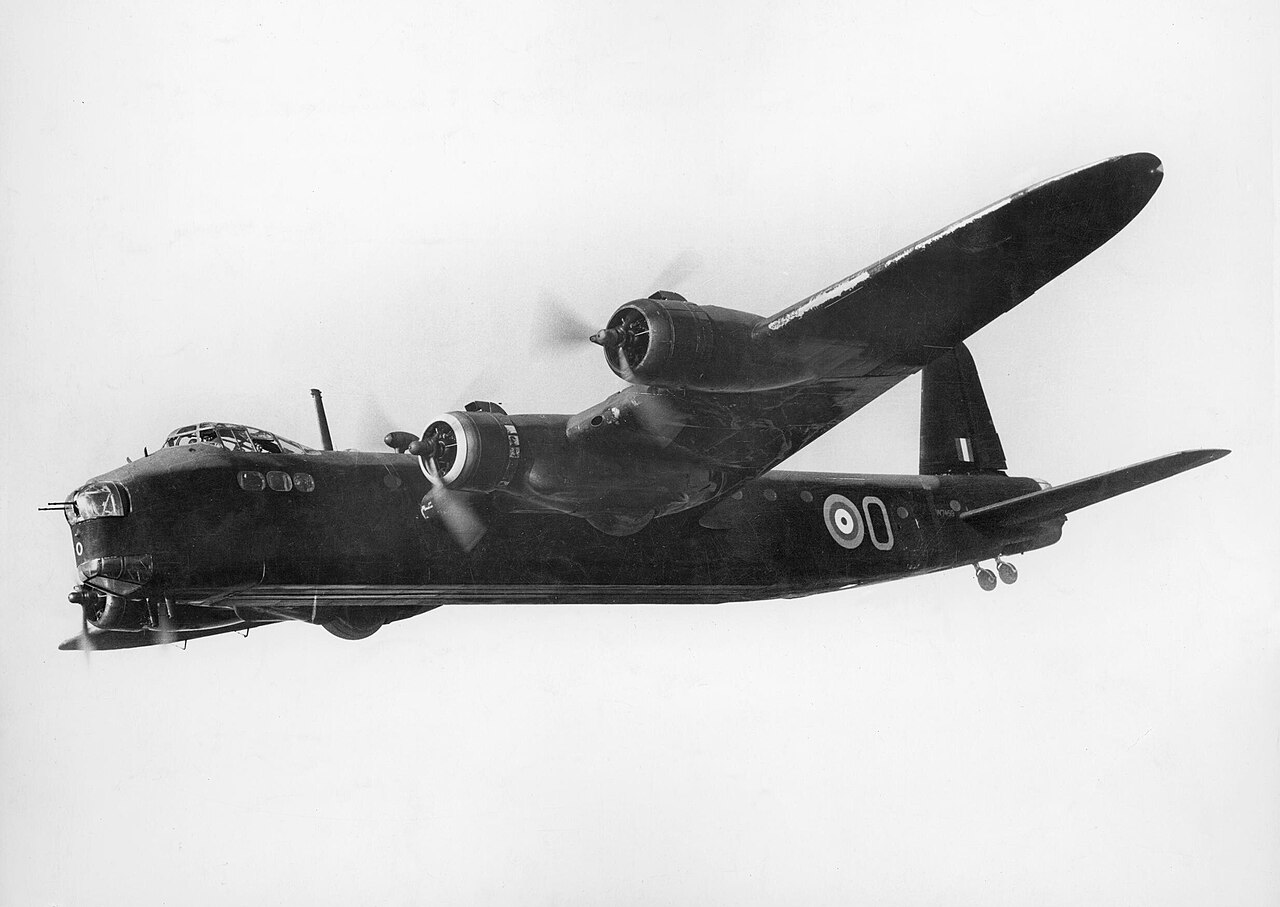
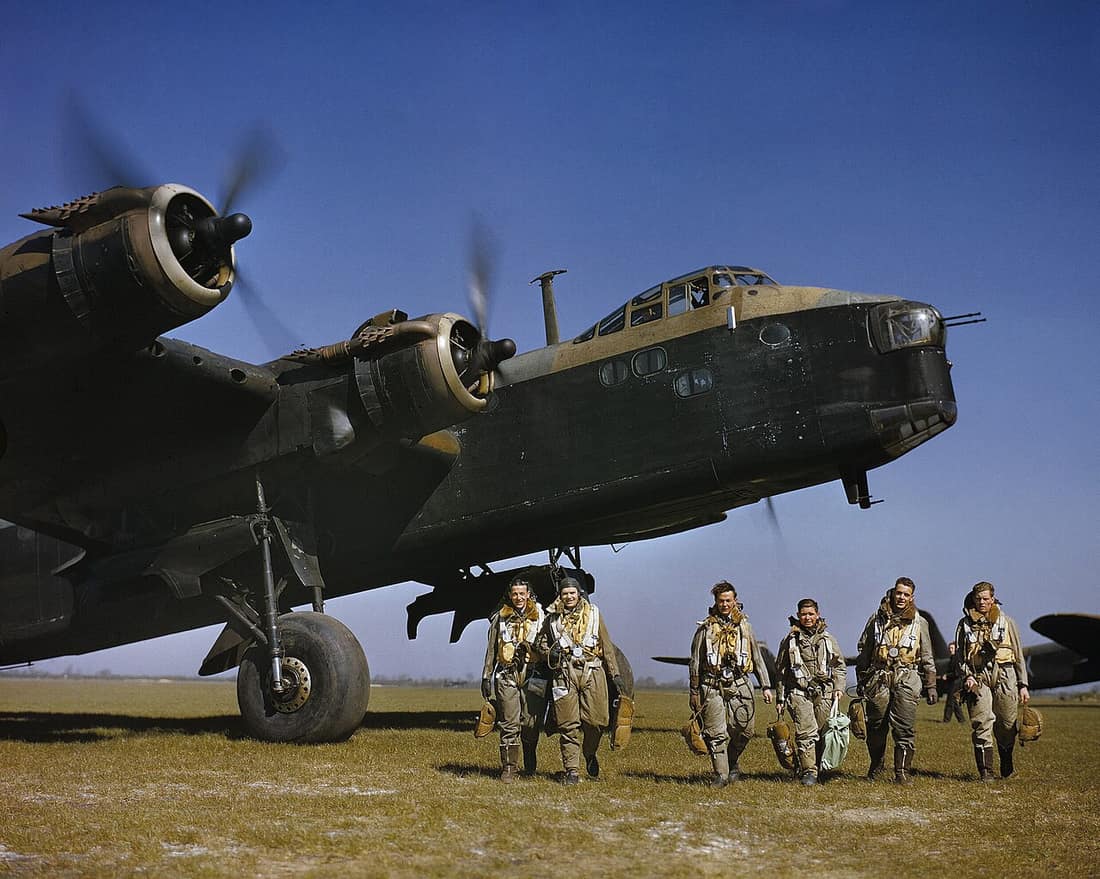
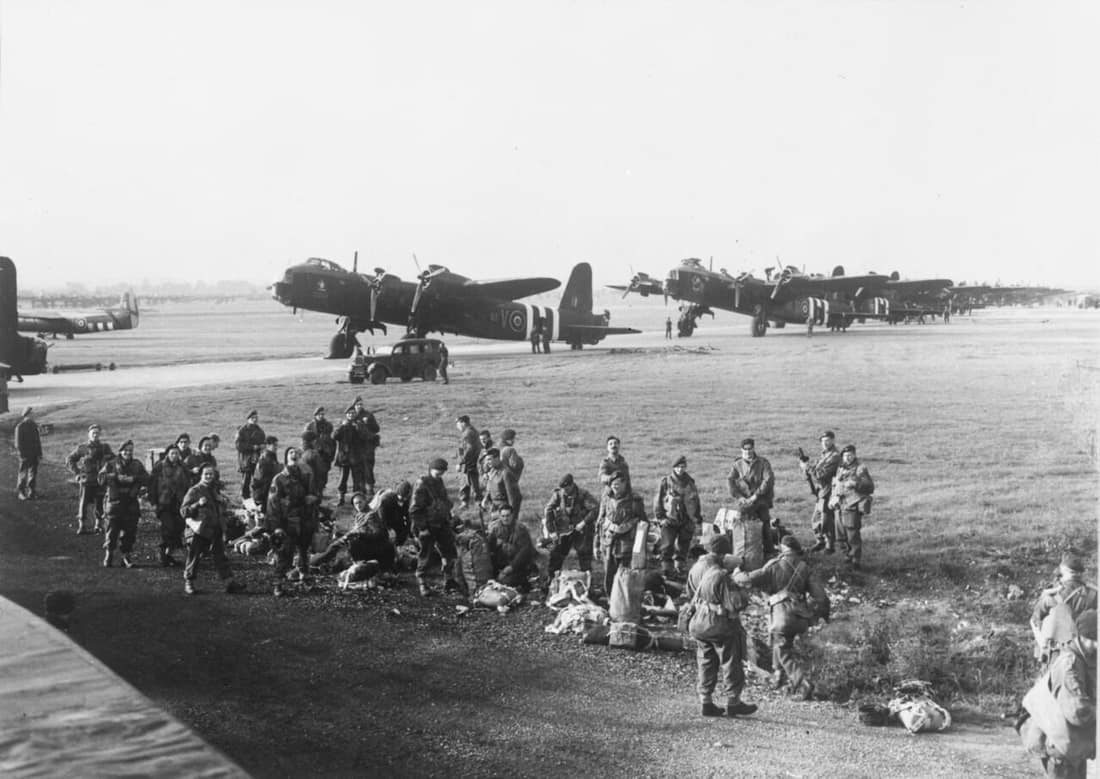
The RAF's first four-engined heavy bomber of the war, the Stirling's short wingspan (the Air Ministry specification capped it at 100 feet) left it unable to reach the altitudes of the Halifax or Lancaster, exposing it to disproportionate losses. Withdrawn from bombing duties by late 1943, it soldiered on towing gliders into Normandy and Arnhem.
RAF Bomber Command Short Stirling Mk.I W7459 'O' of No. 1651 HCU (Heavy Conversion Unit) in flight, 1942.Press Agency photographer · Public domain · sourceShort Stirling Mk I of No. 1651 Heavy Conversion Unit at Waterbeach in Cambridgeshire, 1942. Aircrew in full flying kit walking beneath the nose of Short Stirling Mark I, N3676 'S', of 1651 Heavy Conversion Unit at WaterBrown Charles E · Public domain · sourceOperation MARKET I : the airborne operation to seize bridges between Arnhem and Eindhoven, Holland, (part of Operation MARKET GARDEN). Paratroops of 3rd Platoon, 21st Independent Parachute Company, assemble at RAF FairfoBridge B (Fg Off), Royal Air Force official photographer · Public domain · source