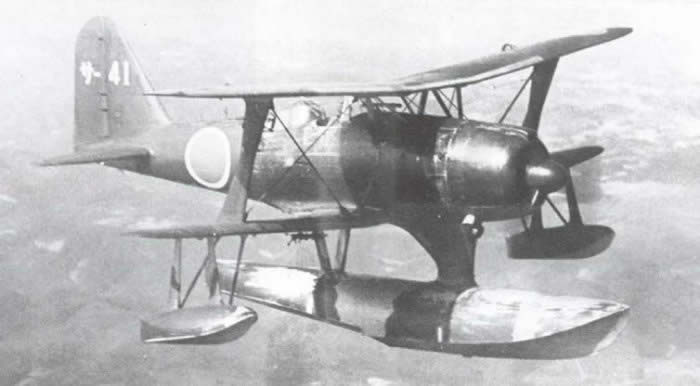
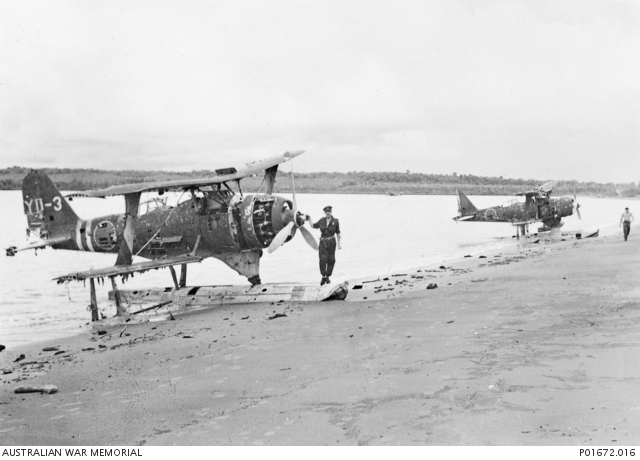
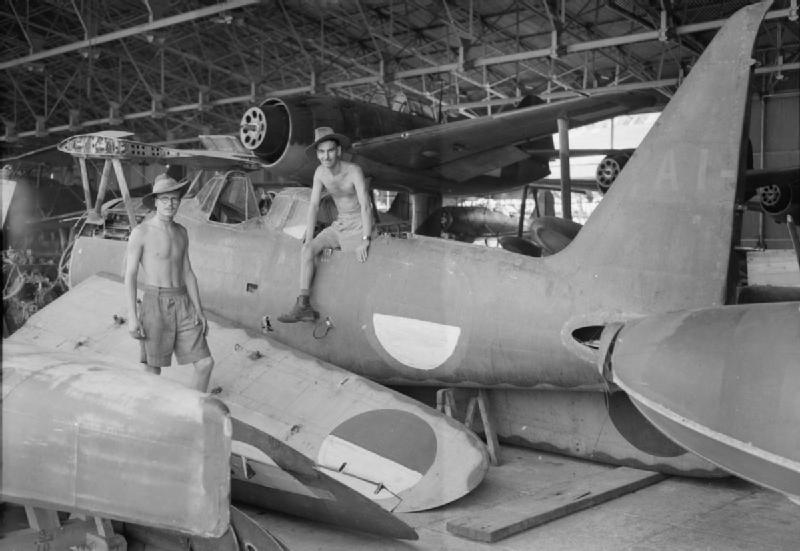
The last biplane the Imperial Navy put into frontline service, the F1M (codenamed Pete) was launched by catapult from battleships and cruisers to scout and spot gunfire. Surprisingly nimble for its role, it was also pressed into service as an improvised fighter and dive bomber over the Solomons when nothing better was available.
Mitsubishi F1M "Pete" (零式水上観測機)Imperial Japanese Navy · Public domain · sourceTwo damaged Mitsubishi F1M2 (Allied code name "Pete") observation seaplanes beached at the former Japanese seaplane base at Rekata Bay on the northern end of Santa Isabel island in March 1944. The man standing on the floF. McConaghy, Australian armed forces · Public domain · sourceCorporal Ralph Hayden and Leading Aircraftman Harry Pearce of No. 80 Squadron RAF amongst parts of a Mitsubishi F1M, bearing Indonesian markings, at an airfield and seaplane base in Surabaya (Soerabaja), Java, January 19Royal Air Force official photographer · Public domain · source