Pacific · United States and Allies vs Japan
Guadalcanal Campaign
7 August 1942 – 9 February 1943
The first Allied offensive of the Pacific war began with the 1st Marine Division seizing the unfinished Japanese airfield on Guadalcanal, renamed Henderson Field. Six months of fighting followed on land, in the air and in seven major naval battles as both sides fed in reinforcements down the Slot. Japan evacuated its starving survivors in February 1943, having lost two battleships, a carrier and the ability to replace its trained aircrew.
Explore Guadalcanal Campaign on the interactive map · Wikipedia
Day by day
— The landings
The 1st Marine Division lands east of Lunga Point at 09:10 against no opposition and takes the unfinished airfield the next afternoon; across the sound the Raiders and Parachutists fight two days for Tulagi, Gavutu and Tanambogo. Fletcher's three carriers are covering from the south and will leave on the evening of the 8th.
— Savo Island
Mikawa's seven cruisers come down the Slot unseen and round Savo at 01:30. In forty minutes of gunfire and torpedoes they sink Canberra, Vincennes, Quincy and Astoria and leave 1,077 dead; then, fearing the carriers at dawn, they go back the way they came without touching the transports. Turner's ships sail that afternoon, leaving the Marines with seventeen days' food.
— Bloody Ridge
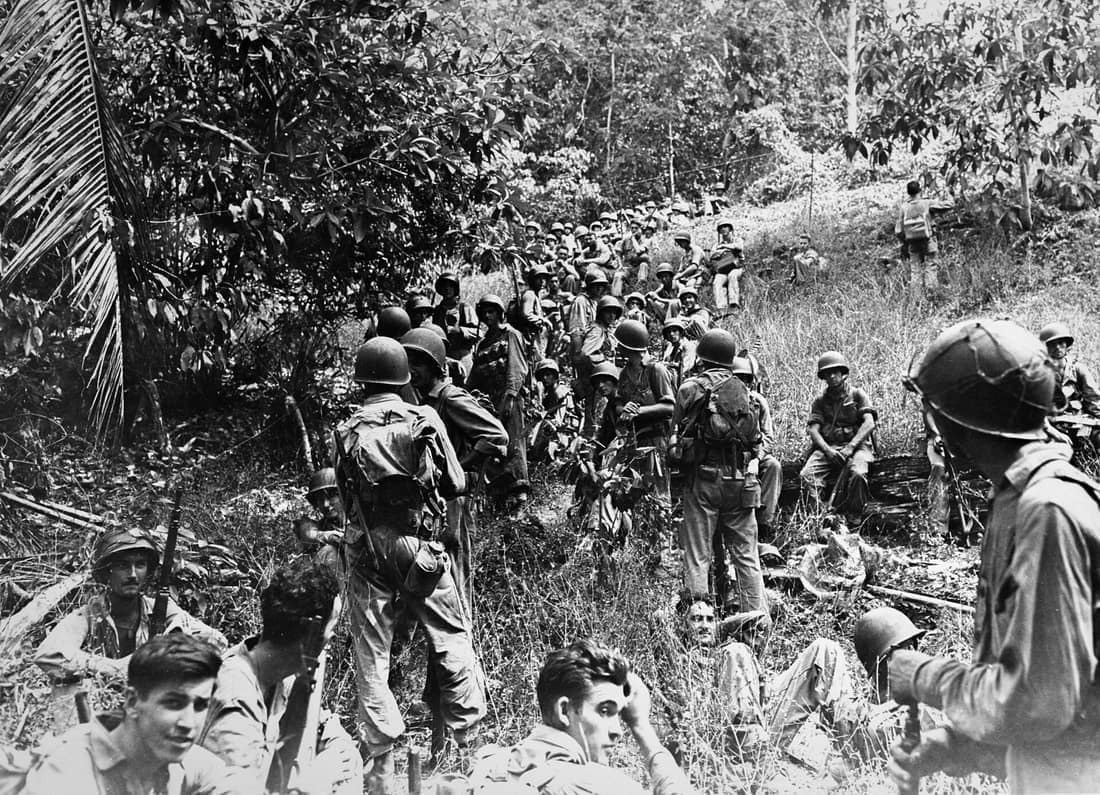
Ichiki's 900 men were destroyed at the mouth of Alligator Creek on 21 August; Kawaguchi's 6,000, landed by destroyer at Taivu Point, march through the jungle to come at the airfield from the south. On the nights of 12 and 13 September they attack the ridge held by Edson's Raiders and Parachutists and are stopped a kilometre from the runway with some 850 dead.
— The Sendai Division
Scott's cruisers surprised Goto off Cape Esperance on the night of 11 October and Kongo and Haruna answered by shelling Henderson Field for eighty minutes two nights later. Maruyama's 2nd Division then marched round Mount Austen to attack the ridge from the south on the nights of 24 and 25 October; it is broken by dawn on the 26th with about 3,000 dead. The same day, 300 miles to the east off the Santa Cruz Islands, Kondo's carriers sink Hornet and damage Enterprise and lose a hundred aircrew they cannot replace.
— The Naval Battle
Callaghan's cruisers meet Abe's bombardment group head-on off Lunga at 01:48 on 13 November; Atlanta and Juneau are lost with both admirals, and Hiei, crippled, is sunk by aircraft that day. On the 14th the aircraft catch Tanaka's eleven transports and sink seven; that night Lee's Washington and South Dakota meet Kondo off Savo and Washington's radar-laid guns wreck Kirishima. The four surviving transports beach themselves at Tassafaronga and are bombed at dawn.
— Operation Ke
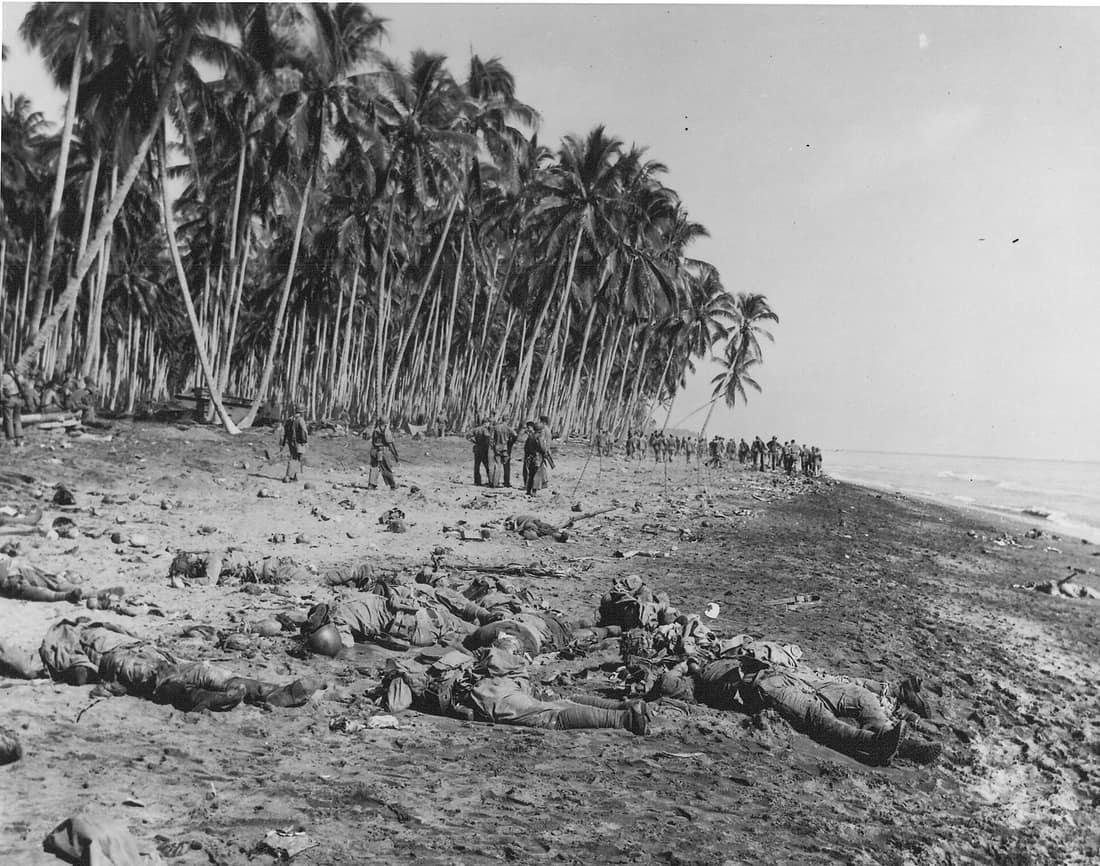
Tanaka's destroyers torpedoed four cruisers off Tassafaronga on 30 November and sank Northampton, but the Tokyo Express could no longer feed the 17th Army; on 31 December Tokyo decided to give the island up. While XIV Corps fights west past Mount Austen and the Matanikau, twenty destroyers lift 10,652 men from Cape Esperance on three nights, the last on 7 February. The Americans reach the cape on the 9th and find nobody.

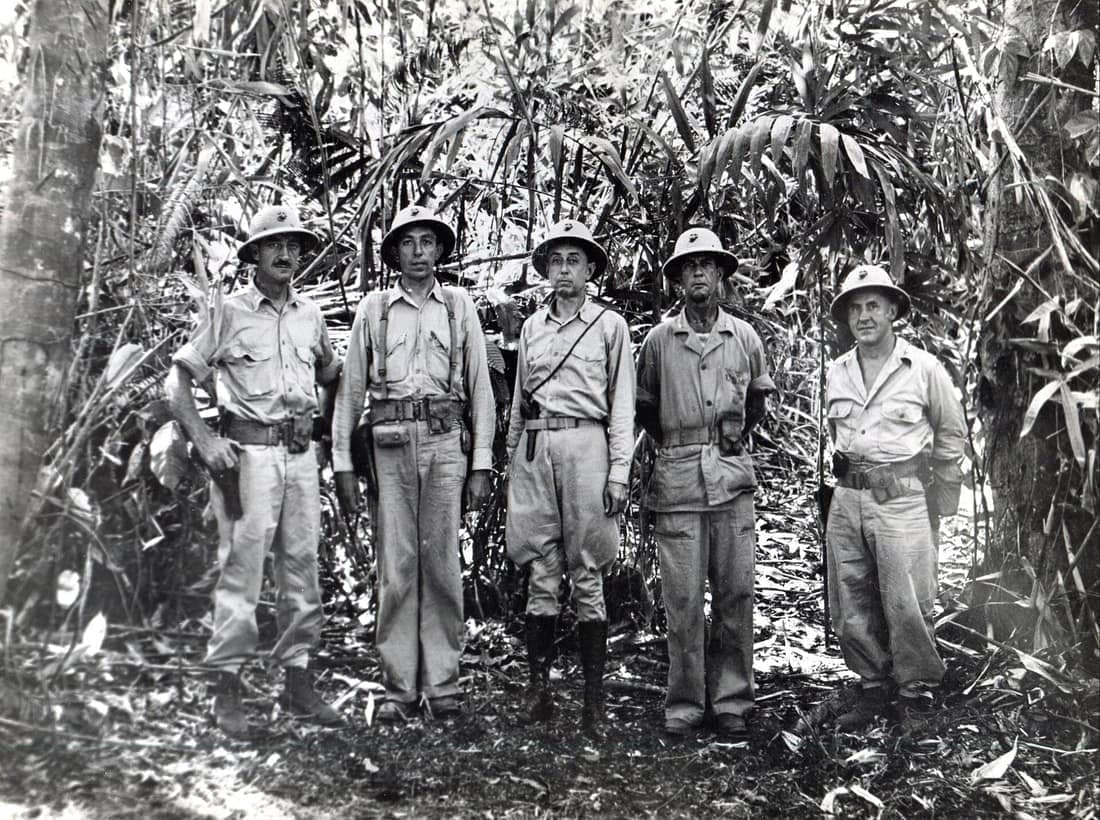

![“RAIDER UNIT LEADER WITH MEN--- Colonel Carlson poses with members of the raider battalion he commands, and they show weapons and equipment captured after meeting and defeating [the Japanese].” From the Thayer Soule Coll](/photos/guadalcanal-campaign-3.jpg)


Equipment in this campaign
- Aichi D3A
- Bell P-39 Airacobra
- Consolidated PBY Catalina
- Douglas SBD Dauntless
- Fletcher-class destroyer
- Fubuki-class destroyer
- Grumman F4F Wildcat
- I-19
- Kongo-class battlecruiser
- LCVP (Higgins boat)
- Lockheed P-38 Lightning
- M1 Garand
- Mitsubishi A6M Zero
- Mitsubishi F1M
- Mitsubishi G4M
- Nakajima A6M2-N
- North Carolina-class battleship
- Type 93 torpedo
- Type 99 Light Machine Gun
- USS Enterprise (CV-6)
- Vought F4U Corsair
- Yukikaze