Pacific · United States and Philippines vs Japan
Battle of Bataan
7 January 1942 – 9 April 1942
About 80,000 American and Filipino troops held the Bataan peninsula on half rations for three months, defeating the first Japanese offensive in January and February. Disease and hunger did the rest; when Homma's reinforced army attacked again in April the line collapsed in a week. The surrender of 76,000 men was followed by the Bataan Death March to Camp O'Donnell.
Explore Battle of Bataan on the interactive map · Wikipedia
Day by day
— The Abucay line
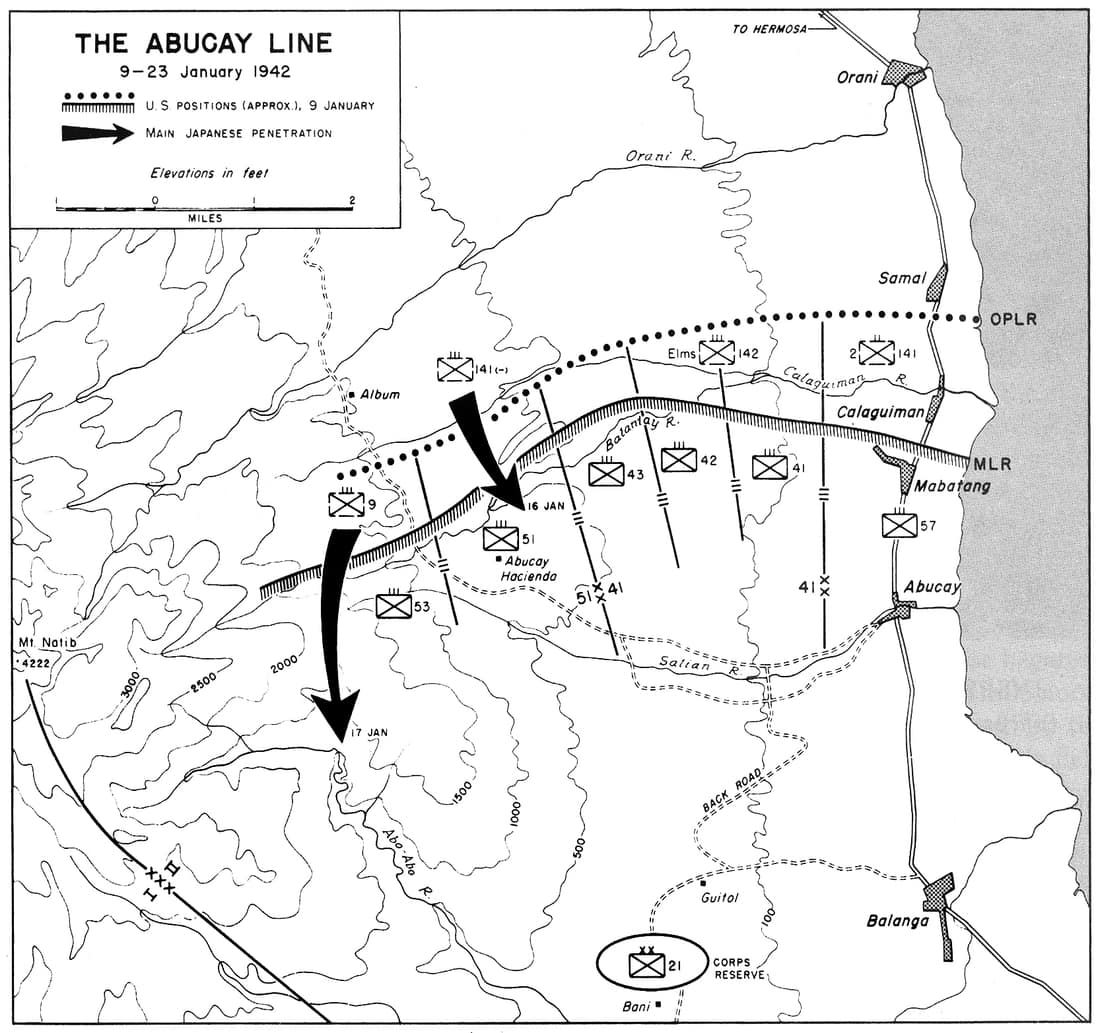
The Luzon Force takes up a line across the neck of the peninsula from Mauban on the China Sea to Abucay on Manila Bay, with the trackless bulk of Mount Natib in the middle and no reserve to cover it. Rations are halved on 5 January: about 80,000 troops and 26,000 civilians are on ground that will feed none of them. The Japanese attack begins on the 9th.
— The Points
The Japanese work round both ends of the line: over the Natib trails behind II Corps, and by barge down the west coast to Quinauan and Longoskawayan Points, well behind I Corps. Sailors, airmen and Philippine Constabulary spend three weeks digging the landing parties out of the cliff caves. The line is ordered given up on the night of the 22nd.
— Bagac-Orion
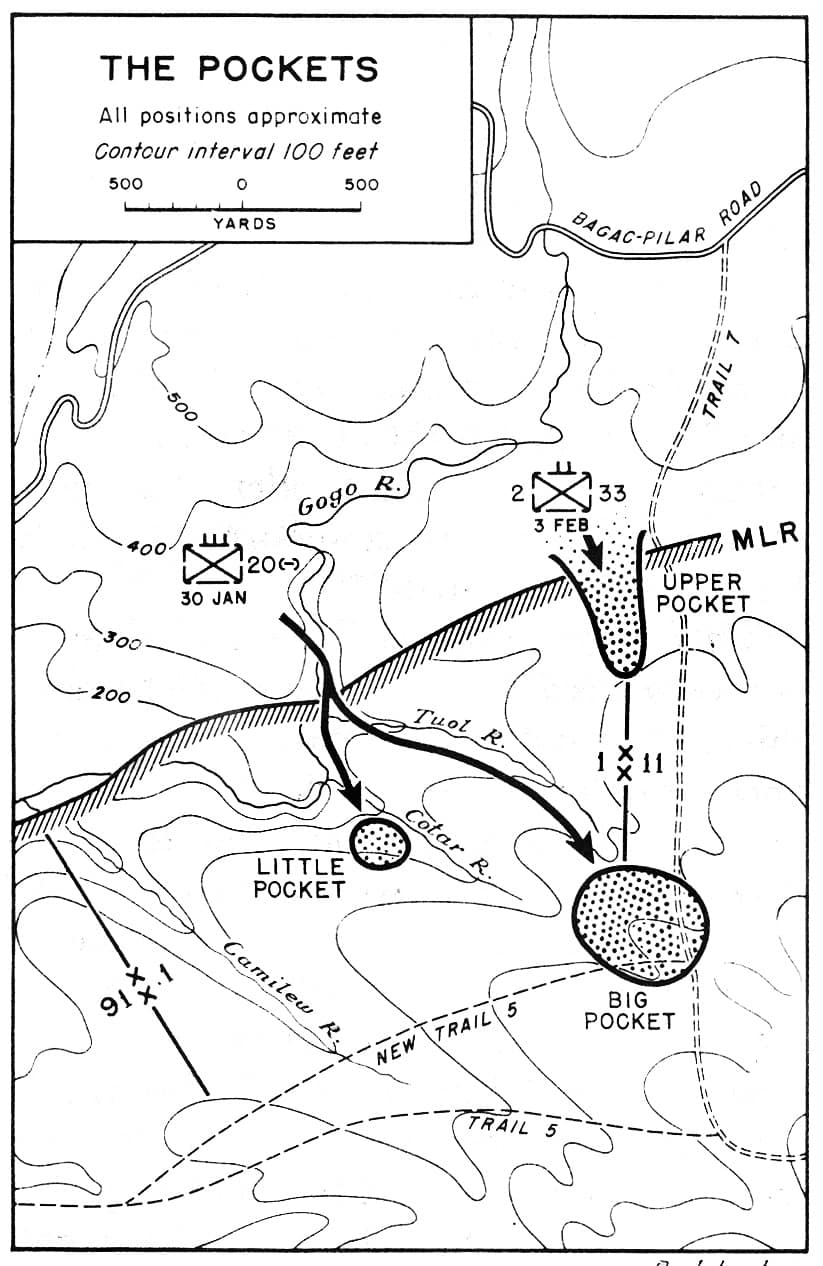
The new line runs from Bagac to Orion, ten kilometres shorter and anchored on Mount Samat. Japanese battalions that got through are cut off in the Tuol and Cotar pockets behind it and wiped out over three weeks of close jungle fighting. It is the last clear defensive success of the campaign.
— The lull
Homma calls the offensive off; his 14th Army has lost a third of its strength, most of it to malaria and dysentery, and the 48th Division has already gone to Java. Six weeks pass in which both sides starve. On Bataan the ration falls to a thousand calories, quinine runs out, and by March three-quarters of the front-line troops have malaria.
— Good Friday
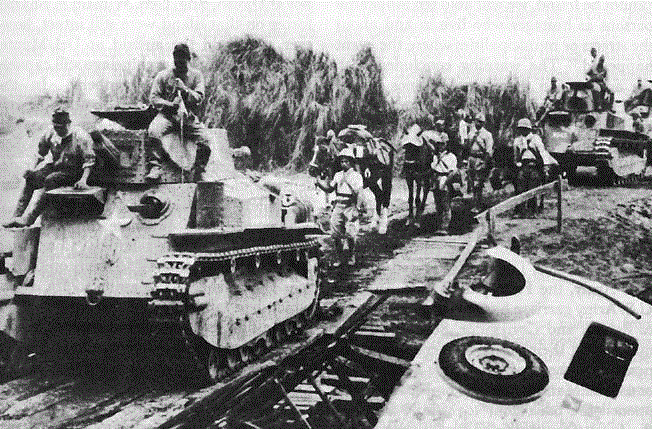
Reinforced with the 4th Division and heavy artillery from Hong Kong, Homma opens with five hours of shelling and bombing on a five-kilometre front at the foot of Mount Samat. The 41st and 21st Divisions in front of it are men who have not eaten properly since January, and the line is gone by the 5th. Counter-attacks on the 6th and 7th fail to start.
— Surrender
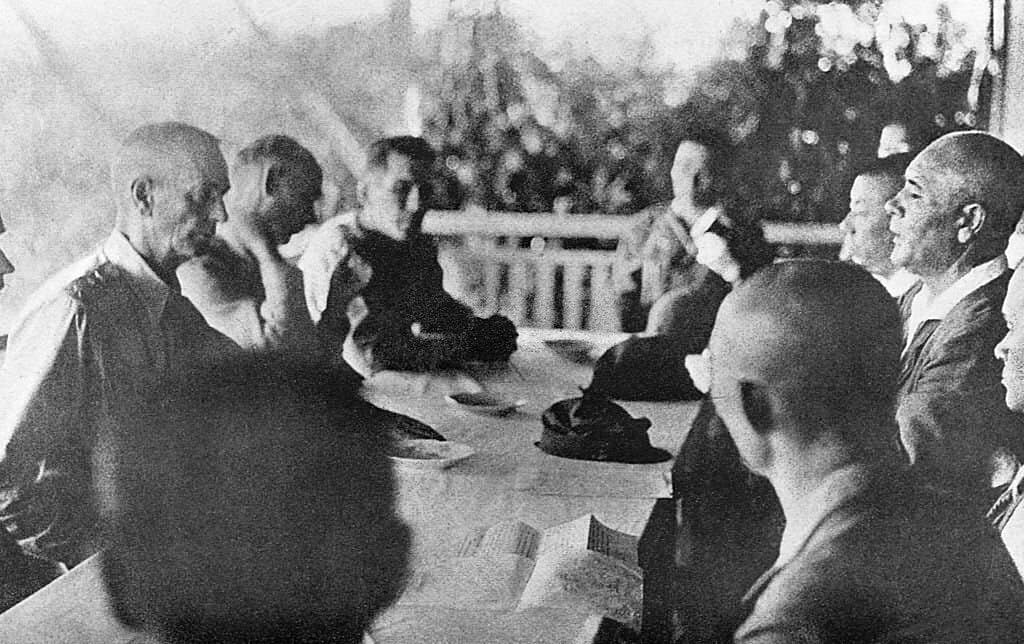
II Corps disintegrates into the ravines behind Limay and there is nothing left to hold Mariveles. King surrenders the Luzon Force at Lamao at 12:30 on 9 April, against Wainwright's orders and to save the men from being shelled where they lie. About 76,000 prisoners are marched north to San Fernando without food or water, and several thousand do not arrive.