Pacific · British Commonwealth vs Japan
Battle of Singapore
8 February 1942 – 15 February 1942
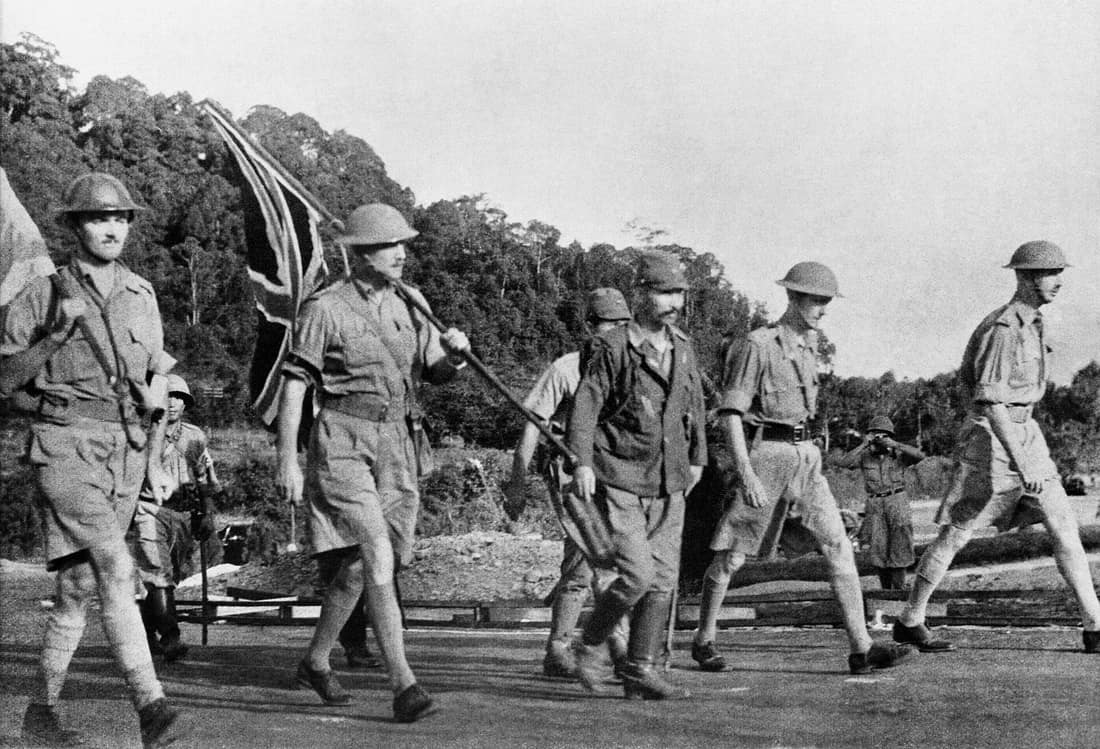
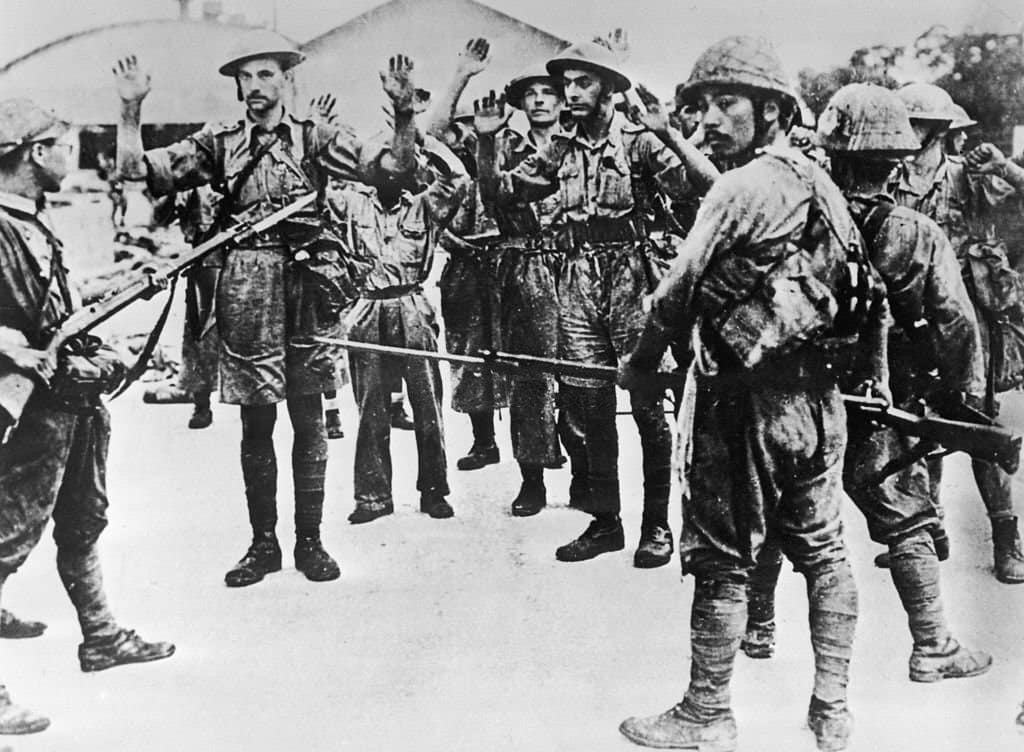
Japanese forces crossed the Johore Strait on the night of 8 February and in a week pushed the larger Commonwealth garrison back into the city. With water, ammunition and fuel running out and the civilian population under bombardment, Percival surrendered on 15 February. Some 80,000 troops went into captivity in the largest surrender in British military history.
Explore Battle of Singapore on the interactive map · Wikipedia
Day by day
— Sarimbun
After a day of shelling heavier than anything yet fired in Malaya, two Japanese divisions cross the strait in collapsible boats at 22:30 on a three-kilometre front held by the Australian 22nd Brigade, about 3,000 men spread over sixteen kilometres of mangrove. The searchlights are never switched on. By dawn 13,000 Japanese are ashore.
— Kranji and Tengah
Tengah airfield is lost in the morning and the Imperial Guards cross west of the causeway that night against the 27th Australian Brigade at Kranji. A misread order pulls the brigade back off the ridge above the landing, and the Guards, who had been close to giving up, come ashore with their tanks. The Jurong line, hastily drawn across the middle of the island, is lost the same day through another misread order.
— Bukit Timah
Bukit Timah village and the hill behind it go on the night of the 10th, and with them the main food, petrol and ammunition dumps and the reservoirs beyond. Yamashita drops a note calling on Percival to give up; it is ignored. Yamashita is by now down to about a hundred rounds a gun and is bluffing with an army half the size of the one in front of him.
— The perimeter
The garrison falls back into a perimeter of about forty square kilometres around the city, holding the water works and the last day or two of supply. The last small ships out are hunted down in the Banka Strait; among them the Vyner Brooke, whose surviving nurses are murdered on Banka beach on the 16th. A million civilians are inside the perimeter and the shelling does not stop.
— The Ford factory
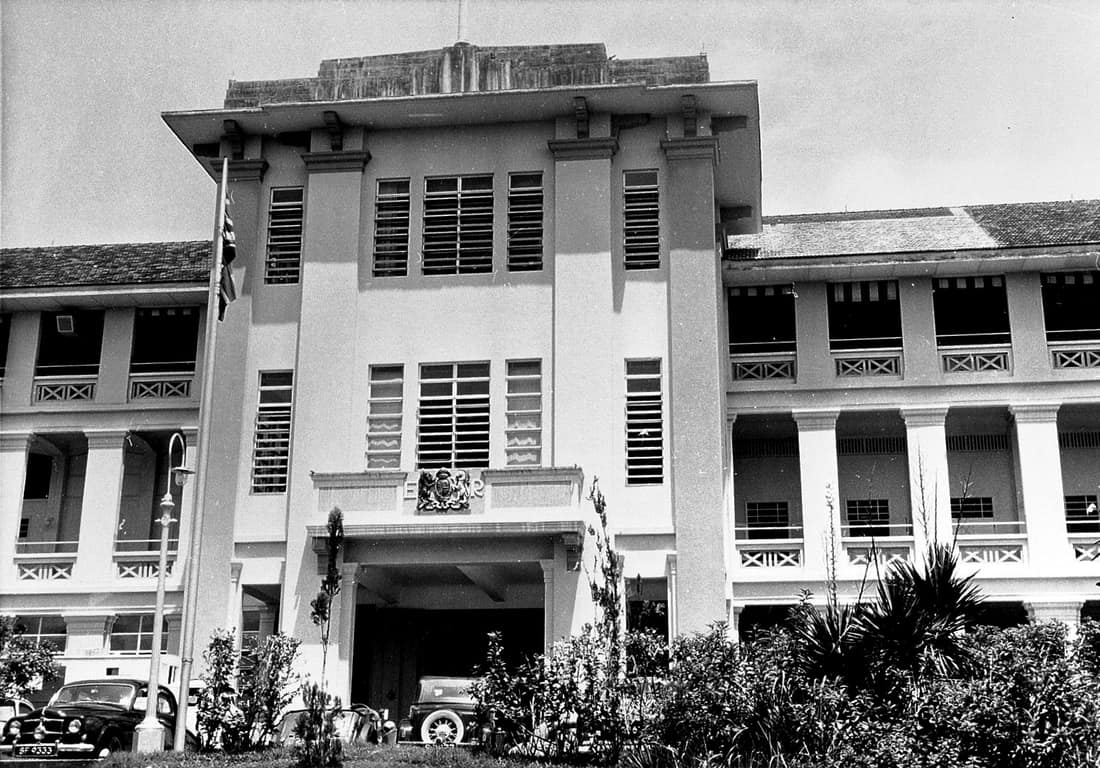
Japanese troops enter Alexandra Hospital on the 14th and kill patients, staff and a man on the operating table. The reservoirs are gone, the water in the mains is failing, and there is petrol and ammunition for perhaps a day. Percival meets Yamashita at the Ford factory on Bukit Timah Road at 17:15 and surrenders unconditionally; about 80,000 men go into captivity, the largest surrender in British military history.