Pacific · United States and Philippines vs Japan
Japanese Invasion of the Philippines
8 December 1941 – 6 January 1942
Japanese air strikes destroyed half of MacArthur's air force on the ground on the first day, and Homma's 14th Army landed in force at Lingayen Gulf and Lamon Bay two weeks later. MacArthur abandoned his plan to fight on the beaches and ordered a withdrawal into the Bataan peninsula, which was completed on 6 January. Manila was declared an open city and occupied.
Explore Japanese Invasion of the Philippines on the interactive map · Wikipedia
Day by day
— Caught on the ground
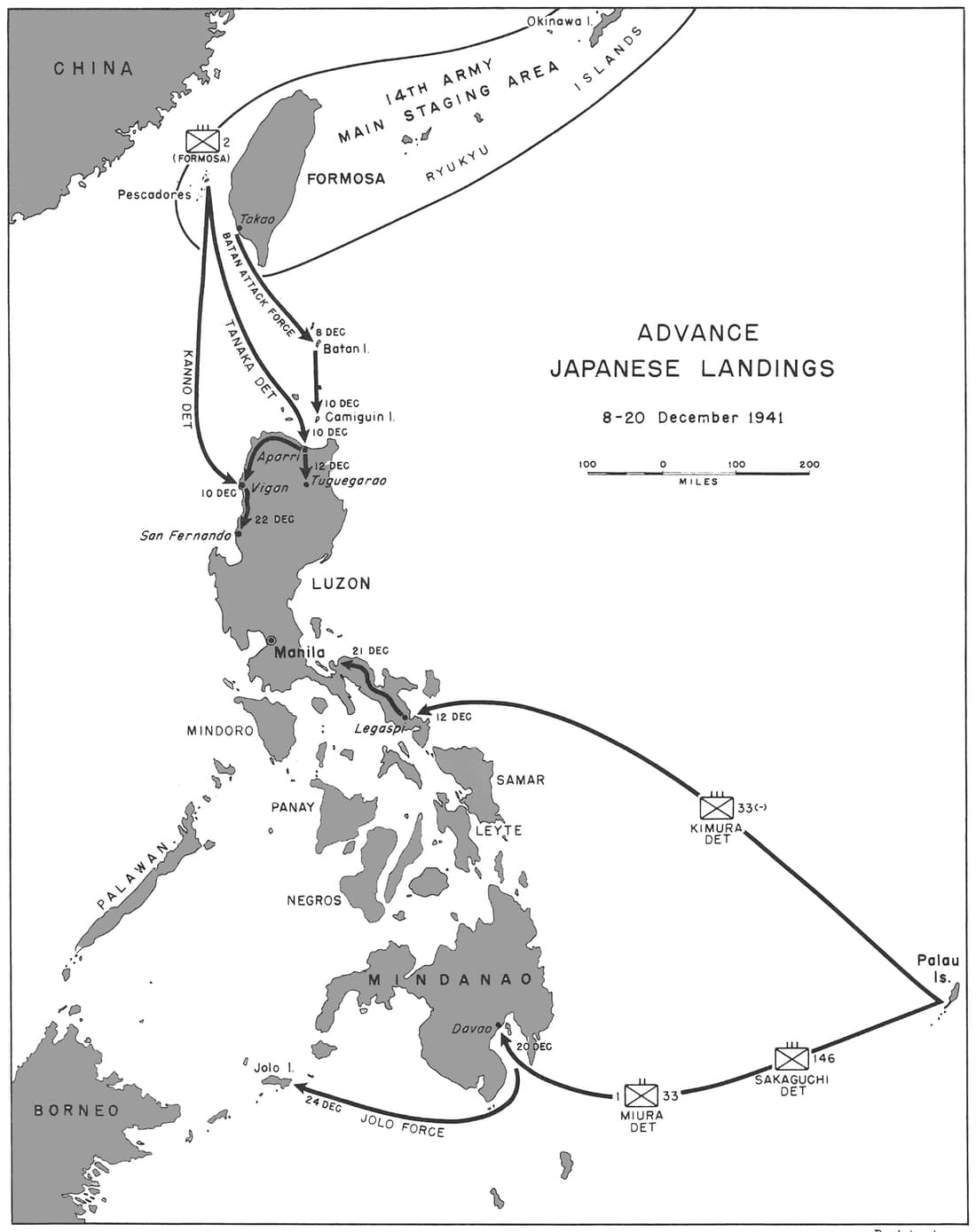
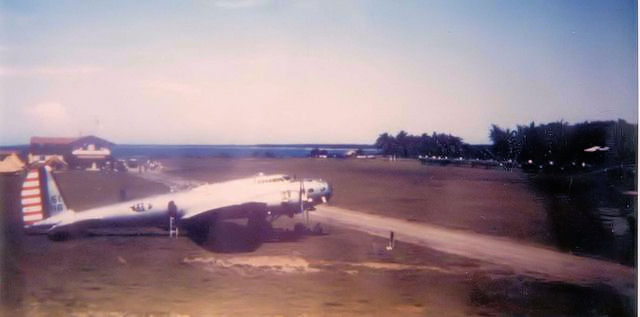
Bombers and fighters from Formosa reach Clark and Iba shortly after midday, nine hours after the news of Pearl Harbor, and find the B-17s parked in rows. Half of the Far East Air Force is destroyed in an afternoon. Small landings follow in the far north at Batan Island the same day.
— The first landings
Advance parties come ashore at Aparri and Vigan to take the northern airfields, and at Legazpi in the far south-east on the 12th. Cavite navy yard is burned out the same afternoon and the Asiatic Fleet leaves for the south. The remaining B-17s are flown to Mindanao and then to Australia.
— Lingayen Gulf
The main body of the 14th Army, some 43,000 men, lands on the eastern shore of Lingayen Gulf before dawn against two Philippine Army divisions with little artillery and less training. The beach defence collapses within a day and Wainwright falls back through five delaying lines toward the Agno river.
— War Plan Orange
A second force lands at Lamon Bay behind Manila, and MacArthur abandons the plan to fight on the beaches. The old plan is revived: both Luzon forces are to fall back on Bataan while the bridges at Calumpit and Layac are held open. Headquarters and the Commonwealth government move to Corregidor and Manila is declared an open city on the 26th.
— Into Bataan
The two forces pass each other through the Calumpit bottleneck and the last units cross the Layac bridges on 6 January; the bridges are blown behind them. Some 80,000 troops and 26,000 civilians are now on the peninsula, with food for a month at half rations. Japanese troops entered Manila on 2 January.