The stubby, rugged Wildcat was outperformed by the Zero in a turning fight but its armor and self-sealing tanks let American pilots absorb punishment the Japanese fighter could not. Squadrons at Wake Island, Coral Sea, Midway and over Guadalcanal used tactics like the Thach Weave to offset its speed disadvantage until the Hellcat arrived. It remained the Navy's frontline fighter through the whole of 1942.
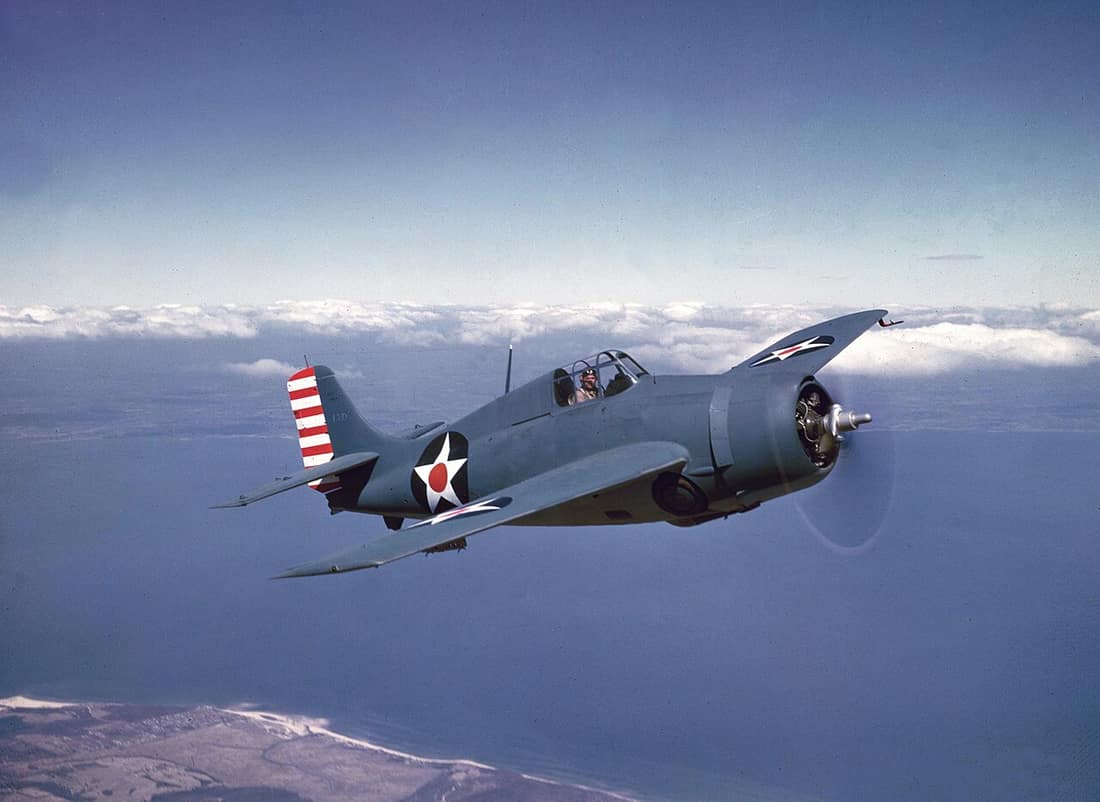
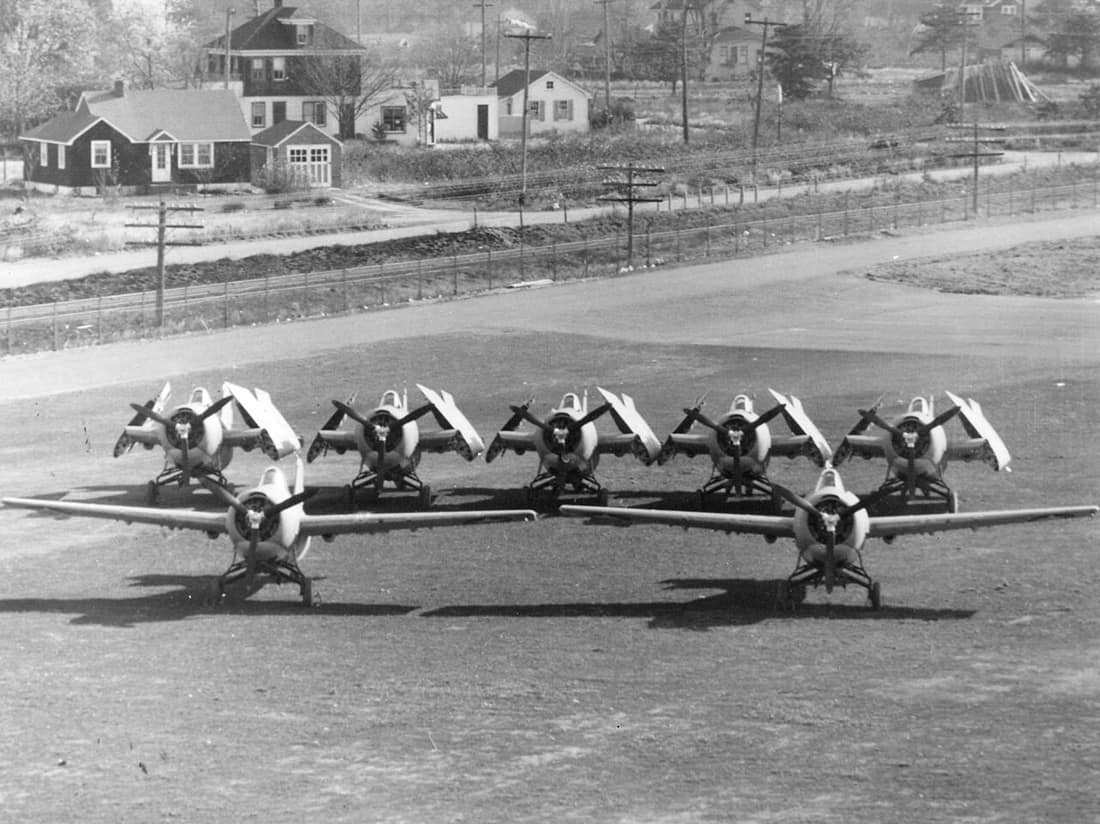
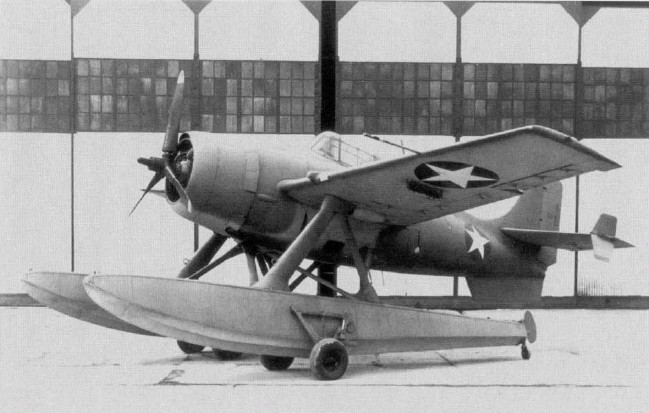
A U.S. Navy Grumman F4F-3 in non-specular blue-grey over light-grey scheme in early 1942. Note modified pitot tube of the later F4F-4 model, moved from the leading edge of the wing to an L-style mount under the wing.The original uploader was Felix c at English Wikipedia. · Public domain · sourceDisplay of U.S. Navy Grumman F4F-4 Wildcats showing that five with Grumman's "sto-wings" could occupy ther space of two without "sto-wings" (like the F4F-3), thereby increasing the stowage of aircraft and the striking foU.S. Navy · Public domain · sourceThe Grumman F4F-3S Wildcatfish (or Wild Catfish), BuNo 4038. This floatplane version of the F4F-3 was developed for use at forward island bases in the Pacific, before the construction of airfields. It was inspired by appUSN · Public domain · source