Pacific · United States and Australia vs Japan
Battle of the Coral Sea
4 May 1942 – 8 May 1942
The first naval battle fought entirely by carrier aircraft, with neither fleet sighting the other. The Japanese sank the Lexington and lost only the light carrier Shoho, but the invasion convoy bound for Port Moresby turned back and the damaged Shokaku and depleted Zuikaku missed Midway a month later.
Explore Battle of the Coral Sea on the interactive map · Wikipedia
Day by day
— Tulagi
The Japanese occupied Tulagi on 3 May to give their flying boats a base for the Port Moresby operation. Fletcher, refuelling to the south, takes Yorktown north and launches three strikes at dawn on the 4th, sinking the destroyer Kikuzuki and some minesweepers and landing barges for twenty-two torpedoes and seventy-six bombs. He then turns south to rejoin Lexington.
— Groping
The Port Moresby convoy is at sea from Rabaul with the light carrier Shoho covering it, aiming to come round the Louisiades through the Jomard Passage. Takagi's Shokaku and Zuikaku enter the Coral Sea round the eastern end of the Solomons, looking for the American carriers. Fletcher joins Fitch and Crace's Australian and American cruisers at Point Corn and fuels from the oiler Neosho.
— The wrong targets
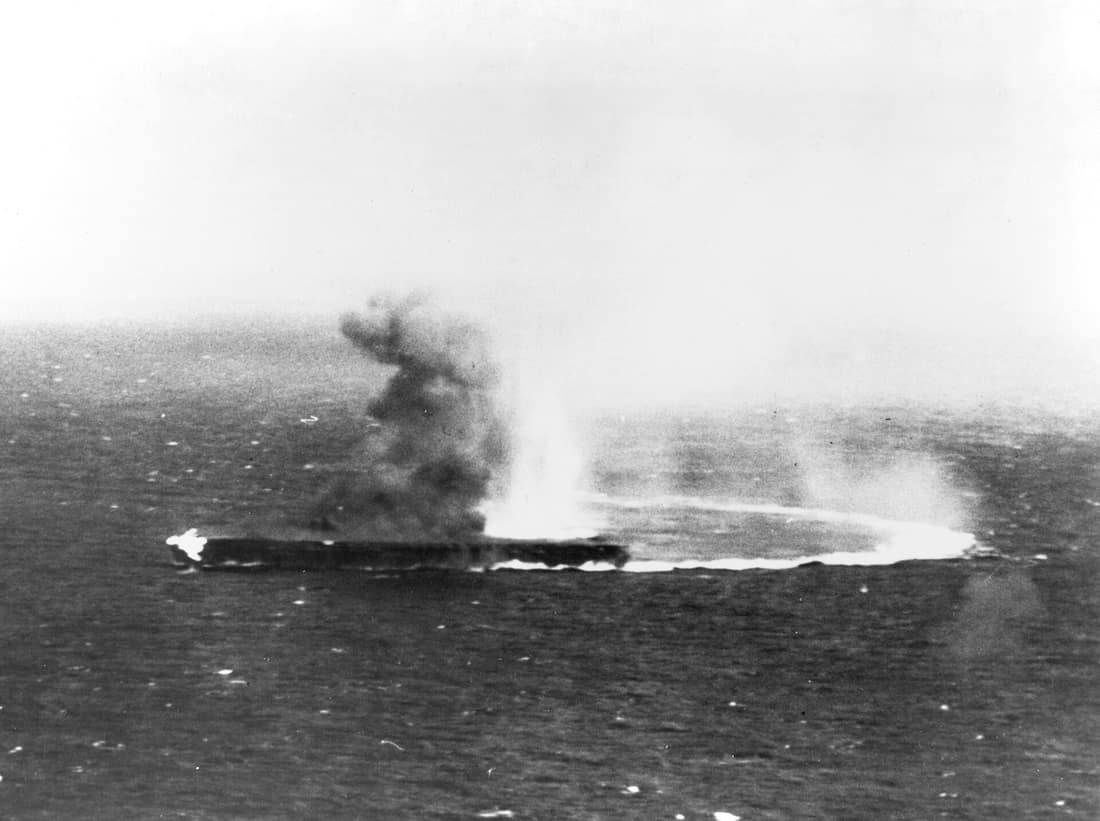
Both fleets spend the day striking what they have found rather than what they were looking for. Japanese aircraft catch the oiler Neosho and the destroyer Sims to the south-east, sinking Sims outright and leaving Neosho drifting for four days; an American scout's coding error sends 93 aircraft after two cruisers, and they find Shoho instead and sink her in ten minutes for the loss of three aircraft. Crace's cruisers, detached to cover the Jomard Passage, are bombed by both sides and hit by neither.
— The carriers meet
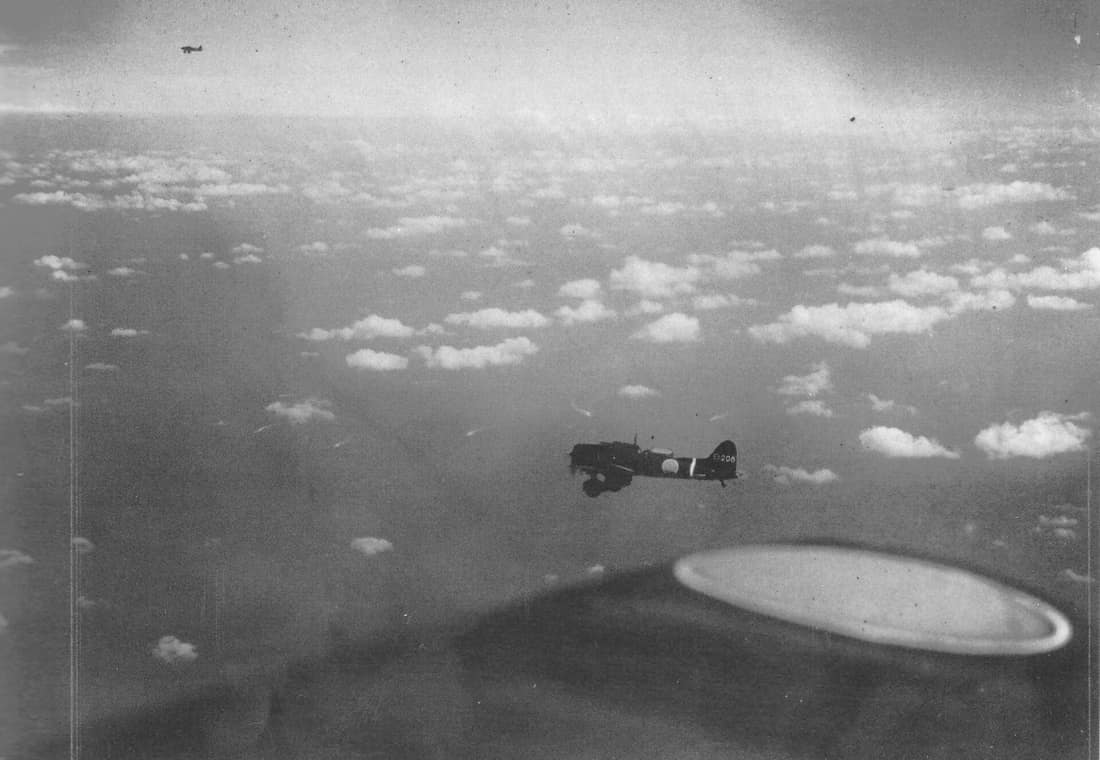
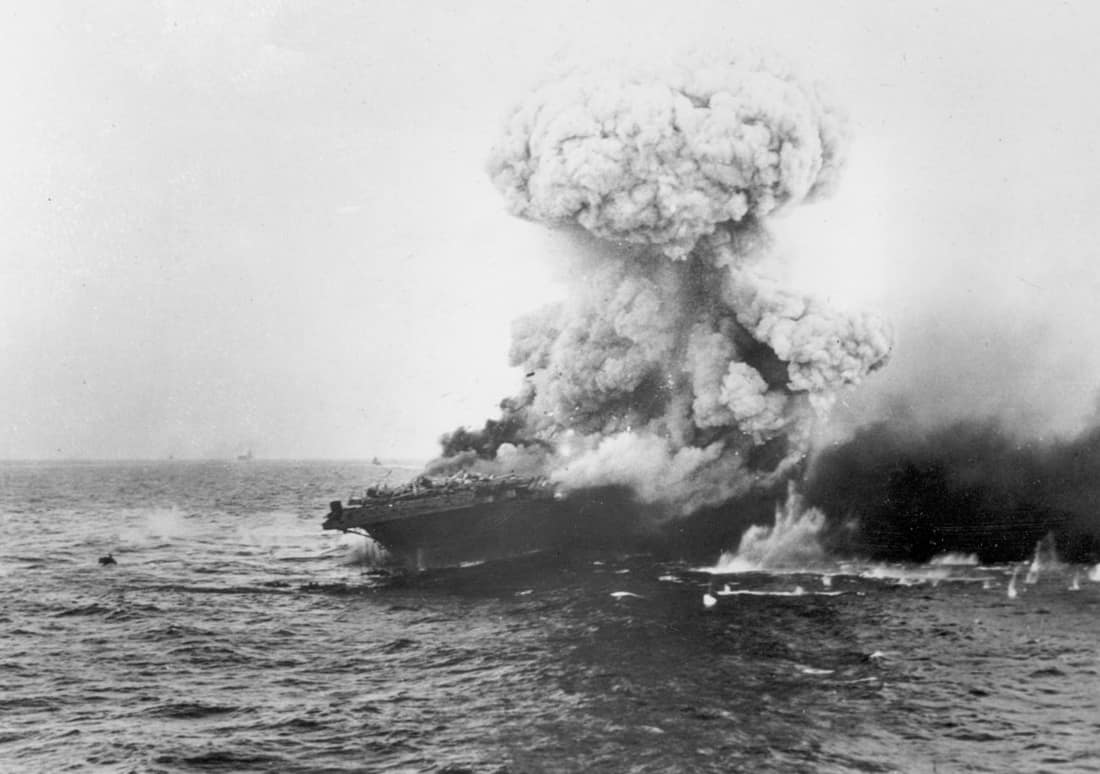
Scouts from both sides find the enemy at about 08:20 and the strikes pass each other in the air. Shokaku takes three bombs on the flight deck and is out of the war for months; Zuikaku, hidden in a rain squall, is untouched but loses most of her aircrew. Lexington is hit by two torpedoes and two bombs, gets her fires under control and is then torn apart by petrol vapour explosions in the afternoon; she is torpedoed by the destroyer Phelps at 19:52. The Port Moresby convoy has already turned back, and Port Moresby is never taken from the sea.
,_8_May_1942_(80-G-16651).jpg)