Balkans · Soviet Union, Yugoslav Partisans and Bulgaria vs Germany
Belgrade Offensive
15 September 1944 – 24 November 1944
The 3rd Ukrainian Front, with Bulgarian and Partisan forces, drove into Serbia from Romania and Bulgaria while Army Group E withdrew from Greece. Belgrade was taken after a week of fighting and the Partisans gained a conventional front line on the Danube and Drina.
Explore Belgrade Offensive on the interactive map · Wikipedia
Day by day
— Over the border
Bulgaria changed sides on 9 September and its armies now face west instead of south. Soviet and Partisan detachments begin working across the Serbian frontier while Tito's divisions come east out of Bosnia and Montenegro. Behind the German front, Army Group E is starting the long walk north out of Greece, and everything depends on whether the road through Belgrade stays open.
— From Vidin
The 57th Army crosses the Danube and the Timok from the Vidin bridgehead on the 28th and pushes into the mountains of eastern Serbia towards the Morava. The Bulgarian Second Army comes at Nis from the east. The country is bad for tanks and the Partisans, who know it, go ahead of the columns.
— The outskirts
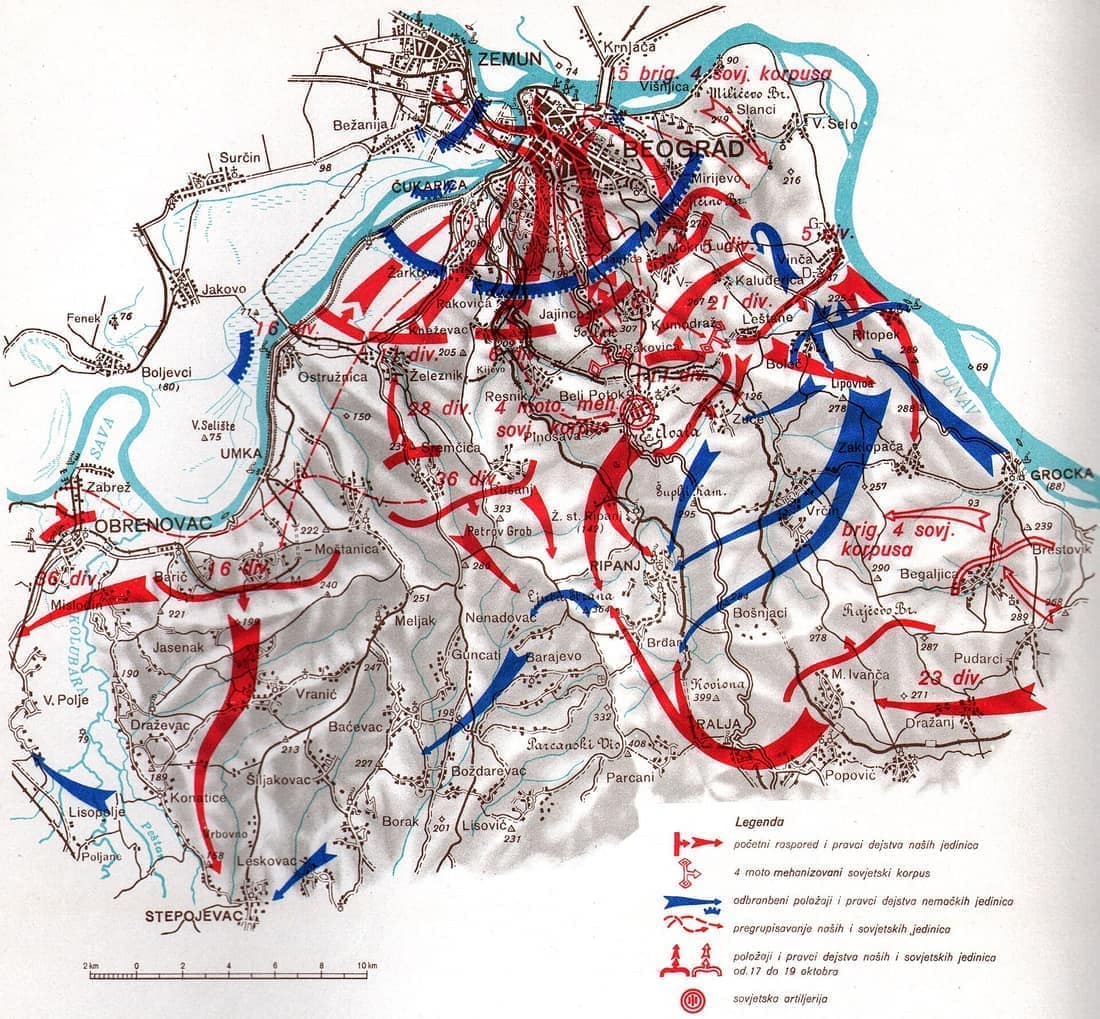
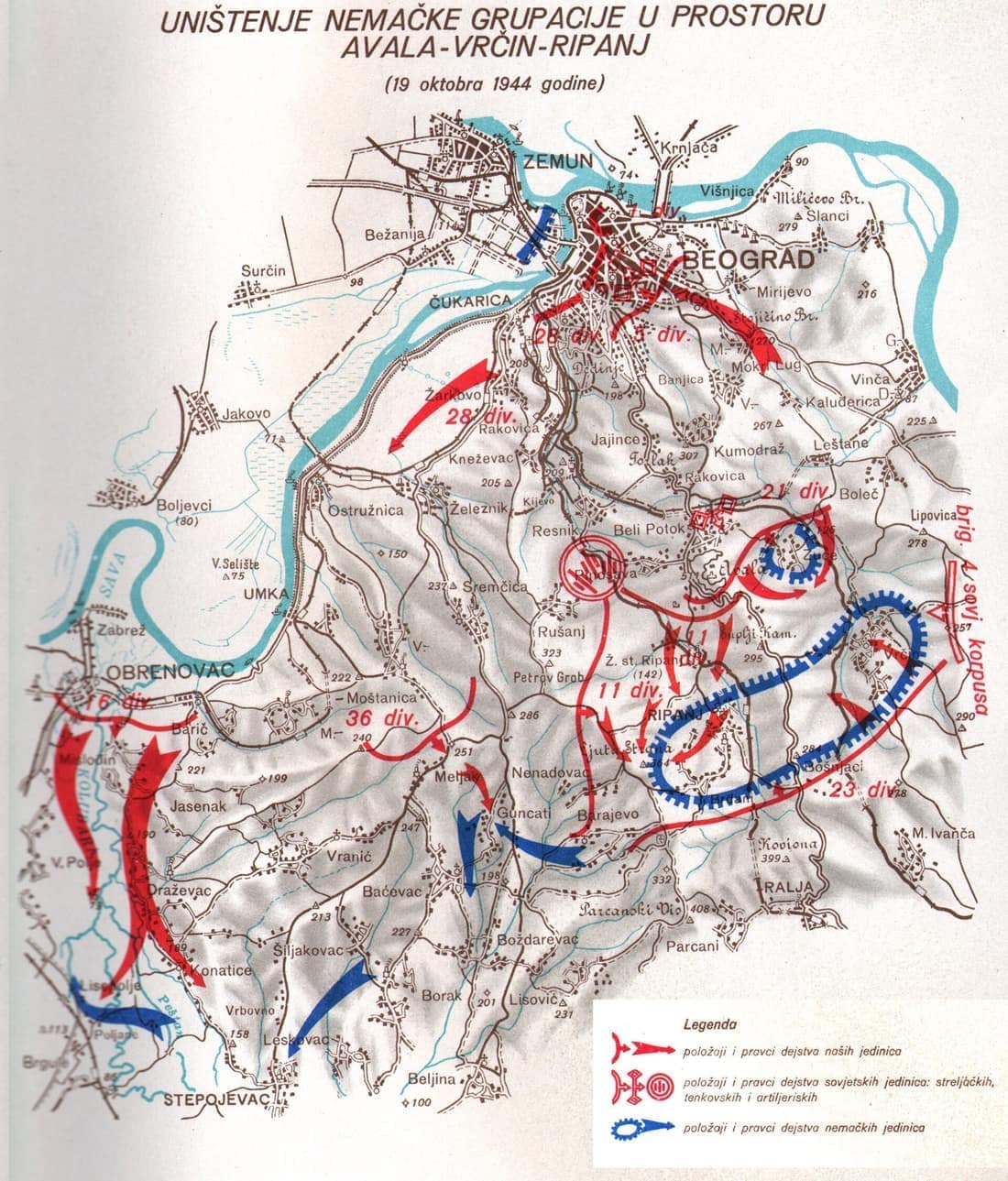
Zhdanov's 4th Guards Mechanised Corps comes up the Morava with the 1st Proletarian and 12th Partisan Corps riding on the tanks, and reaches the southern edge of Belgrade on the 14th. Behind them a German group of about 20,000 men is cut off in the hills round Avala, trying to get into the city. Street fighting begins the same day.
— Belgrade
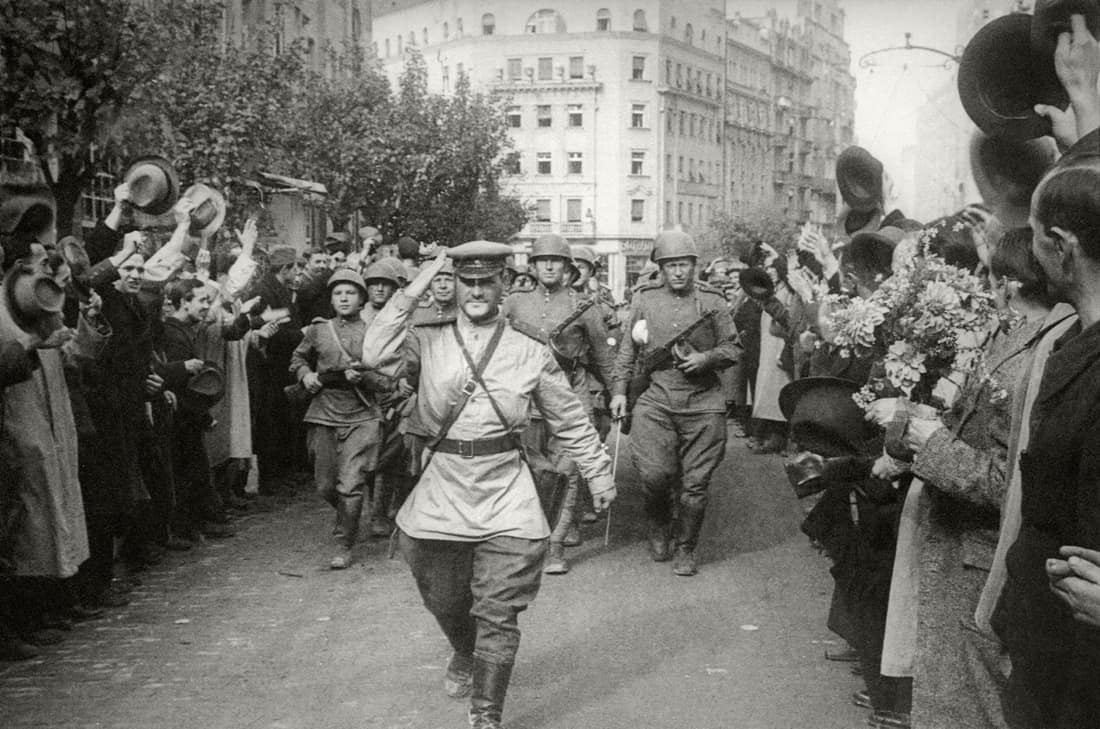
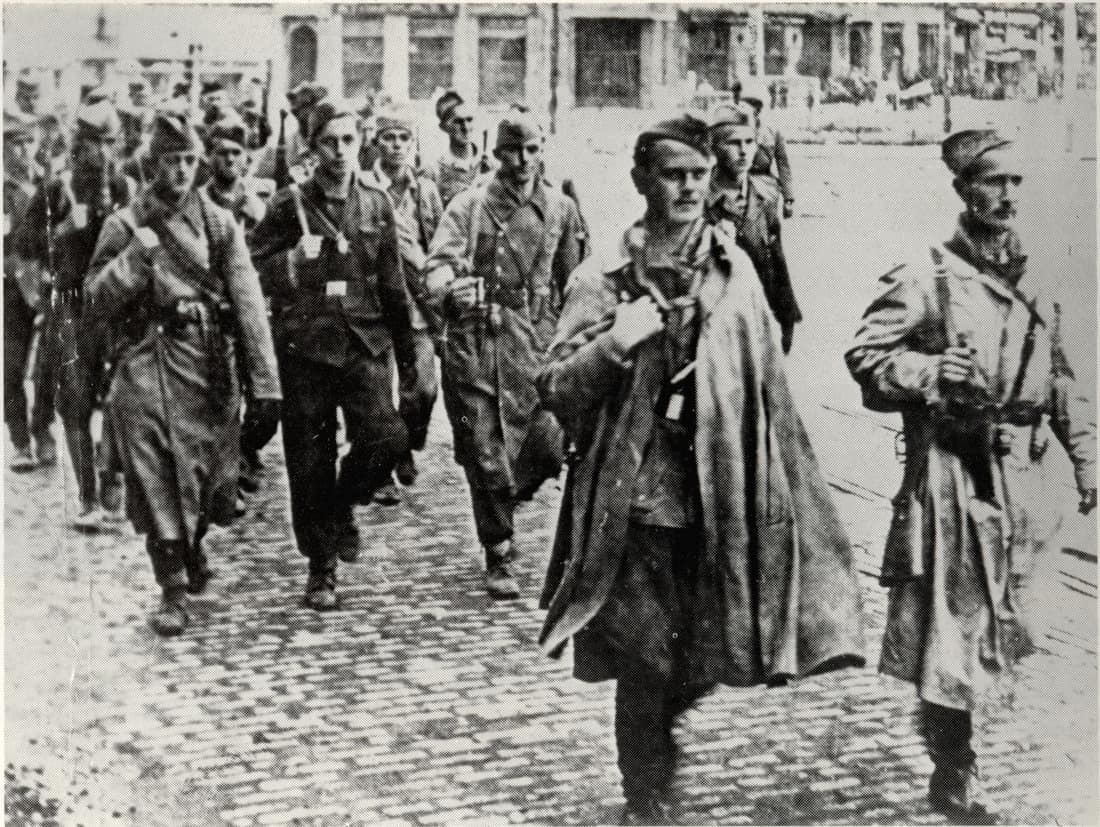
Six days of fighting street by street, with Soviet tanks and Partisan infantry working together and the Germans blowing the Sava bridges behind them. The Avala group is destroyed on the 19th. The city is clear on the 20th; it is the first capital in the Balkans to be taken back, and the Partisans have a government waiting in it.
— The Srem line
Army Group E gets most of its men out up the Ibar and Drina valleys, having lost the shortest road, and the fighting on the Danube dies down in late November. The front settles across the Srem between the Danube and the Sava, and stays there through the winter. For the first time the Partisans hold a continuous conventional front line.