Balkans · Yugoslav Partisans vs Germany, Italy, Croatia and Chetniks
Yugoslav Partisan War
7 July 1941 – 15 May 1945
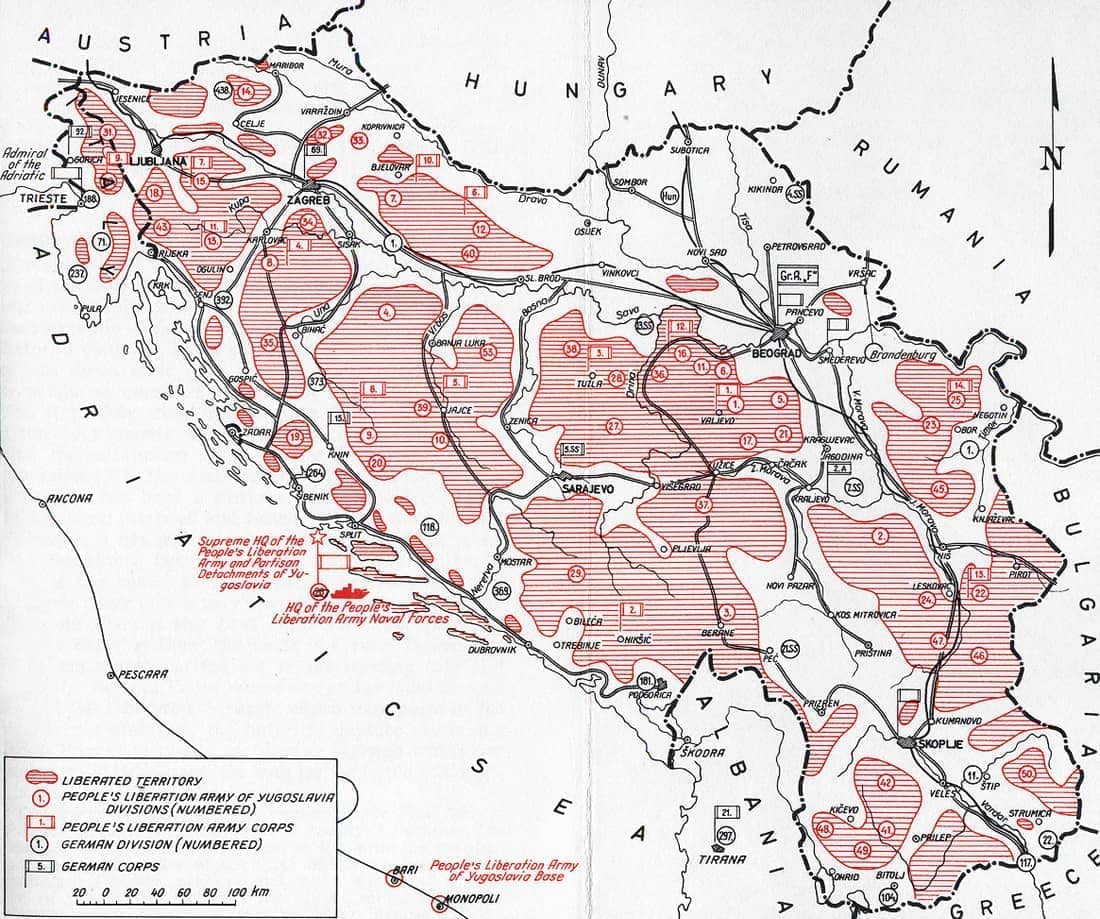
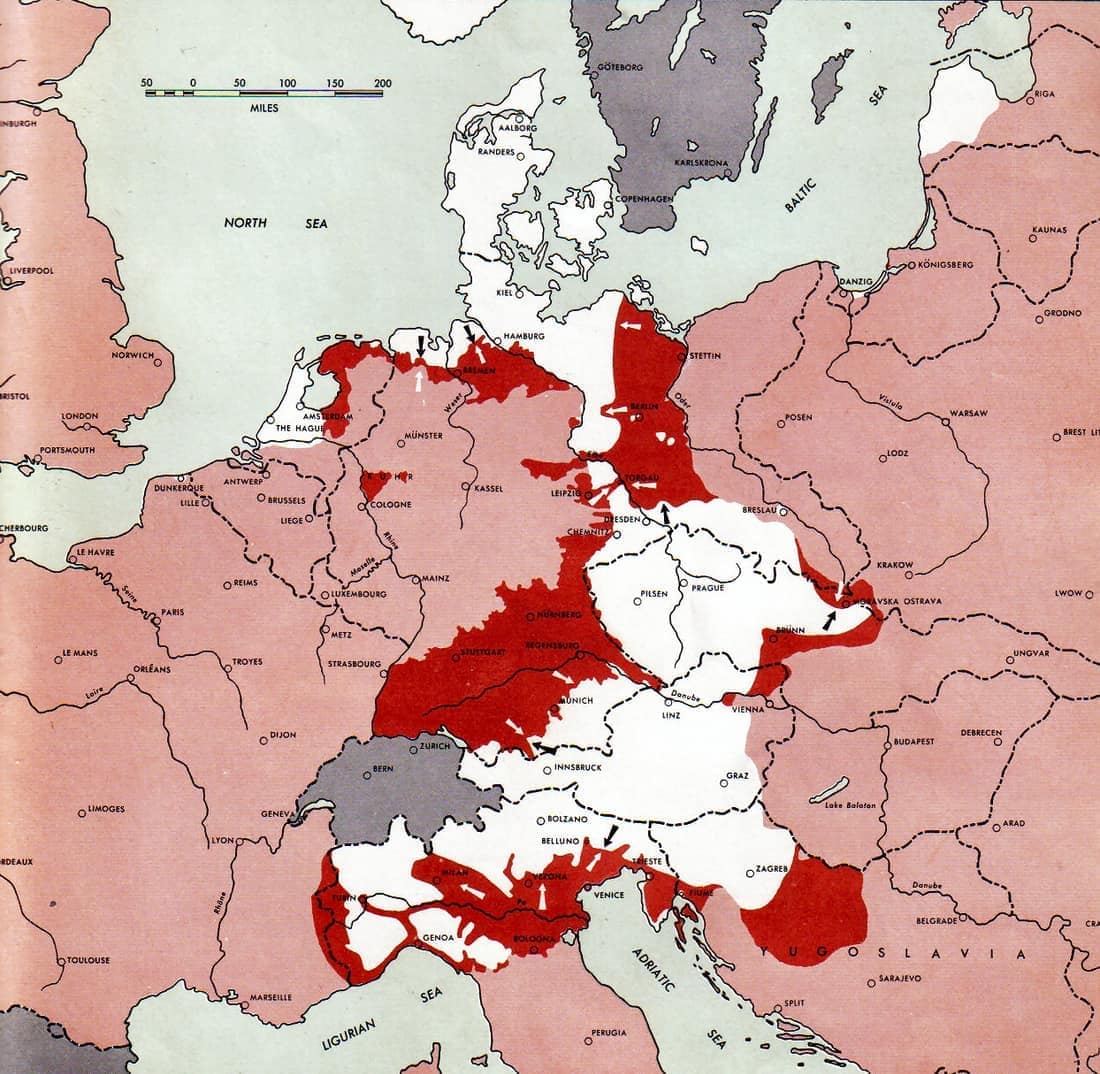
Tito's communist Partisans waged a four-year guerrilla and then conventional war against the Axis occupiers, the Croatian Ustase and the royalist Chetniks. Surviving seven major Axis offensives, they grew into an army of 800,000 that liberated most of the country with Soviet help.
Explore Yugoslav Partisan War on the interactive map · Wikipedia
Day by day
— Bela Crkva
Zikica Jovanovic Spanac shoots two gendarmes outside the village hall at Bela Crkva in western Serbia, the day the Communist Party has set for a rising. Within weeks the countryside is out in Serbia, eastern Bosnia, Montenegro and the Lika, where the Ustase massacres have driven whole Serb villages into the woods. The garrisons hold the towns and the railways and little else.
— The first offensive
By autumn the Partisans hold a stretch of western Serbia with Uzice as its capital, a rifle factory and a newspaper. Three German divisions and the Serbian collaborationist forces attack it in November, and the Chetniks, who have already fallen out with Tito, attack Uzice as well. The town falls on the 29th and the surviving Partisans walk south into the Sandzak and on into Bosnia.
— The Neretva
The second and third offensives drove the Partisans across Bosnia in 1942; by the winter they held a republic round Bihac and had a proper army of brigades and divisions. Case White throws Germans, Italians, Ustase and Chetniks at it in January. Carrying 4,000 wounded and with typhus among them, the Partisans blow the Neretva bridges to fool the pursuit, then improvise a crossing at Jablanica and break through the Chetniks on the far bank in the first week of March.
— Sutjeska
Case Black surrounds the same group in the mountains of eastern Bosnia and Montenegro with 127,000 men and orders that no one be allowed out. For three weeks the Partisans are bombed from the air in a shrinking ring with their wounded and no supplies. On 9 June the 1st Proletarian Division forces the Sutjeska gorge at Tjentiste and the column gets out to the north; Tito is wounded by the same bomb that kills the British liaison officer's companion. A third of the force is lost, and the wounded left behind are killed.
— Jajce
Italy's capitulation in September hands the Partisans the coast, the islands and the weapons of eleven divisions, and the movement doubles in a season. Delegates meeting at Jajce on 29 November proclaim a provisional government and make Tito a marshal, without telling the King or the Allies first. The sixth offensive is already pushing them off the coast again, and Bihac and Jajce are lost within weeks.
— The liberation
The seventh offensive opened on 25 May 1944 with a glider and parachute landing on Tito's headquarters at Drvar; he got out through a cave and was flown to Bari and then to Vis. In October the Partisans and the Red Army take Belgrade together and the guerrilla army becomes a front-line one, four field armies strong, that pushes north-west through the winter. The last Axis and Ustase column, still marching for the Austrian border, surrenders at Poljana on 15 May 1945, a week after the war ended everywhere else.