Balkans · Germany, Italy and Hungary vs Yugoslavia
Invasion of Yugoslavia
6 April 1941 – 18 April 1941
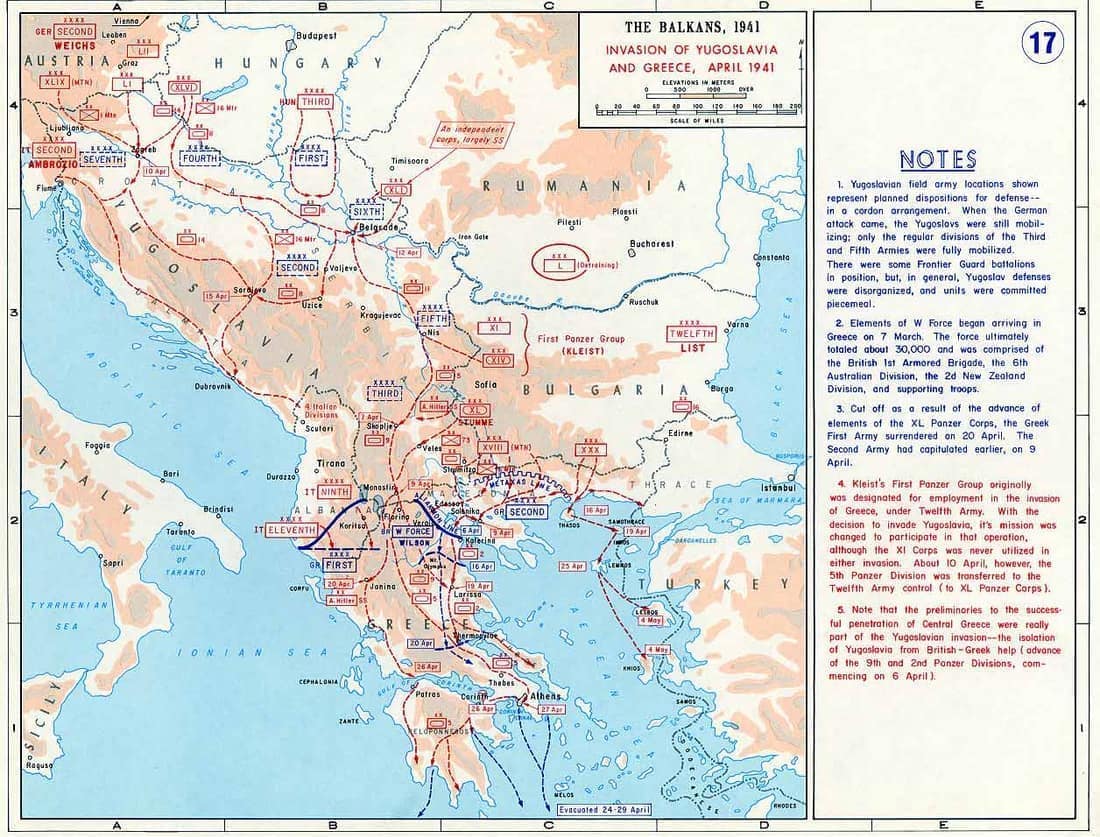
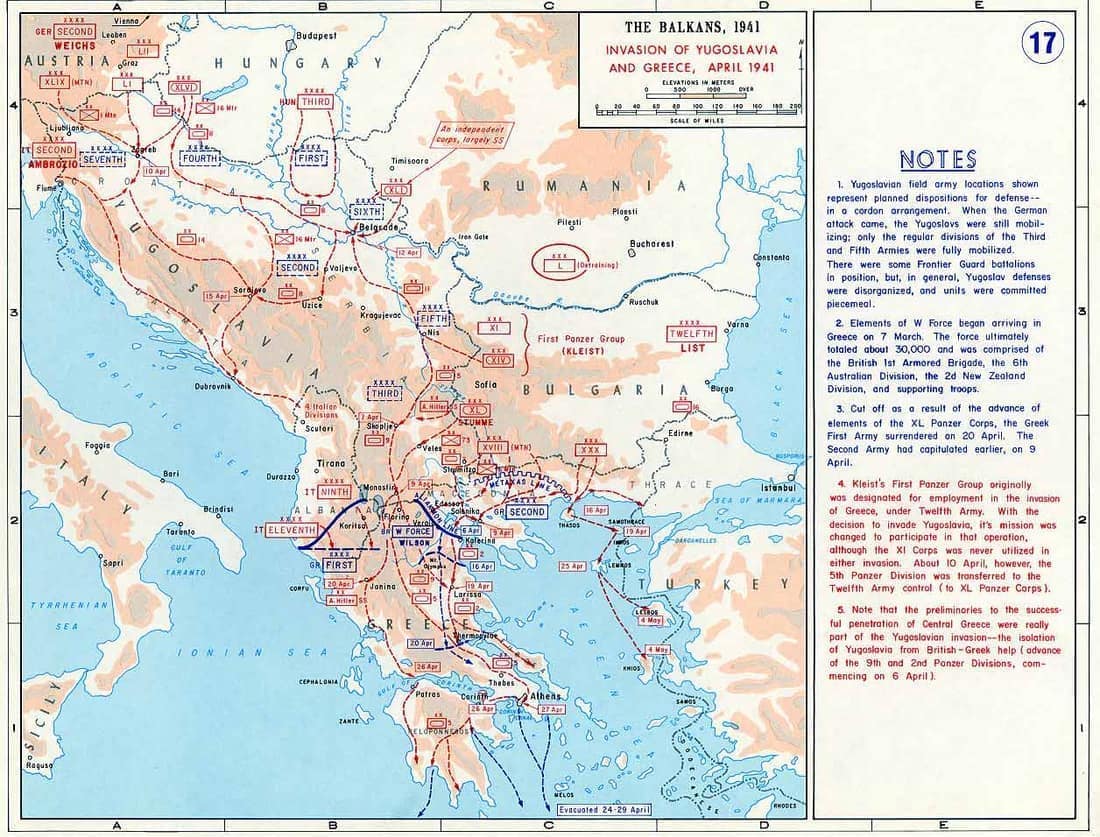
After a coup in Belgrade repudiated Yugoslavia's accession to the Tripartite Pact, Germany attacked from Bulgaria, Austria and Hungary. The Yugoslav army, mobilising and split by ethnic divisions, collapsed in eleven days. The country was partitioned and a Croatian puppet state proclaimed.
Explore Invasion of Yugoslavia on the interactive map · Wikipedia
Day by day
— Punishment
The Luftwaffe opens Operation Punishment over Belgrade at first light and bombs the undefended capital for three days, killing several thousand people. On the ground List's Twelfth Army comes out of Bulgaria for Skopje and Nis, splitting Yugoslavia from Greece. The Yugoslav army has a million men on paper, is still mobilising, and is strung out along 3,000 kilometres of frontier.
— Zagreb
Skopje fell on the 7th and Nis on the 9th, and the Second Army now attacks in the north. The 14th Panzer Division reaches Zagreb on the afternoon of the 10th against no resistance; Croat units have been going home or changing sides for days. That evening Slavko Kvaternik proclaims the Independent State of Croatia on the radio.
— Belgrade
Motorised columns converge on the capital from Romania, from the Banat and up the Morava. A patrol of the SS Division Das Reich crosses the Danube in a captured boat and takes the surrender of the city from its mayor on the evening of the 12th, before the armies arrive. Hungarian troops crossed into the Backa the day before.
— Unconditional
King Peter and the government were flown out on the 14th and 15th, first to Greece and then to Cairo. General Kalafatovic's representatives sign an unconditional surrender in Belgrade on the 17th, to take effect at noon on the 18th. Some 254,000 men go into captivity; the Germans have lost 151 dead. The country is carved up between Germany, Italy, Hungary, Bulgaria and the new Croatian state.