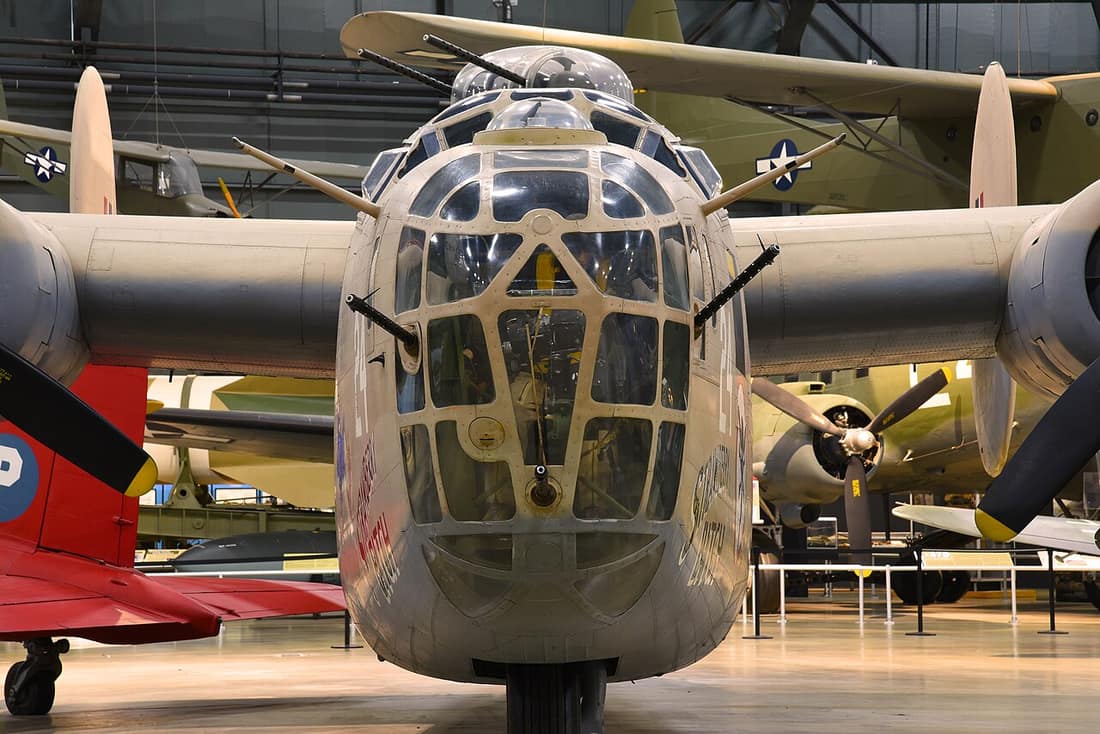
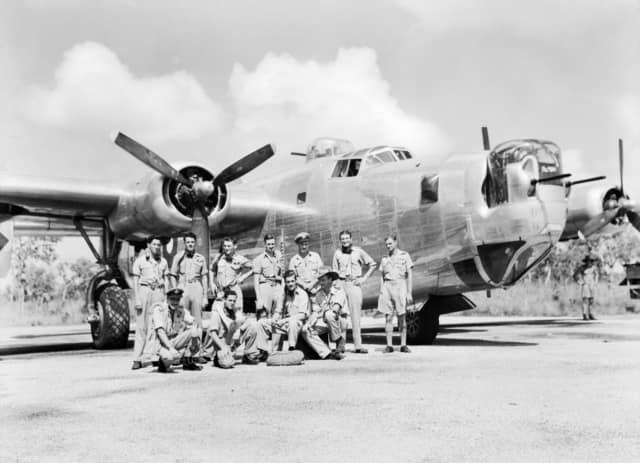
The most-produced Allied heavy bomber of the war, the long-ranged Liberator also flew in a maritime-patrol role that closed the mid-Atlantic 'air gap' where U-boats had previously operated free of air attack, a turning point in the Battle of the Atlantic in 1943.
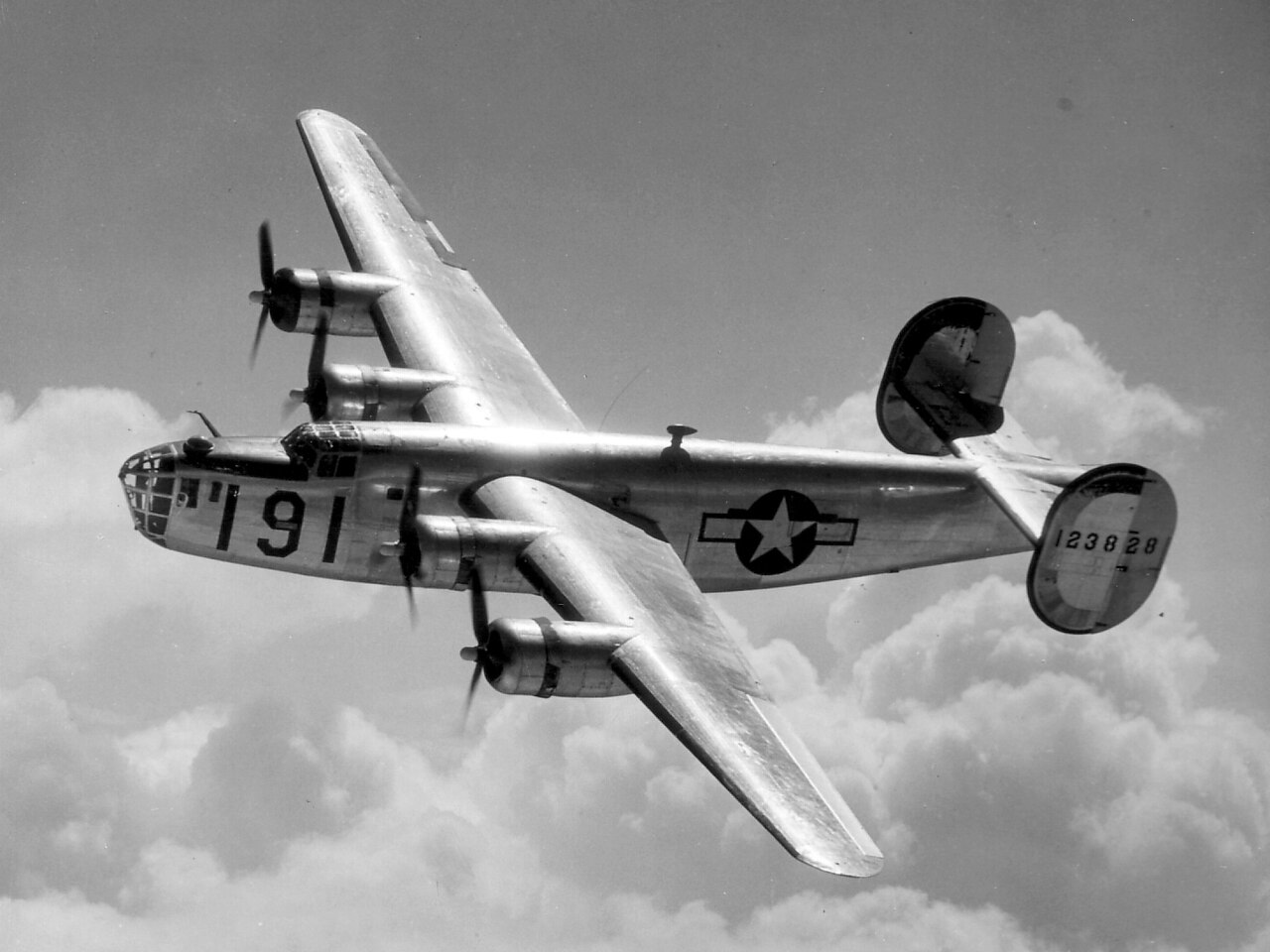
A Consolidated B-24 Liberator from Maxwell Field, Alabama, four engine pilot school, glistens in the sun as it makes a turn at high altitude in the clouds. The B-24 is B-24D-7-CO 41-23828, which was later assigned to theU.S. Air Force photos · Public domain · sourceDAYTON, Ohio -- Consolidated B-24D Liberator in the World War II Gallery at the National Museum of the United States Air Force. (U.S. Air Force photo)Ken LaRock - U.S. Air Force photo · Public domain · sourceAWM caption : Fenton, NT. 1945-03. An informal group portrait of a crew of a Consolidated B-24 Liberator bomber aircraft of No. 21 Squadron RAAF, standing beside their aircraft. Left to right: Back row: Flight Sergeant (Department of Air · Public domain · source
.jpg)