Battle of the Atlantic · United Kingdom, Canada and United States vs Germany
Battle of the Atlantic
3 September 1939 – 8 May 1945
The longest continuous campaign of the war, fought to keep the sea lanes between North America and Britain open against U-boats, surface raiders and aircraft. Allied shipping losses peaked in 1942 and early 1943 before escort carriers, long-range aircraft, radar and codebreaking turned the balance in May 1943. Some 3,500 merchant ships and 783 U-boats were lost.
Explore Battle of the Atlantic on the interactive map · Wikipedia
Day by day
— The first day
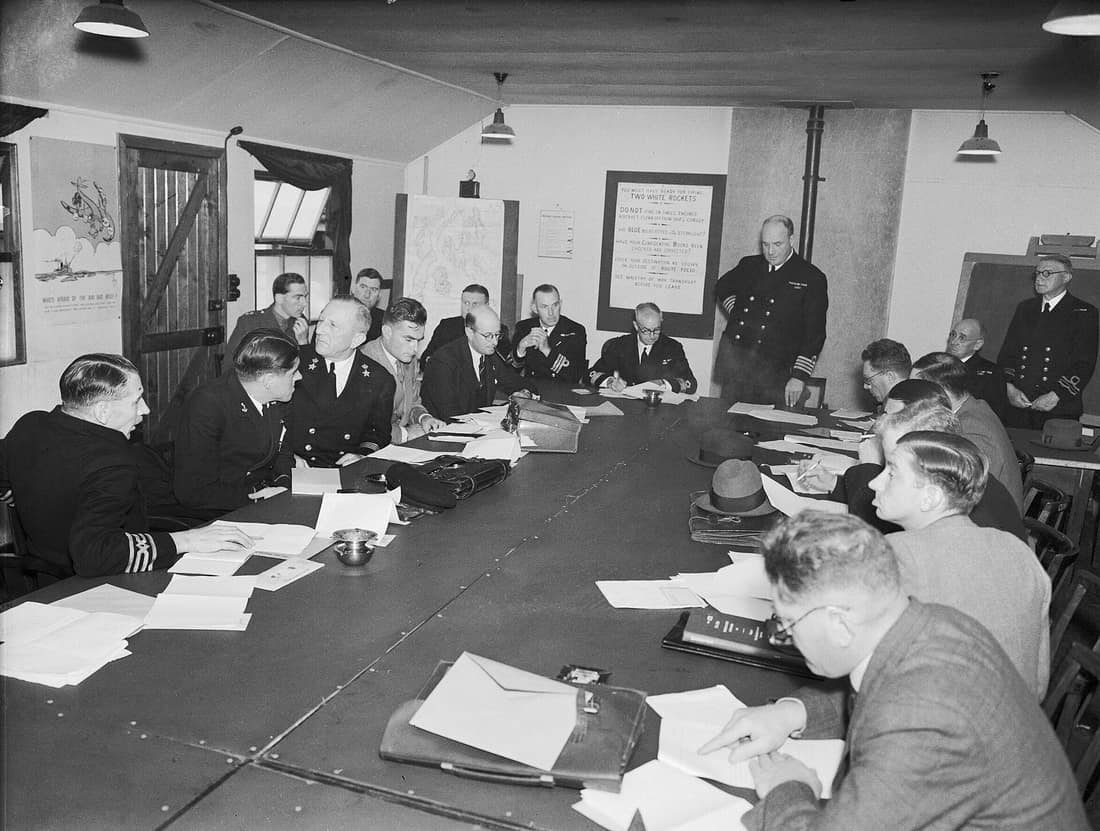
Ten hours after the declaration U-30 torpedoes the liner Athenia 250 miles north-west of Ireland, and 118 passengers and crew are lost. Convoy sailing begins at once from Halifax and Liverpool, but there are too few escorts to take a convoy further than about 200 miles out and 200 miles home. On 14 October U-47 works through the blockships into Scapa Flow and sinks the battleship Royal Oak at anchor.
— The happy time
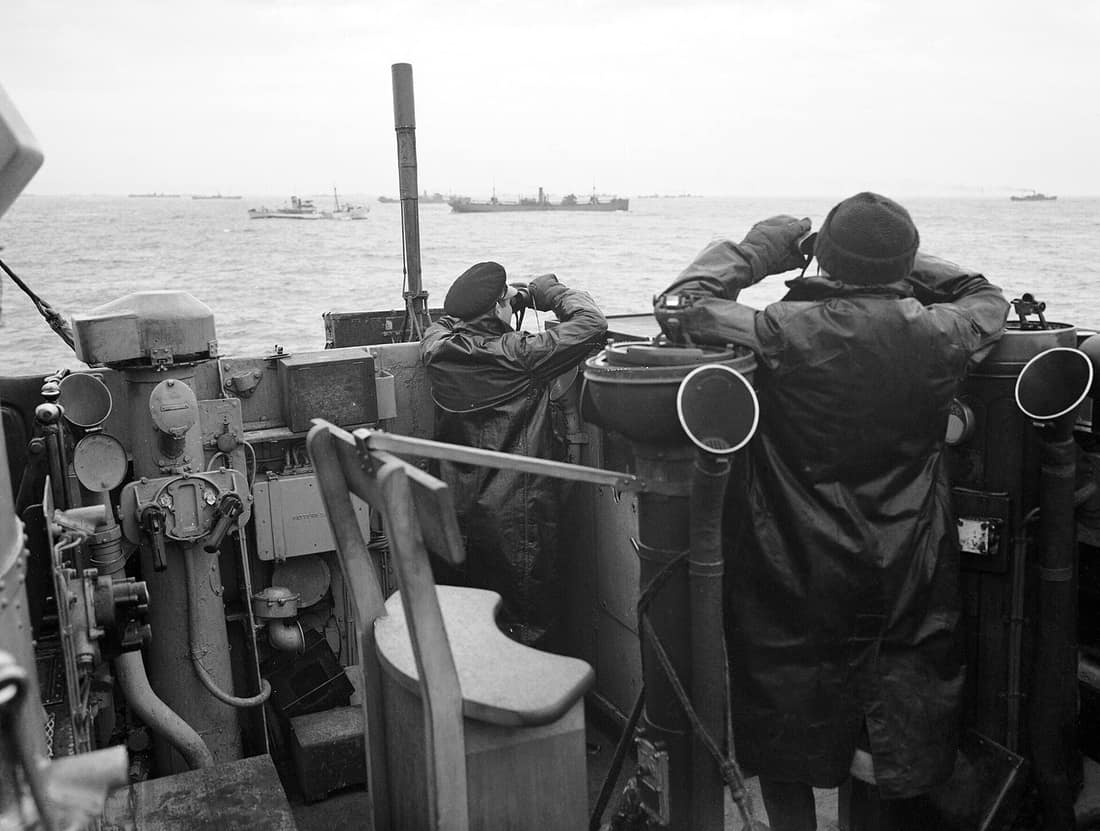
With France beaten the U-boats move to Lorient and St Nazaire and reach the convoy routes without the long passage round Scotland; from August the Condors of KG 40 fly from Bordeaux over the same water. Doenitz spreads his boats in patrol lines across the track and attacks on the surface at night, in packs, where asdic cannot hear them. Between the range of aircraft from Ulster, Iceland and Newfoundland lies the mid-ocean air gap, and in it a convoy is on its own.
— Drumbeat
Five long-range boats open Operation Paukenschlag off New York and Cape Hatteras, where the coast is still lit and ships sail alone and unrouted. In six months the U-boats sink some 500 ships in American waters, most of them tankers, for the loss of very few boats; the crews call it the second happy time. A coastal blackout and coastal convoy end it by July, and Doenitz takes his boats back to the mid-ocean.
— HX 229 and SC 122
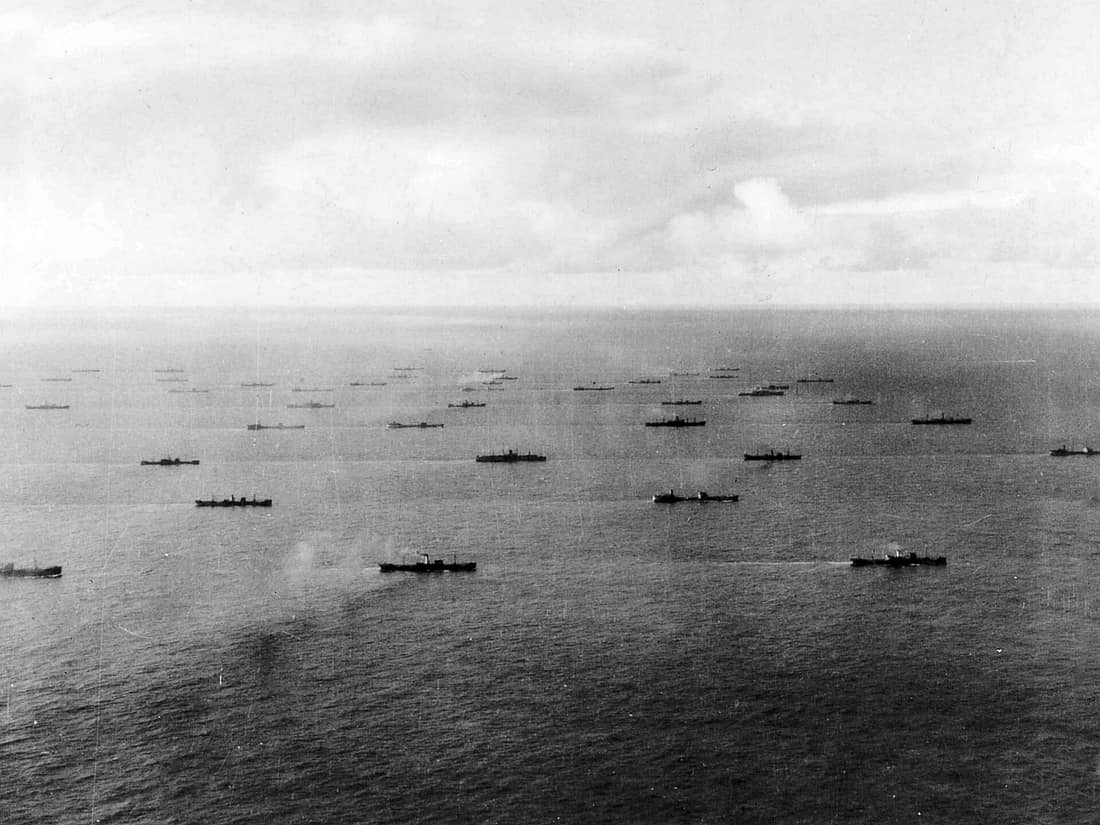
Forty boats of three patrol lines fall on the slow convoy SC 122 and the fast HX 229 in the air gap south-east of Cape Race. In four days 22 ships of 146,000 tons go down for the loss of one U-boat, the worst convoy defeat of the war, and the Admiralty afterwards admits that it doubted for a fortnight whether convoy could be held as a system. March costs 108 ships in all.
— Black May
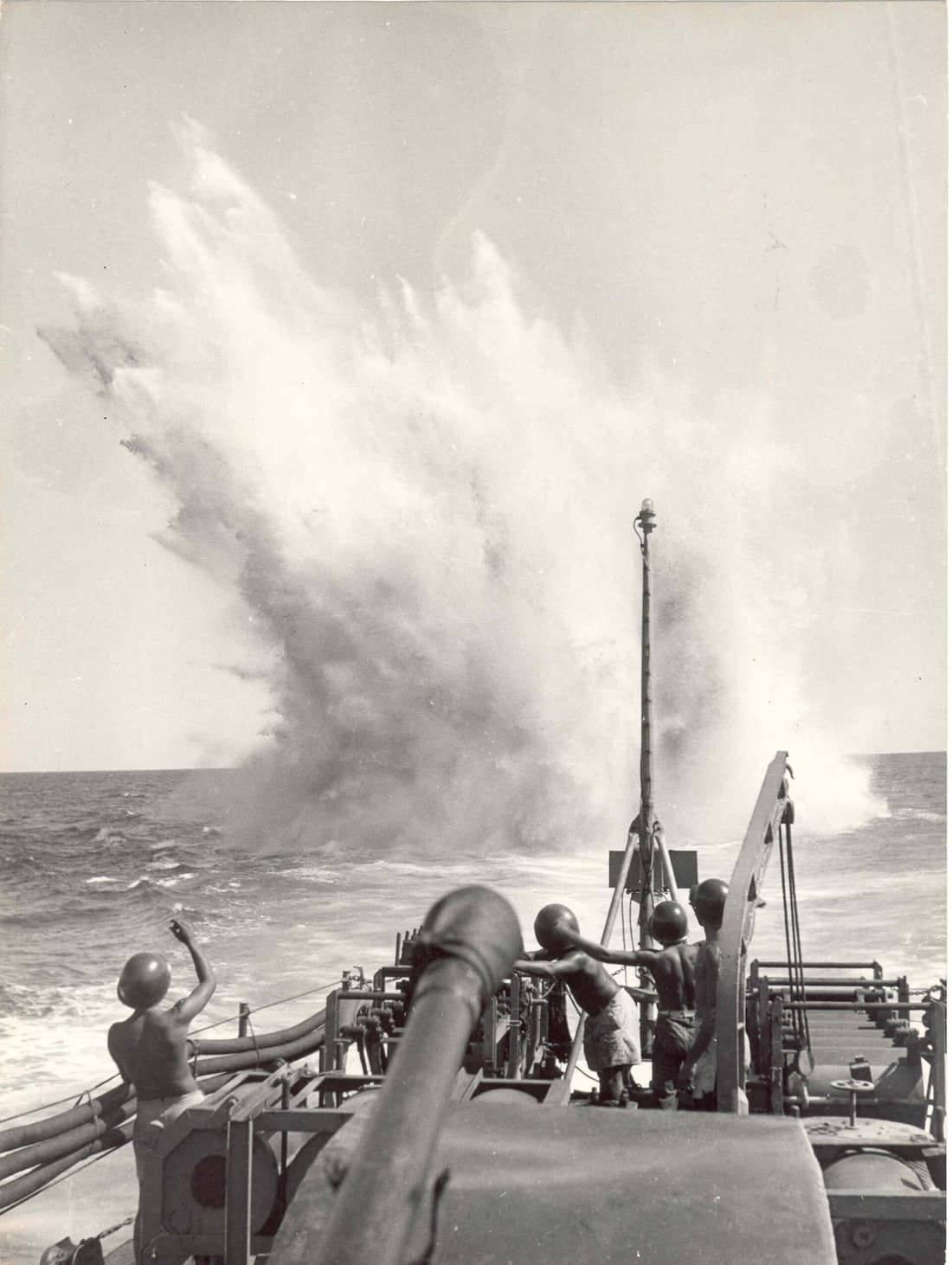
ONS 5, beaten about by fog and gales at the start of the month, loses 13 ships but sinks six U-boats around it. Through May 41 boats are lost, and on the 24th Doenitz orders the survivors out of the North Atlantic convoy routes. Very-long-range Liberators, escort carriers, support groups, 10-centimetre radar and the broken Enigma have between them closed the air gap, and no convoy is ever mauled that way again.
— The inshore campaign
The schnorchel lets a boat charge its batteries submerged, and the survivors give up the ocean for the shallows: the Minches, the Irish Sea, the Channel and the approaches to the Clyde and the Thames, where a periscope wake is lost in the ground return of the radar. They are hard to find and they sink few ships, and the convoys arrive. When the boats are ordered to surface and surrender on 8 May 1945 some 3,500 merchant ships and 783 U-boats have gone.

.jpg)

.jpg)