Western Europe · United Kingdom and United States vs Germany
Strategic bombing of Germany
15 May 1940 – 25 April 1945
RAF Bomber Command bombed Germany by night from May 1940 and the US Eighth Air Force by day from 1942, formalised as the Combined Bomber Offensive in 1943. Losses were severe until long-range escort fighters won air superiority in early 1944. The campaign destroyed much of Germany's cities and, in its last year, its oil and transport systems; around 400,000 German civilians died.
Explore Strategic bombing of Germany on the interactive map · Wikipedia
Day by day
— By night, and blind
Ninety-nine aircraft are sent to oil plants and railways in the Ruhr on the night of 15 May, the first raid east of the Rhine. For two years crews aim at what they cannot see: the Butt Report of August 1941 finds that of those claiming to have bombed, only one in three got within eight kilometres of the target, and over the Ruhr one in ten. Berlin, Mannheim and the Channel ports are attacked with the same accuracy.
— A thousand bombers
Harris takes over in February with the Area Bombing Directive behind him and scrapes together every aircraft and crew in the command, training units included, for a single blow. On the night of 30 May, 1,047 bombers attack Cologne in ninety minutes and burn out 240 hectares of it; 41 aircraft are lost. Essen and Bremen follow within the month, and the bomber stream and its concentration in time become the method for the rest of the war.
— The Ruhr and Hamburg
Oboe and H2S give Bomber Command a target it can find. The Battle of the Ruhr opens on Essen on 5 March and runs for five months over the Krupp works and the valley cities. In eight days at the end of July, Operation Gomorrah destroys Hamburg, the first use of Window blinding the German radar; the firestorm of 27 July kills most of the raid's 37,000 dead.
— Black Thursday
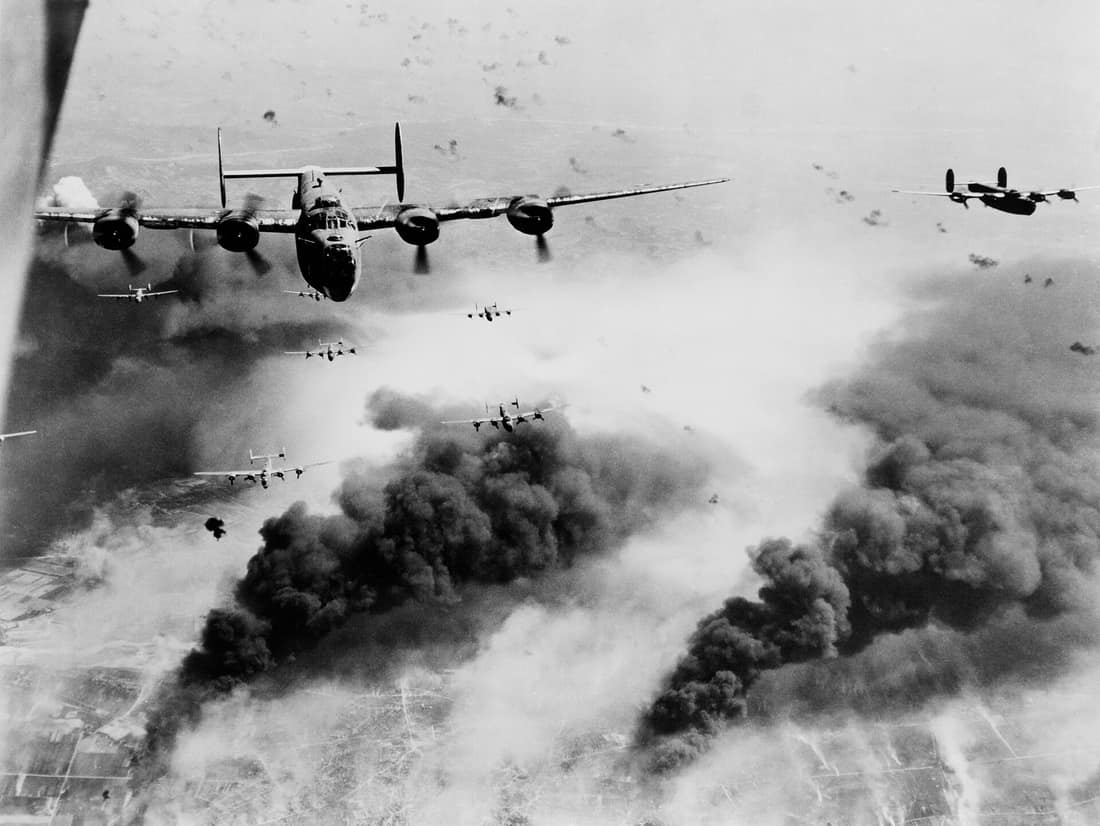
The Americans hold that a self-defending box of B-17s can bomb in daylight without escort. On 17 August 60 of 376 are lost attacking Schweinfurt and Regensburg; on 14 October a second Schweinfurt raid loses 60 more out of 291, a rate no force can stand. Deep daylight penetration is suspended until the escorts can go all the way. Bomber Command loses 1,047 aircraft in the same period.
— Big Week and oil
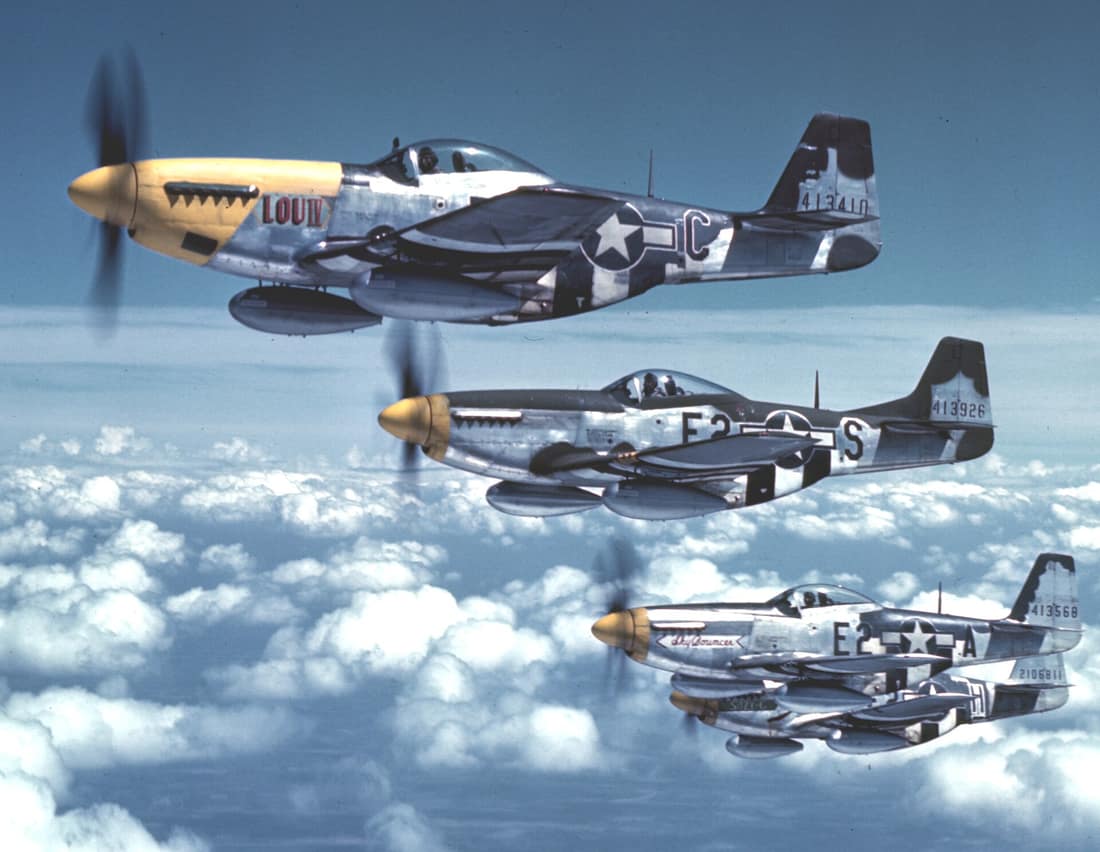
The P-51 can now reach Berlin and back, and the Americans go looking for the German fighter force with the bombers as bait. Six days from 20 February against the aircraft factories cost 226 heavy bombers and cost the Luftwaffe pilots it cannot replace. Bomber Command's own winter battle over Berlin ends on 30 March with 95 aircraft lost at Nuremberg. From May the weight goes onto the synthetic oil plants, and by the autumn German aviation fuel output has all but stopped.
— Dresden and after
With the Luftwaffe beaten and the German rail net the target, 796 Lancasters attack Dresden in two waves on the night of 13 February and the Eighth Air Force follows by day; about 25,000 people are killed in a city full of refugees. The last months are transport, oil and the northern ports, and Bomber Command's final major raid of the war goes to Berchtesgaden on 25 April. Some 400,000 German civilians are dead, and 55,573 men of Bomber Command.
![Captions and Titles from Published Works 2003: One of the most famous images of World War II shows The Sandman, piloted by Robert Sternfels, as it emerges from a pall of smoke during the TIDALWAVE mission.[1] 2002: The S](/photos/strategic-bombing-of-germany-1.jpg)

.jpg)