Western Europe · France, United Kingdom, Belgium and Netherlands vs Germany and Italy
Battle of France
10 May 1940 – 25 June 1940
Germany invaded the Netherlands, Belgium and Luxembourg on 10 May 1940, drawing the Allied field armies north while the main armoured thrust came through the Ardennes and crossed the Meuse at Sedan. The panzers reached the Channel in ten days, cutting off the northern armies. Paris fell on 14 June and France signed an armistice on 22 June.
Explore Battle of France on the interactive map · Wikipedia
Day by day
— Ten May
At dawn Germany attacks the Netherlands, Belgium and Luxembourg. Gliders land on the roof of Fort Eben-Emael and take the strongest work in Belgium in a morning. The Allies do exactly what is hoped of them and march their best armies north into Belgium, while forty-five divisions and seven of the ten panzer divisions file through the Ardennes behind them.
— The Meuse at Sedan
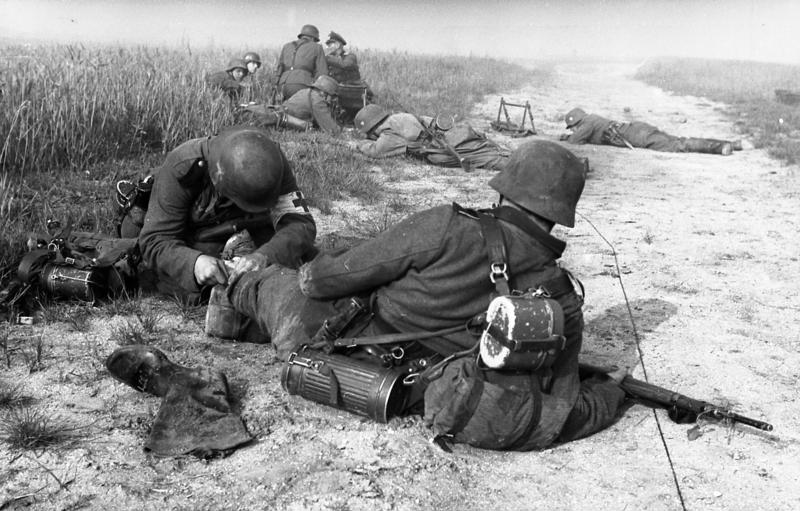
Three panzer corps reach the Meuse and force it the same afternoon, Guderian at Sedan, Reinhardt at Montherme and Rommel at Dinant, under an all-day bombardment by the Stukas. The French Ninth and Second Armies, second-line divisions holding what was thought impassable country, come apart. On the 14th Rotterdam is bombed and the Netherlands surrenders the next day.
— The corridor to the sea
The panzers turn west and run for the Channel, covering 350 kilometres in a week with their flanks in the air and their infantry days behind. The 2nd Panzer Division reaches Abbeville on the evening of the 20th. A million men of the northern armies, the BEF among them, are cut off from France.
— Dunkirk
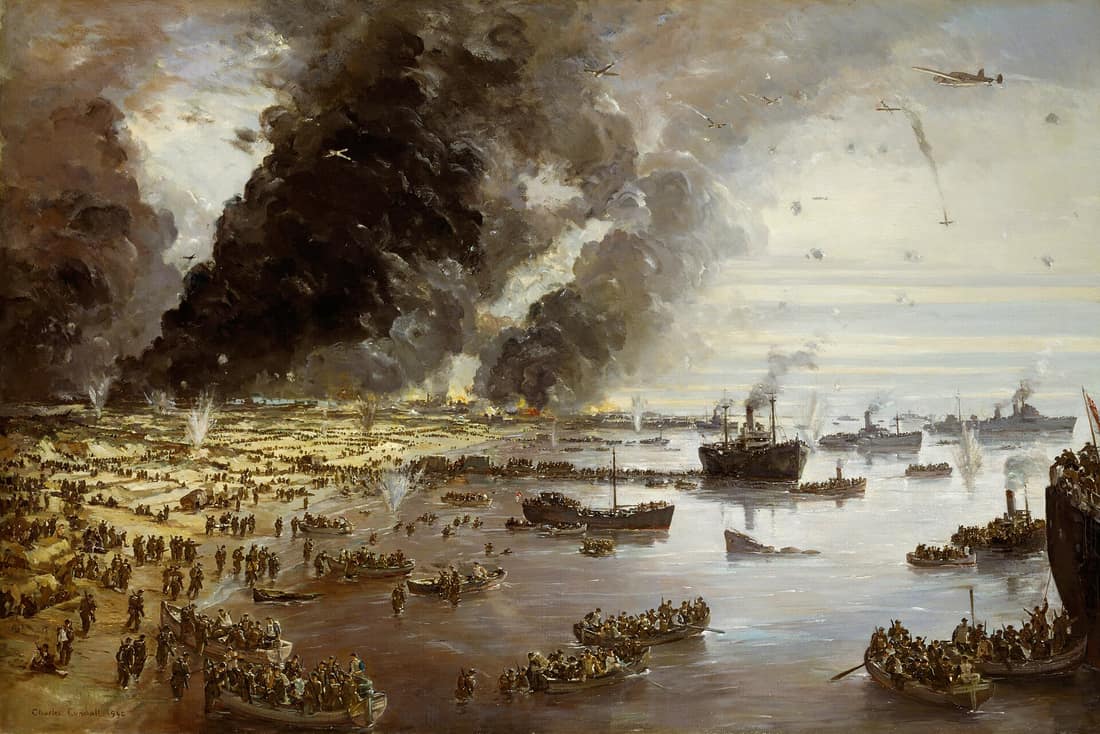
Belgium surrenders at four in the morning, uncovering the left of the pocket. The panzers have been halted short of Dunkirk since the 24th and the perimeter holds long enough for Operation Dynamo to work: 338,000 British and French soldiers are taken off the beaches and the mole by 4 June, without their guns, tanks or transport.
— Fall Rot
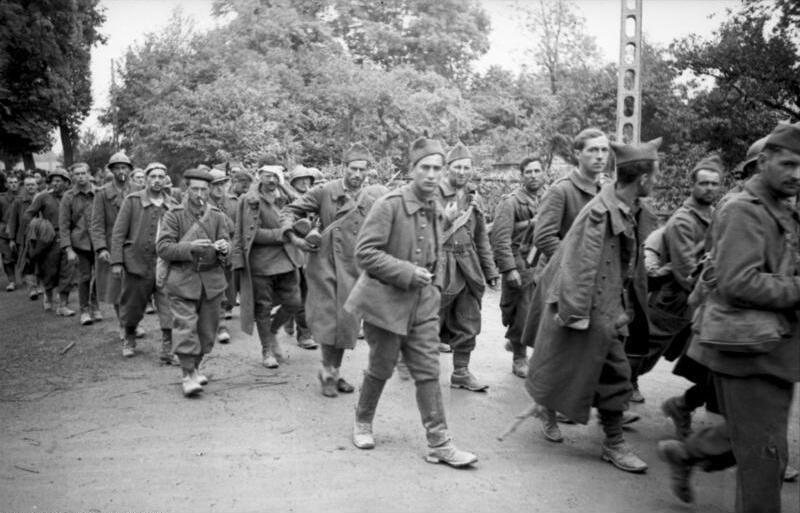
Weygand has sixty-odd divisions left to hold a line from the Channel to Switzerland and no reserve behind it. The Germans attack across the Somme and the Aisne on 5 June; the hedgehog defence holds for two days and then the armour is through in open country. The government leaves Paris on the 10th, the day Italy declares war.
— Compiegne
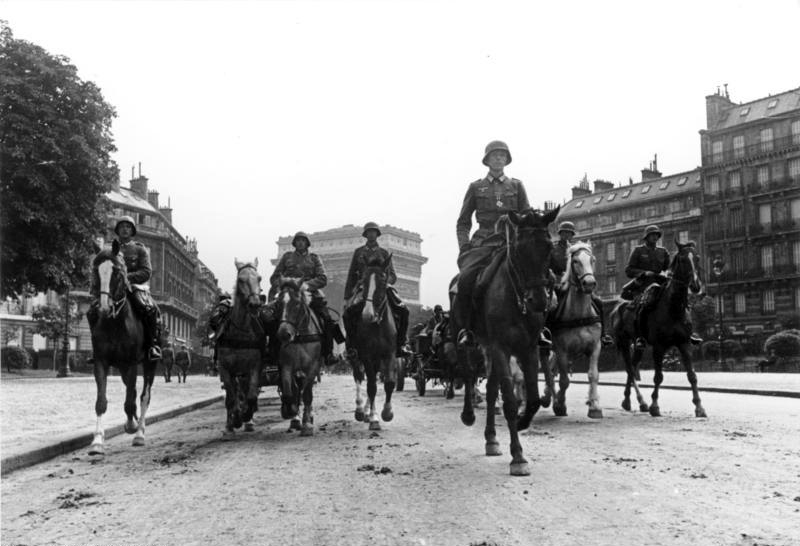
German troops enter Paris on 14 June, declared an open city and left undefended. The armies south of the Loire dissolve, Guderian reaches the Swiss frontier and the Maginot garrisons are taken from behind. Petain asks for terms; the armistice is signed on 22 June in the same railway carriage in which Germany signed in 1918, and takes effect on the 25th.