Western Europe · United Kingdom vs Germany
The Blitz
7 September 1940 – 11 May 1941
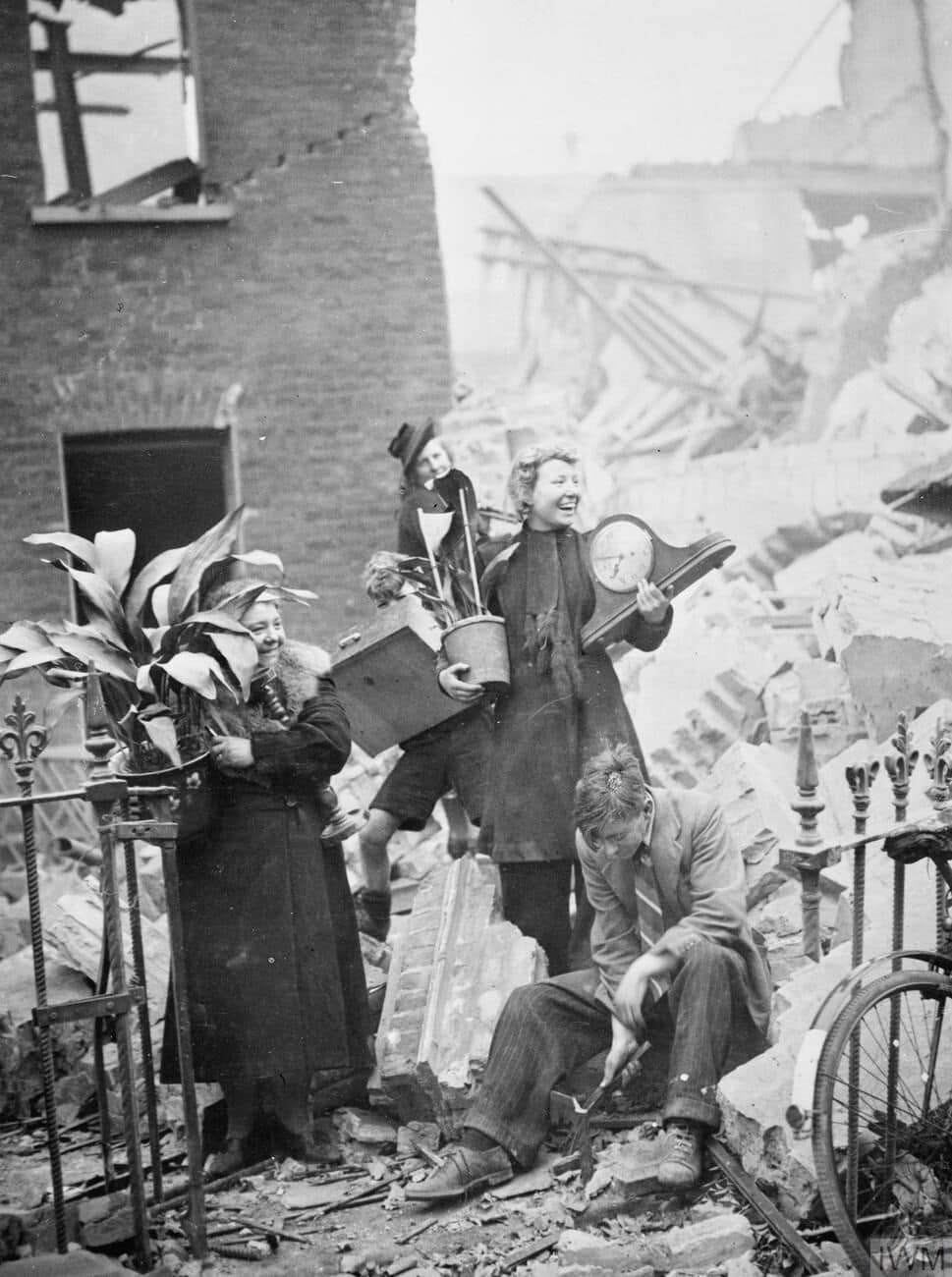
Night bombing of London and other British cities by the Luftwaffe over eight months. London was attacked on 57 consecutive nights from 7 September 1940; Coventry, Liverpool, Birmingham, Glasgow, Belfast and others followed. About 43,000 civilians were killed before the bombers moved east for the invasion of the Soviet Union.
Explore The Blitz on the interactive map · Wikipedia
Day by day
— Black Saturday
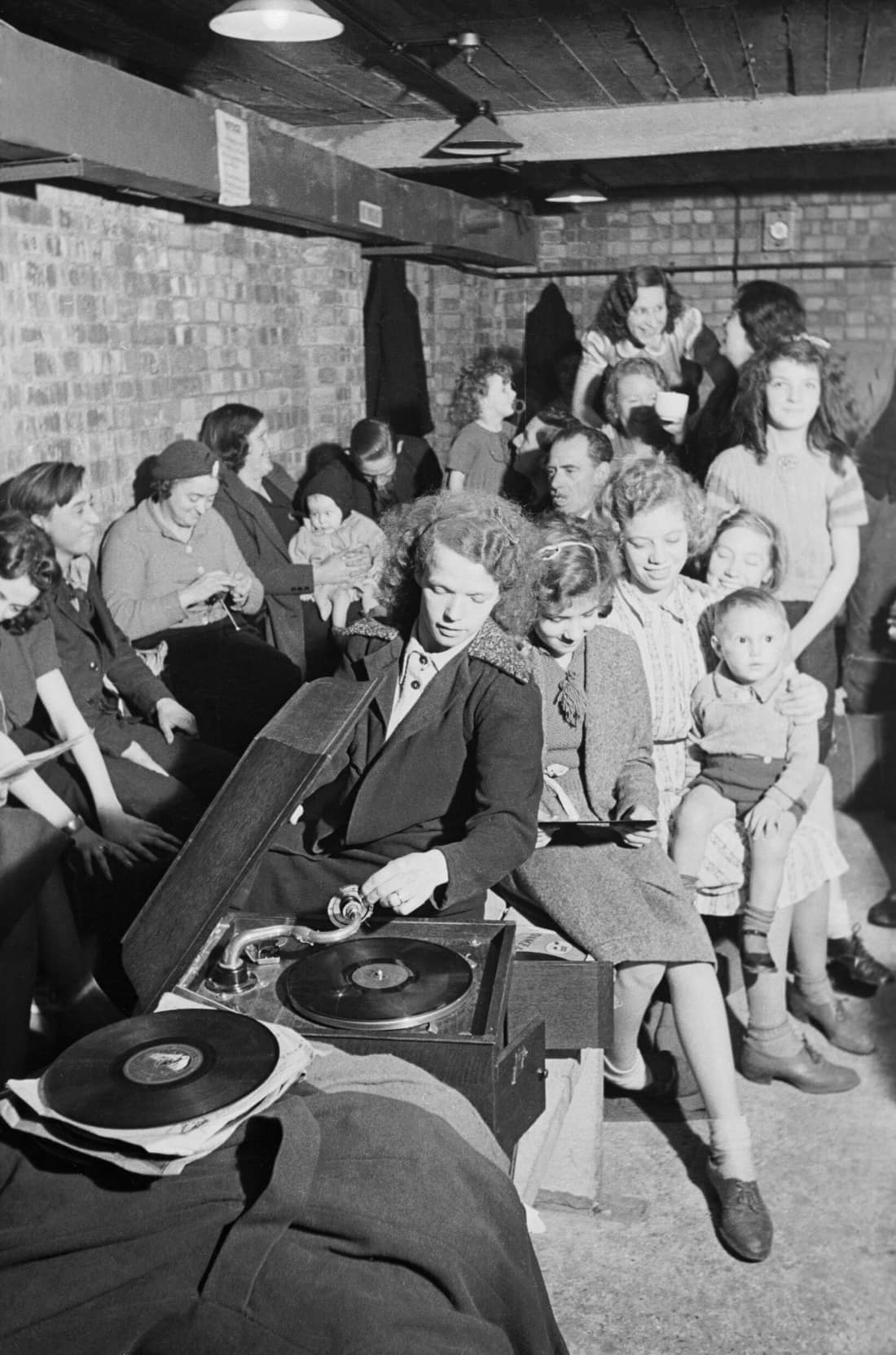
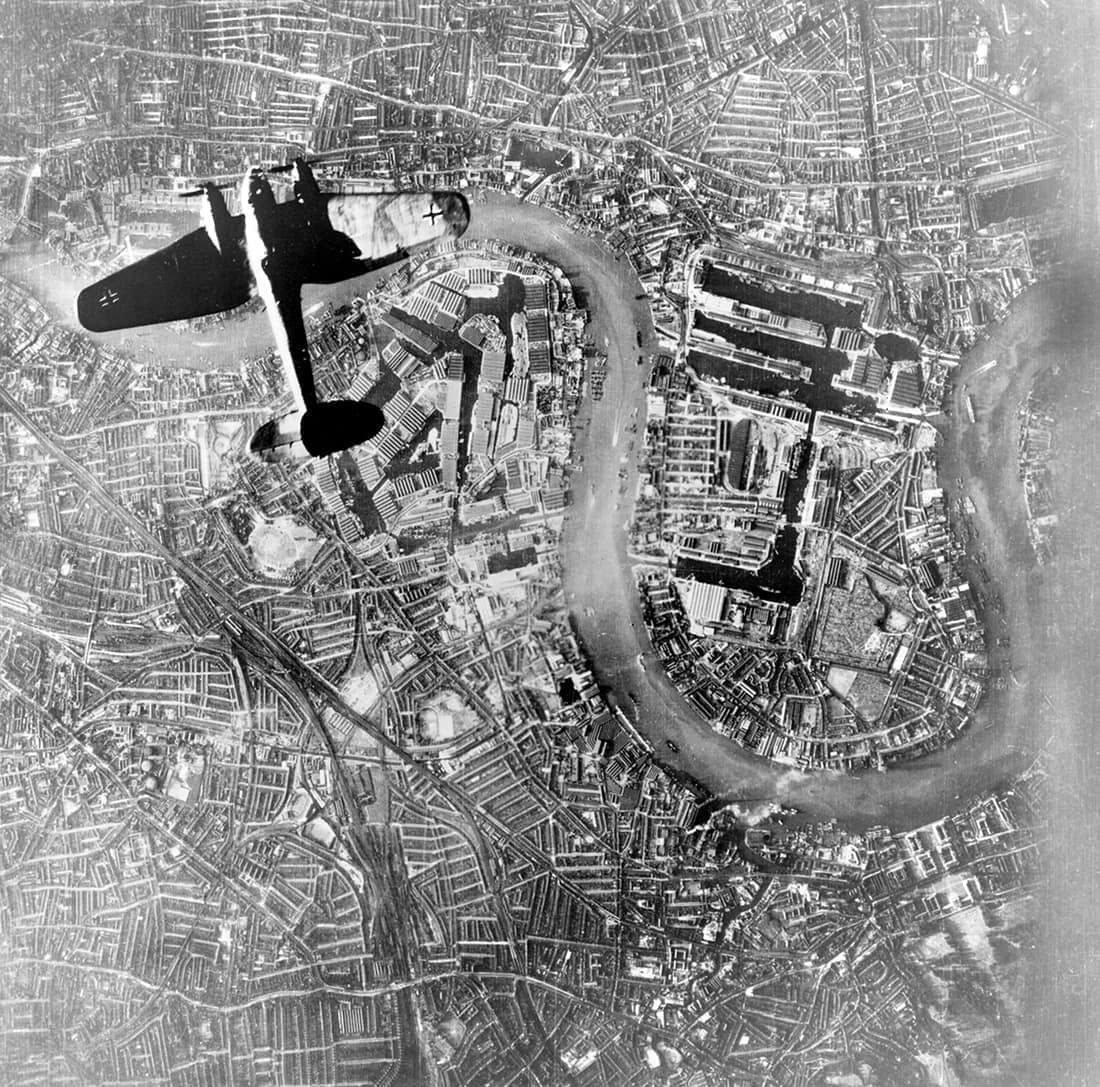
Nearly a thousand aircraft come up the Thames on the afternoon of 7 September and set the docks and the East End alight; 250 bombers return that night, guided by the fires. London is bombed on 57 consecutive nights. The shelters are the Underground stations the government had tried to keep closed, and the anti-aircraft guns can hit almost nothing in the dark.
— Coventry
Operation Moonlight Sonata sends 515 aircraft to Coventry on a clear night at full moon, led in by the pathfinders of KGr 100 flying down a radio beam from Vannes. The city centre and the cathedral burn out and the water mains are cut; 568 people are killed in a place of a quarter of a million. Southampton, Birmingham and Bristol follow within the fortnight.
— The Second Great Fire
A small force drops nearly 25,000 incendiaries on the City on a Sunday night, when the offices and warehouses are locked and empty and the Thames is at a low tide the fireboats cannot draw from. Eight Wren churches and the Guildhall burn; St Paul's is saved by its own watch. Nineteen fire crews are killed.
— The ports
From the spring the weight shifts to the Atlantic ports, to strangle the convoy trade. Clydebank is razed over the nights of 13 and 14 March: of 12,000 houses, seven are left undamaged and 35,000 people are made homeless. Belfast, with almost no guns and no shelters, loses about 900 people on 15 April, and Plymouth, Swansea and Merseyside are hit through the same weeks.
— The last night
Liverpool has just taken seven nights running, the worst provincial battering of the war. On 10 May 507 aircraft make the heaviest raid on London of the whole Blitz: 1,436 people are killed, the Chamber of the House of Commons is destroyed and 700 acres burn. Then the bombers go east for Barbarossa. About 43,000 civilians have been killed and the war production they were meant to stop has risen.

.jpg)