Mediterranean and North Africa · British Commonwealth and Ethiopian patriots vs Italy
East African campaign
10 June 1940 – 27 November 1941
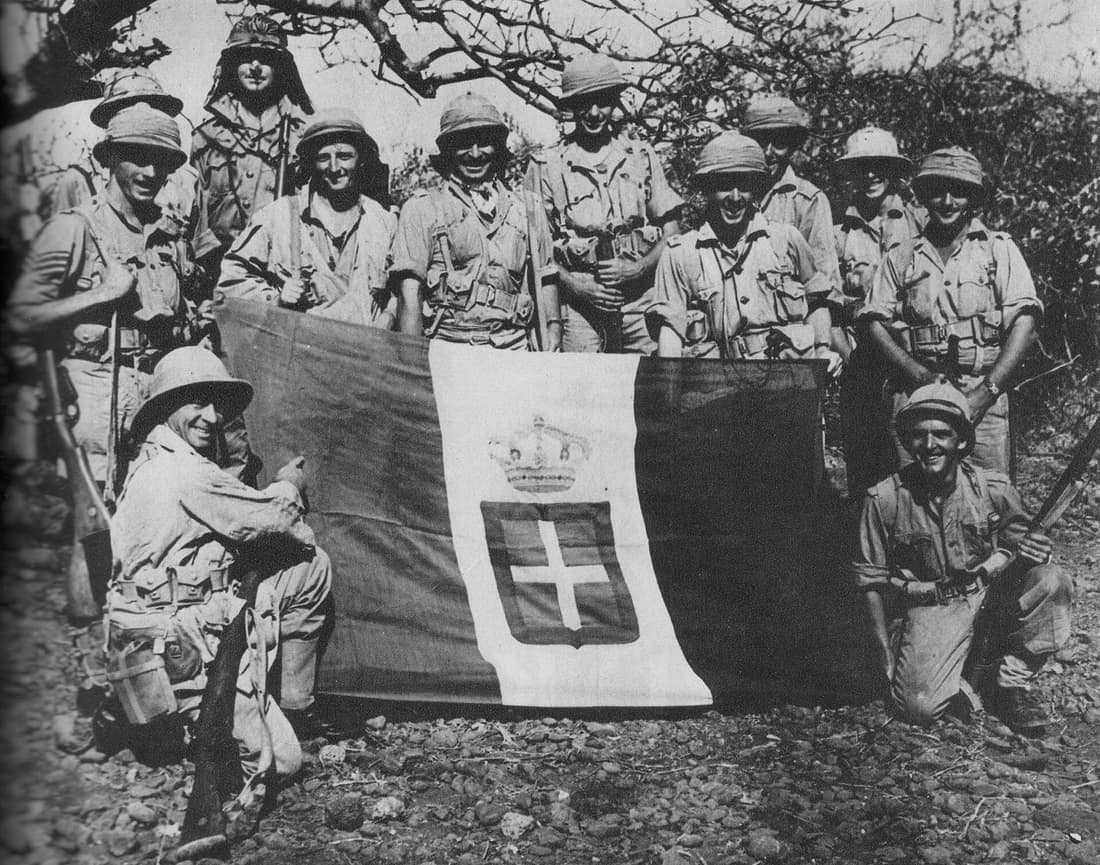
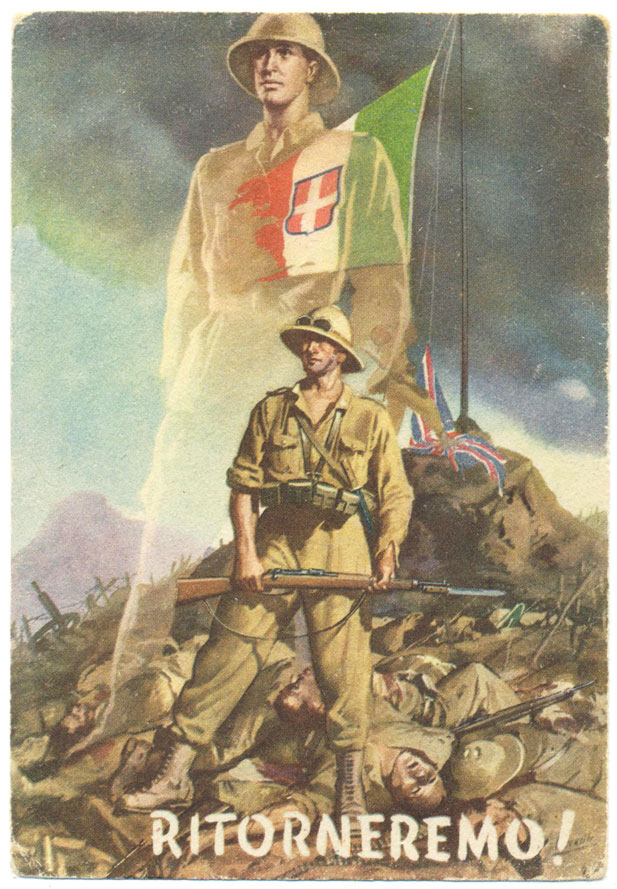
Italian forces in Eritrea, Ethiopia and Somaliland overran British Somaliland in 1940, then were destroyed by converging offensives from Sudan and Kenya in 1941. The hardest fighting was at Keren. Isolated Italian garrisons held out until Gondar fell in November 1941.
Explore East African campaign on the interactive map · Wikipedia
Day by day
— Italy's empire
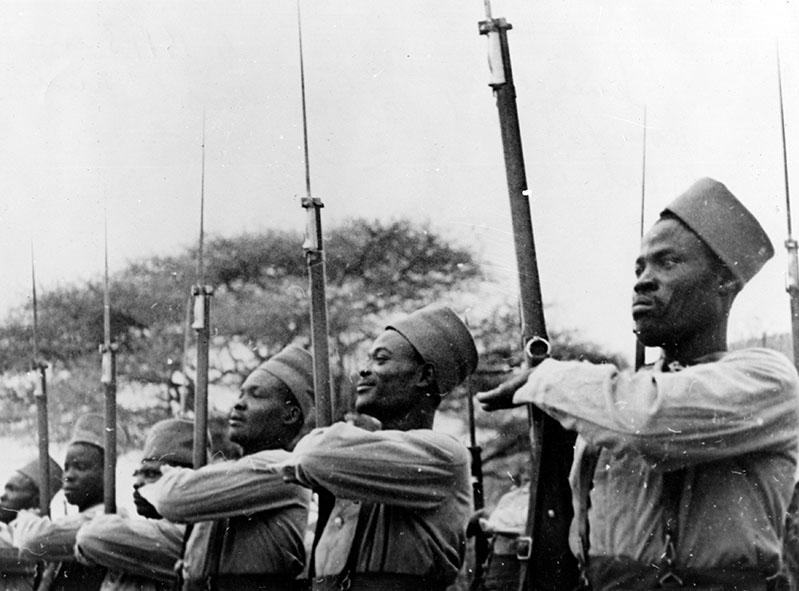
Italy enters the war with some 250,000 men in Eritrea, Ethiopia and Somaliland, most of them askari, and about 300 aircraft. Cut off from Italy by Suez, they can fight only with what is already in the country. Facing them across three frontiers are perhaps 20,000 British, Sudanese, Kenyan and Indian troops.
— British Somaliland
Kassala and Gallabat fell on 4 July and Moyale on the 15th. On 3 August Nasi led 25,000 men into British Somaliland; the garrison of about 4,000 held the Tug Argan gap for four days, then fell back on Berbera and was taken off to Aden by 19 August. It is Italy's only conquest of British territory in the war.
— Platt into Eritrea
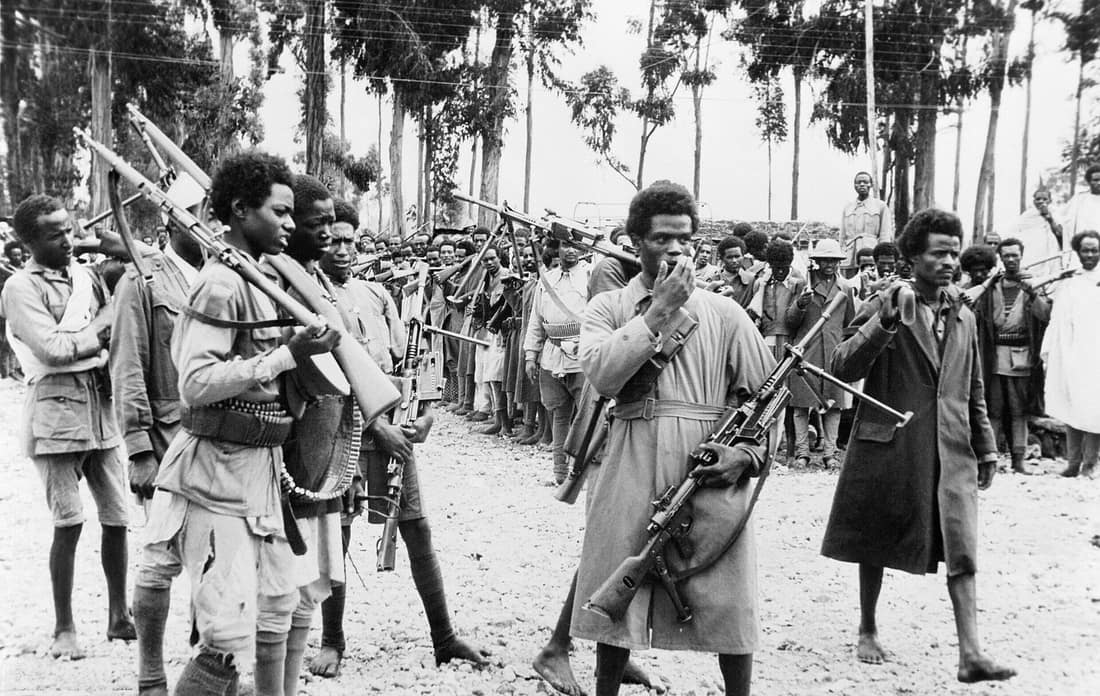
The Italians abandoned Kassala on 18 January and the 4th and 5th Indian Divisions follow them into Eritrea; Agordat and Barentu fall by 2 February and the road runs up into the mountains at Keren. On the 20th Haile Selassie crosses the frontier with Wingate's Gideon Force. From Kenya, Cunningham's African and South African divisions are moving on the Juba.
— Keren falls
The 4th and 5th Indian Divisions have been fighting for the peaks above Keren since 5 February; the second assault opened on 15 March and the Italians withdraw on the 27th after losing about 3,000 dead. In the south Cunningham took Kismayu on 14 February, Mogadishu on the 25th and Harar yesterday, an advance of 1,700 kilometres. Berbera was retaken from Aden on 16 March.
— Amba Alagi
Asmara fell on 1 April, Addis Ababa on the 6th and Massawa on the 8th; Haile Selassie re-entered his capital on 5 May, five years to the day after the Italians. The Duke of Aosta, pressed from north and south on the 3,400-metre Amba Alagi, surrenders with 7,000 men and the honours of war. Gazzera in the south-west and Nasi at Gondar fight on.
— Gondar
Gazzera gave up in the south-west in July. Nasi's 40,000 at Gondar, ringed by patriots, held out through the rains; the Wolchefit pass fell on 28 September and Kulkaber on 21 November. On the 27th the 12th African Division and the patriots take Gondar itself. Italy's East African empire has lasted five and a half years.