Mediterranean and North Africa · Germany vs British Commonwealth and Greece
Battle of Crete
20 May 1941 – 1 June 1941
German paratroops and glider troops took Crete in the first mainly airborne invasion in history. Losses were so heavy that Hitler never again attempted a large airborne operation. The Royal Navy lost three cruisers and six destroyers keeping the sea and evacuating the garrison.
Explore Battle of Crete on the interactive map · Wikipedia
Day by day
— The drop
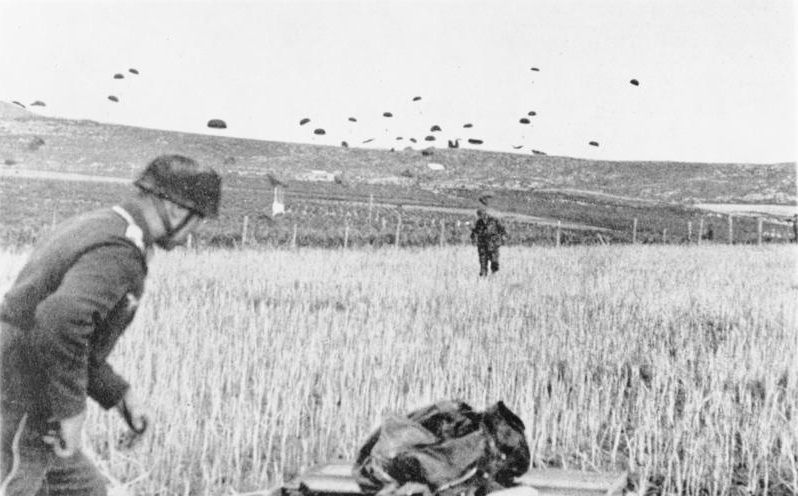
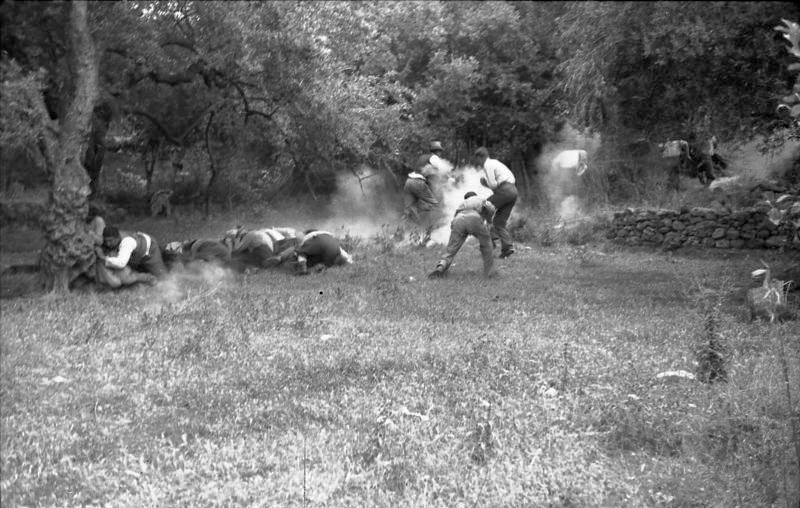
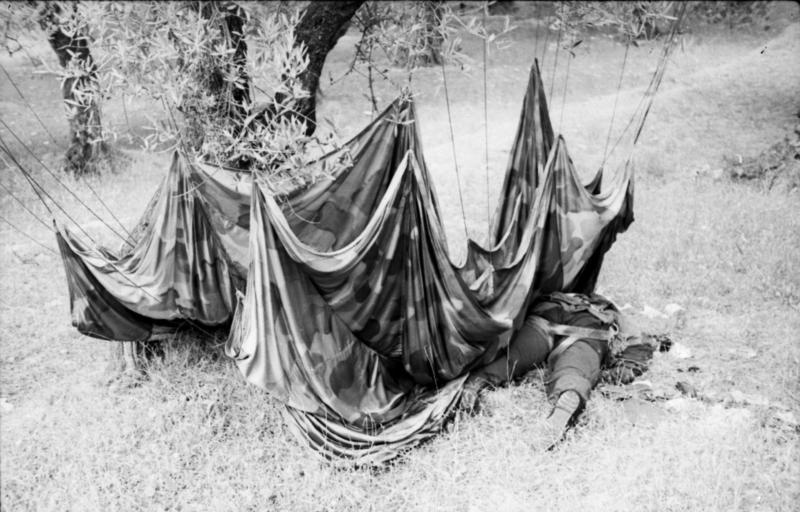
Gliders and parachutes came in over Maleme and the Prison Valley at 08:00 and over Rethymno and Heraklion in the afternoon, 10,000 men in the day. Freyberg had 42,000 troops on the island, most of them taken off Greece three weeks earlier without their guns or transport, and he had been reading the German plan for a fortnight through Ultra. The Sturmregiment lost a third of its strength in the first hours, the Greek gendarmerie and armed civilians fought the drop at Kastelli and Heraklion, and by dark not one airfield had been taken.
— Maleme
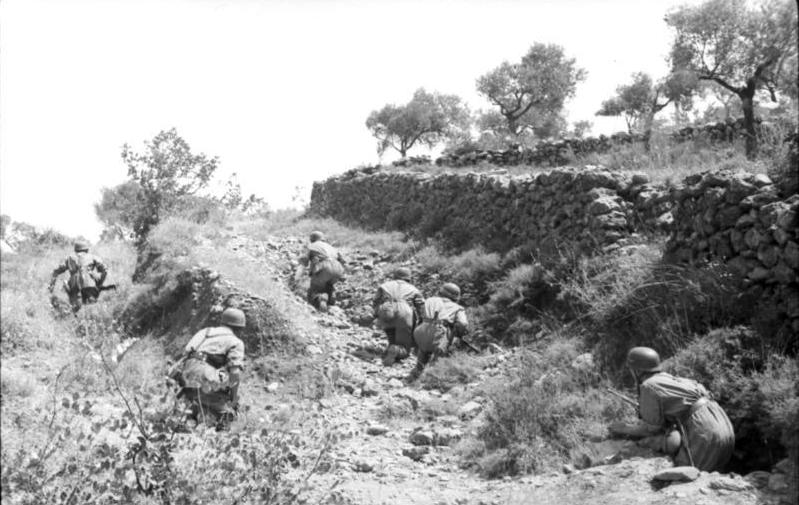
The 22nd Battalion, out of touch with its brigade and believing its flanks gone, came off Hill 107 in the night, and by morning the Germans had the airfield and the ridge above it. Ju 52s began landing the 5th Mountain Division under shellfire from 17:00, wrecking aircraft as they came but putting men ashore faster than they could be killed. That night Force D destroyed the caique convoy carrying the mountain troops by sea north of Chania and drowned some 300 of them.
— The Navy's day
The New Zealand counter-attack on Maleme went in at 03:30, four hours late, and was stopped short of the airfield by daylight and the Stukas. Off the Kythera Strait the fleet, out of anti-aircraft ammunition, lost the cruisers Gloucester and Fiji and the destroyer Greyhound in a single afternoon; Kelly and Kashmir followed on the 23rd. No German landed on Crete by sea, and the price for that was three cruisers and six destroyers sunk over ten days.
— Over the mountains
Galatas was lost and retaken by a bayonet charge on the 25th and then given up; on the 27th the Maoris and the Australians broke a pursuing battalion at 42nd Street behind Souda. That evening Freyberg was told to evacuate, and the army began climbing the White Mountains by the one road to Sphakia on the south coast, 50 kilometres away and 1,200 metres up. The garrisons at Rethymno and Heraklion, still holding their ground, could not be told in time; Heraklion was taken off by sea and Rethymno was left.
— Sphakia
Four nights of destroyers took 16,500 men off the beach at Sphakia; on 1 June the last ships had gone and about 5,000 men left on the shore surrendered. Crete cost the British 1,700 dead, 12,000 prisoners and nine ships, and the Germans some 4,000 dead, 220 aircraft and the parachute arm they had built; Hitler never mounted a large airborne operation again. Cretan civilians who had fought with rifles from the last war were shot in reprisal at Kondomari and Kandanos.