Pacific · United States vs Japan
Battle of Guam
21 July 1944 – 10 August 1944
Guam, an American possession lost in December 1941, was retaken by the 3rd Marine Division, 1st Provisional Marine Brigade and 77th Infantry Division after the longest preliminary bombardment of the Pacific war. The Japanese counterattack against the beachheads failed in the first week and the rest of the fighting was a pursuit into the northern jungle. The island became the main forward base of the Pacific Fleet.
Explore Battle of Guam on the interactive map · Wikipedia
Day by day
— Asan and Agat
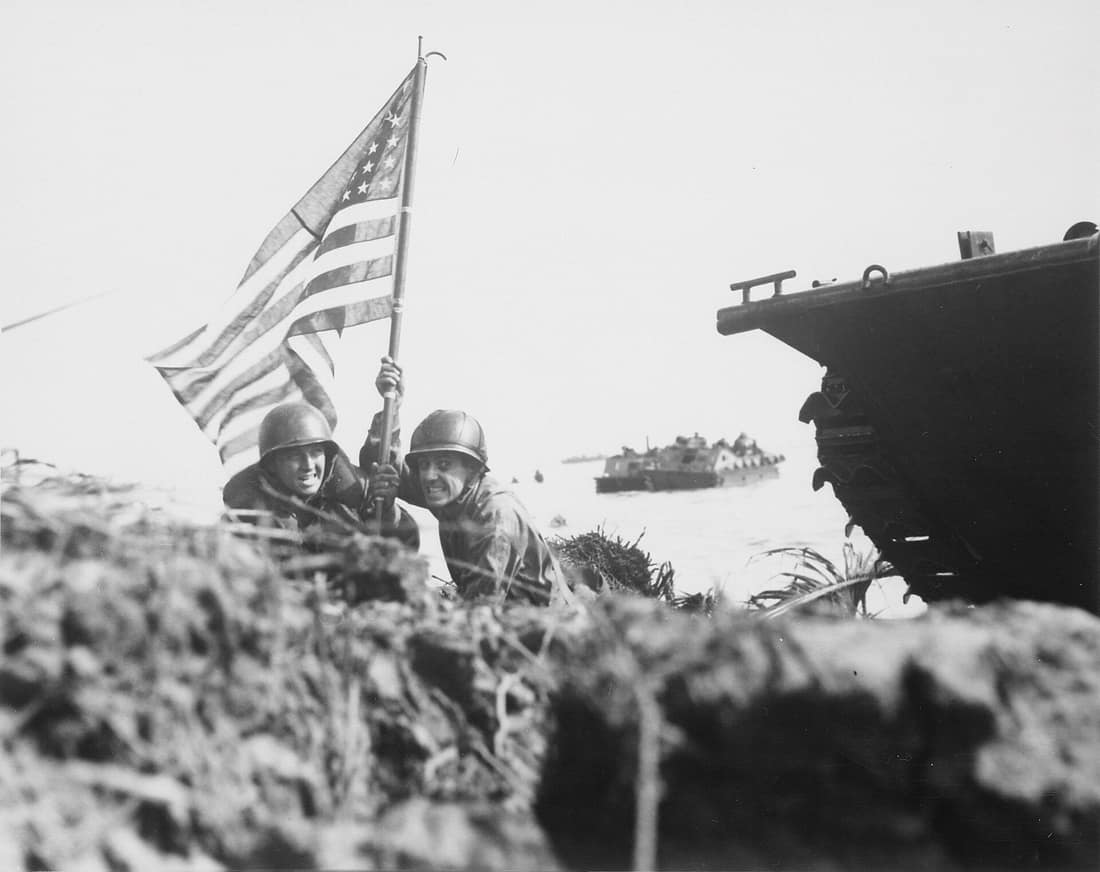
Thirteen days of naval and air bombardment, the longest of the Pacific war, go in before the landings at 08:29. The 3rd Marine Division comes ashore at Asan under cliffs the Japanese call the Amphitheatre; the 1st Provisional Marine Brigade lands at Agat six kilometres south, with the Orote peninsula and its airfield between them. Both lodgements are shallow by dark and the 77th Division starts coming in behind the southern one.
— The counter-attack
Takashina throws what he has at the Asan beachhead in the dark of 25 July, seven battalions coming down the ravines onto the Fonte Plateau, some of them drunk; a party gets as far as the 3rd Division's hospital before it is killed. On the Orote peninsula the garrison charges out of the mangroves at the brigade's line with much shouting and loses about 400 men. By morning the Japanese have spent their organised strength for the loss of some 3,500 dead.
— Orote
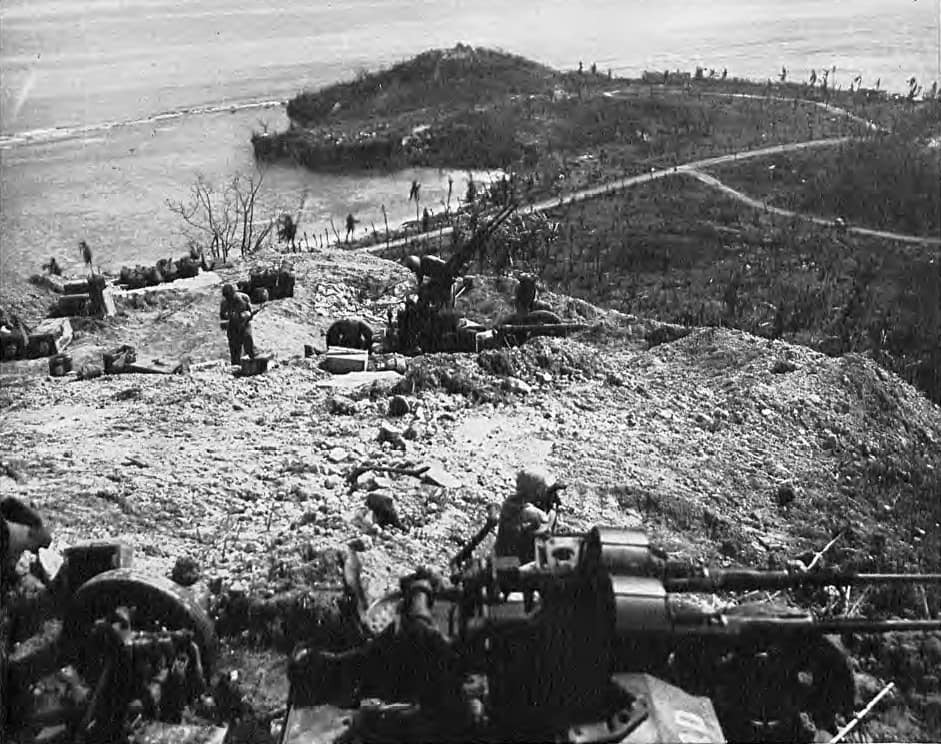
The two beachheads join along the Mount Tenjo road on 28 July and Takashina is killed the same day. The brigade cuts across the neck of the Orote peninsula and clears it by the 29th; the flag goes up over the old Marine barracks on the 29th, and the airfield is in use within a week. Agana, or what is left of it, is entered on 31 July.
— Barrigada
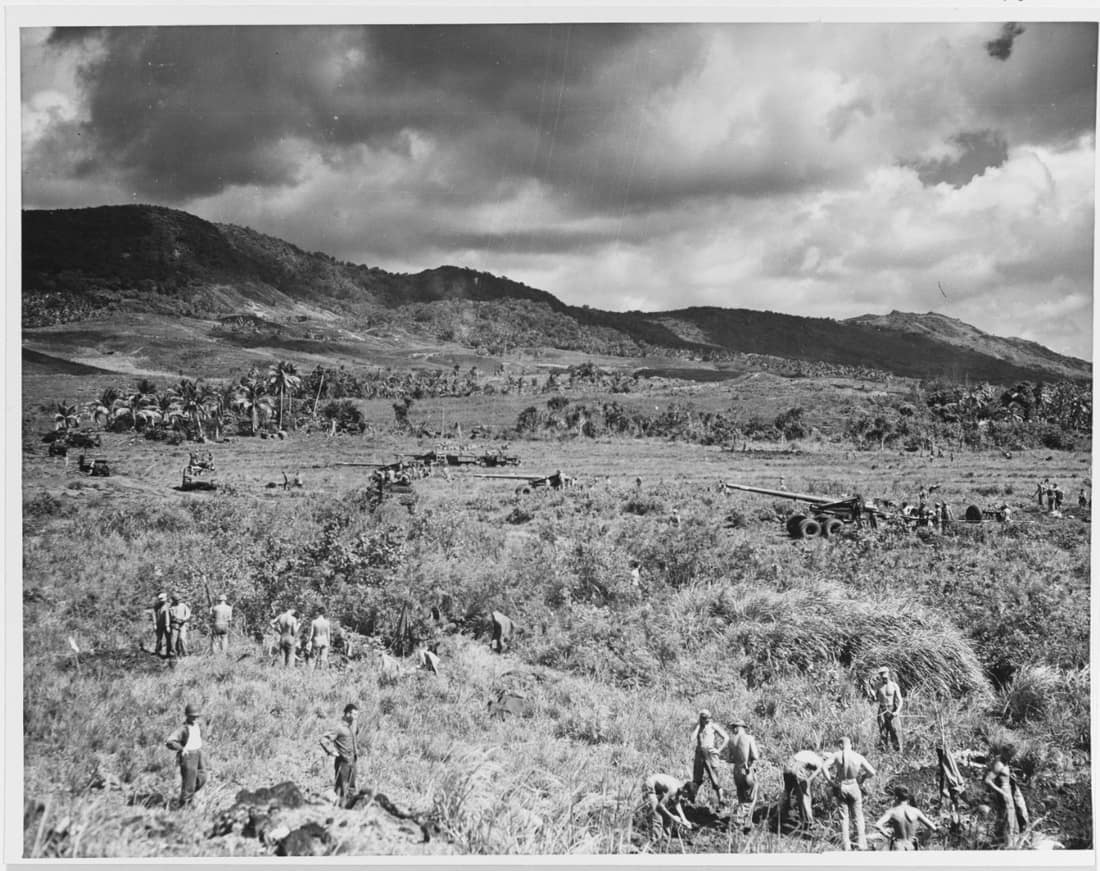
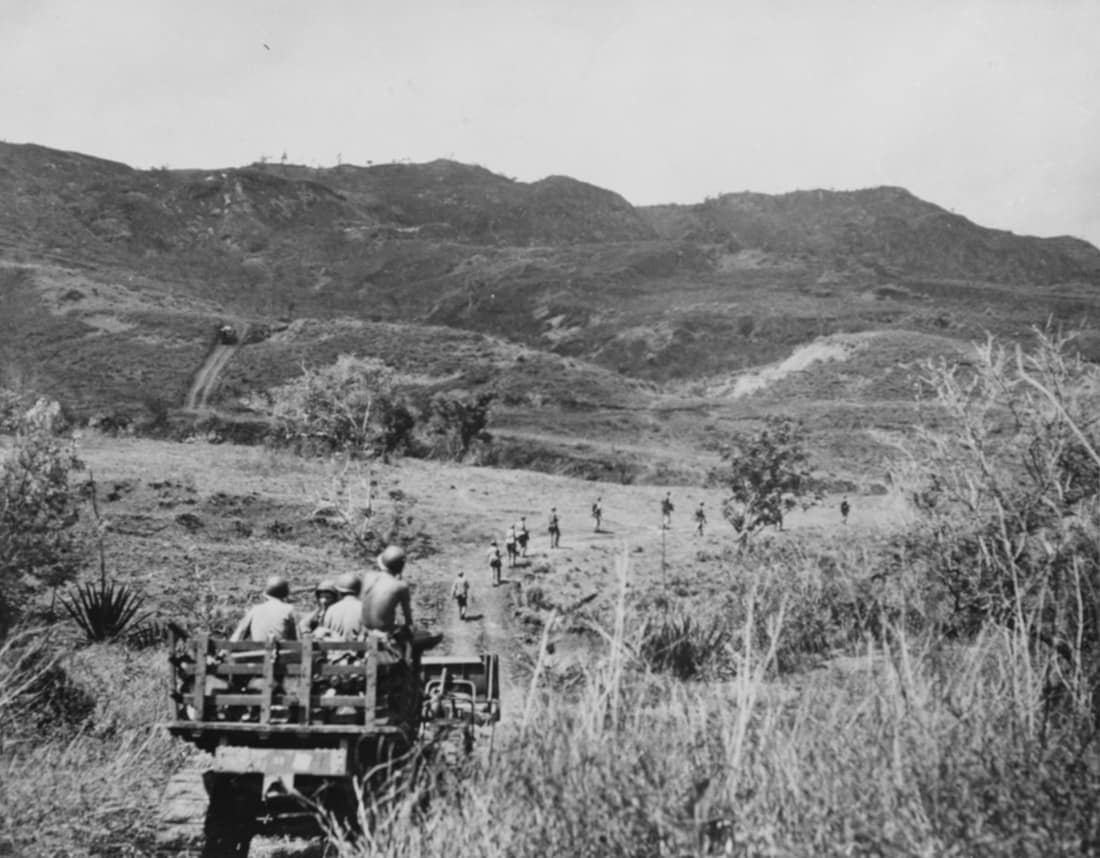
What is left of the garrison falls back on Mount Santa Rosa in the north-east, and the pursuit becomes a march up a narrowing island with the 3rd Marine Division on the left and the 77th on the right. Mount Barrigada, with the island's water supply on it, is taken on 4 August after two days. Rain, mud and a shortage of maps slow the advance more than the Japanese do.
— The north
The 77th takes Mount Santa Rosa on 8 August after a tank action at Yigo, and the Marines reach the cliffs at Ritidian and Pati Points. Organised resistance ends on 10 August at 11:31. About 18,500 Japanese are dead and 1,250 Americans; several thousand men are still in the bush, and Sergeant Shoichi Yokoi comes out of it in 1972. Guam becomes the forward base of the Pacific Fleet and, from November, a B-29 field.