Eastern Front · Germany vs Soviet Union
Battle of Kiev
7 July 1941 – 26 September 1941
Hitler turned Guderian's panzers south from the Moscow axis to meet Kleist's group driving north from Kremenchug, trapping the Soviet Southwestern Front east of Kiev. Stalin refused permission to withdraw until too late. Over 600,000 Soviet soldiers were killed or captured in the largest encirclement of the war.
Explore Battle of Kiev on the interactive map · Wikipedia
Day by day
— Before Kiev
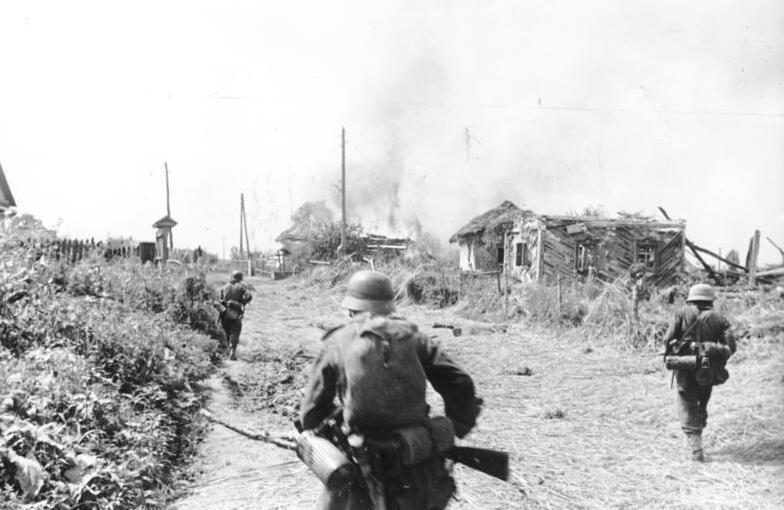
Panzer Group 1 broke through the old fortified line near Zhitomir and is 130 kilometres from Kiev; the Sixth Army follows it up. The Soviet 5th Army counterattacks out of the Pripet marshes into the German flank and keeps doing so for two months, which is why Hitler starts thinking about the Ukraine rather than Moscow.
— Guderian turns south
Panzer Group 2 gives up the Moscow road and drives south across the Desna at Novgorod-Seversky. Yeremenko's Bryansk Front is told to stop it and cannot. The Soviet line still holds the Dnieper and a bridgehead round Kiev itself, and Stalin refuses to hear of giving the city up.
— Kremenchug
Kleist's Panzer Group 1 breaks north out of the Kremenchug bridgehead, which the Soviet command had thought too weak to matter. Guderian is 200 kilometres away at Romny coming the other way. Budenny asks for permission to pull the front back that day and is sacked for it.
— Lokhvitsa
The 3rd Panzer Division from the north and the 16th Panzer from the south meet at Lokhvitsa in the afternoon, 200 kilometres east of Kiev. Four Soviet armies are inside. Stavka authorises a withdrawal on the night of the 17th, by which time there is nowhere to withdraw to and no radios left to order it with.
— Kiev occupied
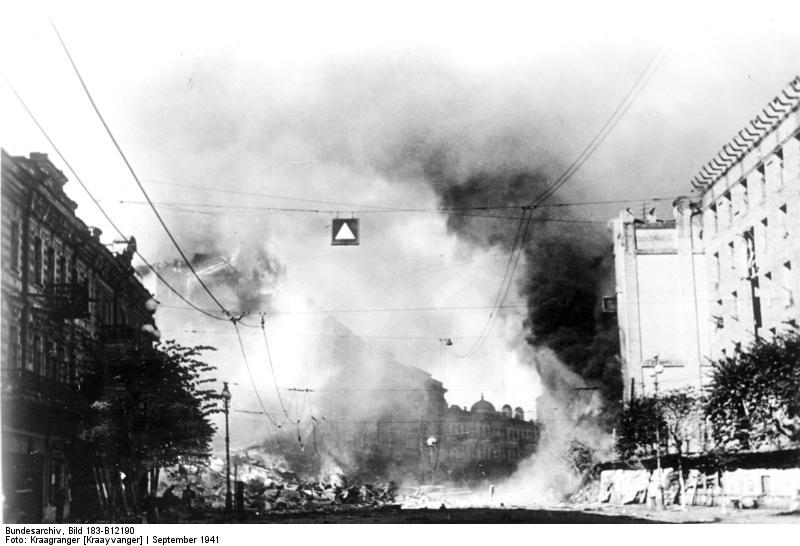
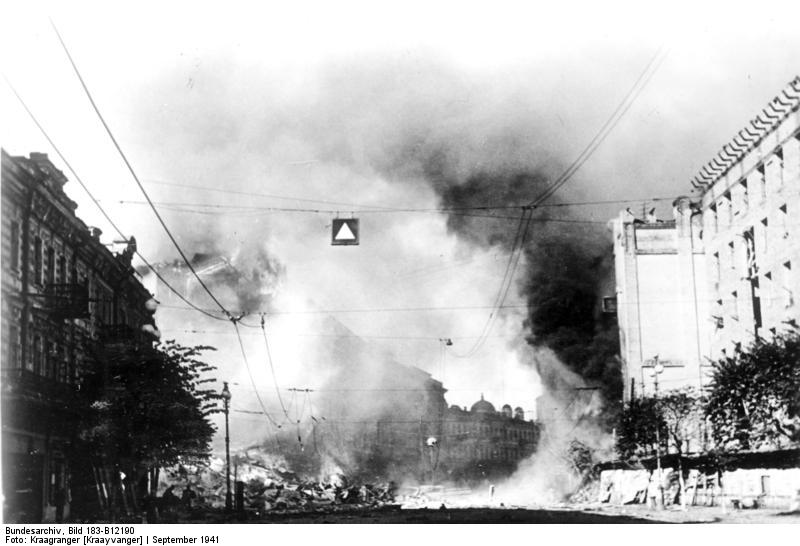
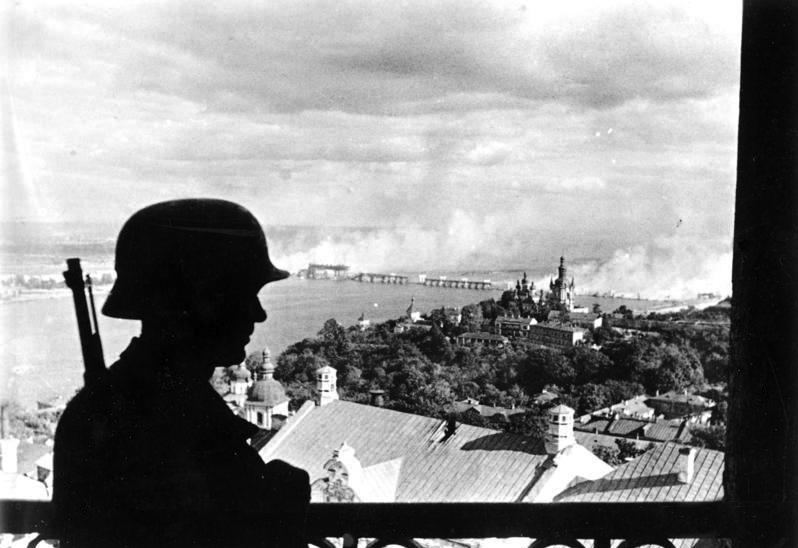
The Sixth Army enters Kiev on the 19th. Mines laid by the NKVD blow up the Kreshchatik five days later and burn out the centre of the city. On 29 and 30 September Sonderkommando 4a and its auxiliaries shoot 33,771 Jews at Babi Yar on the edge of the city.
— The pocket ends
The last organised resistance stops on 26 September. The Germans count 665,000 prisoners; the Soviet Union puts its own losses at about 700,000 killed, wounded and captured. Kirponos was killed breaking out at the Shumeykovo grove near Lokhvitsa on the 20th, along with most of his staff.