Eastern Front · Germany and Axis allies vs Soviet Union
Operation Barbarossa
22 June 1941 – 5 December 1941
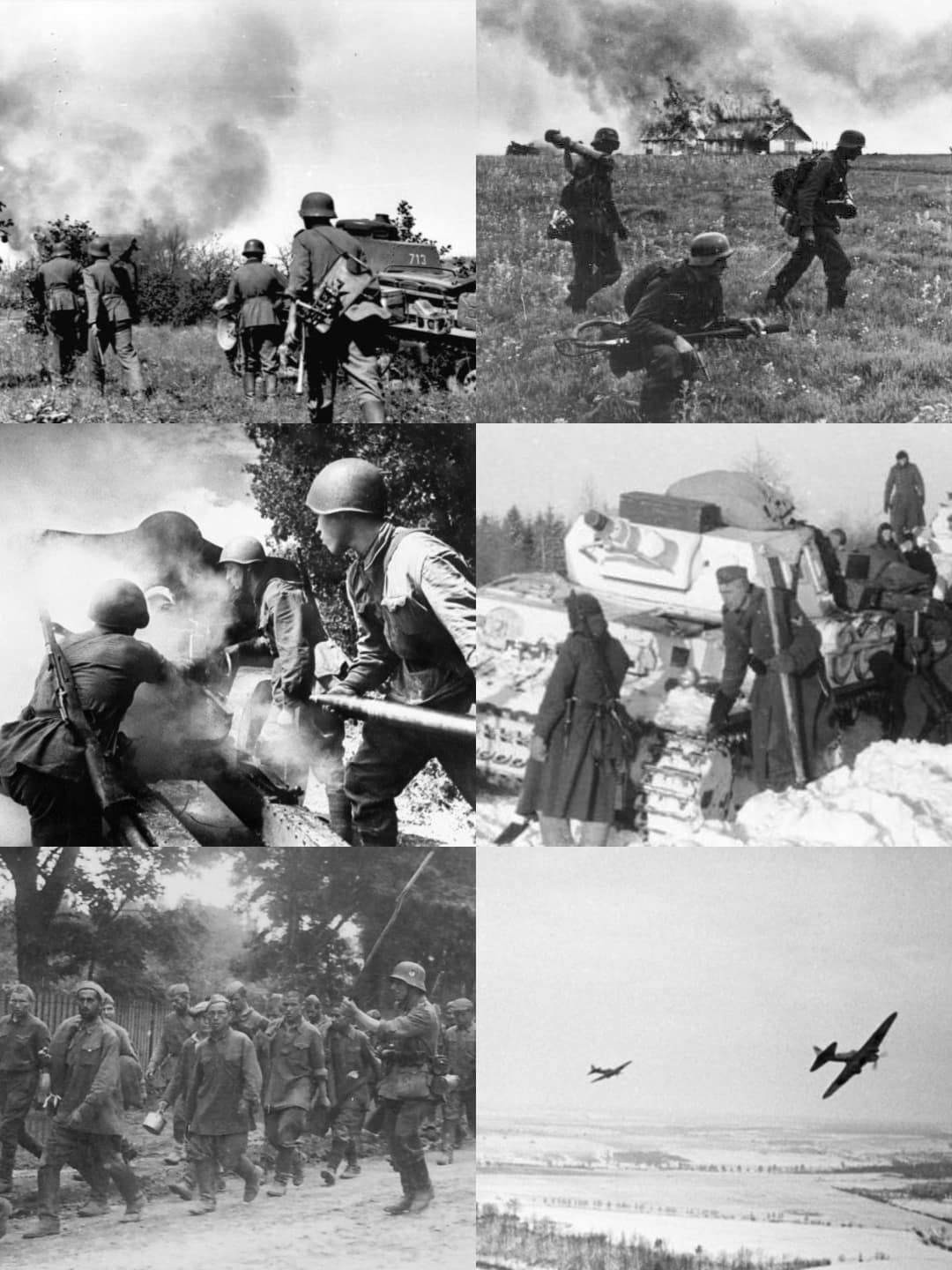
The largest invasion in history: over three million Axis troops attacked the Soviet Union on a front from the Baltic to the Black Sea. Huge encirclements destroyed much of the Red Army's peacetime strength, but the Germans failed to take Leningrad or Moscow before winter and the Soviet counteroffensive.
Explore Operation Barbarossa on the interactive map · Wikipedia
Day by day
— Three army groups
At 03:15 some 3.5 million Axis troops, 3,600 tanks and 2,700 aircraft attack on a front of 2,900 kilometres from the Baltic to the Black Sea. The Soviet air force loses over a thousand machines on the first day, most of them on the ground. Army Group North is to take Leningrad, Centre to destroy the armies in Belorussia, South to take the Ukraine and its wheat and coal.
— Minsk and Smolensk
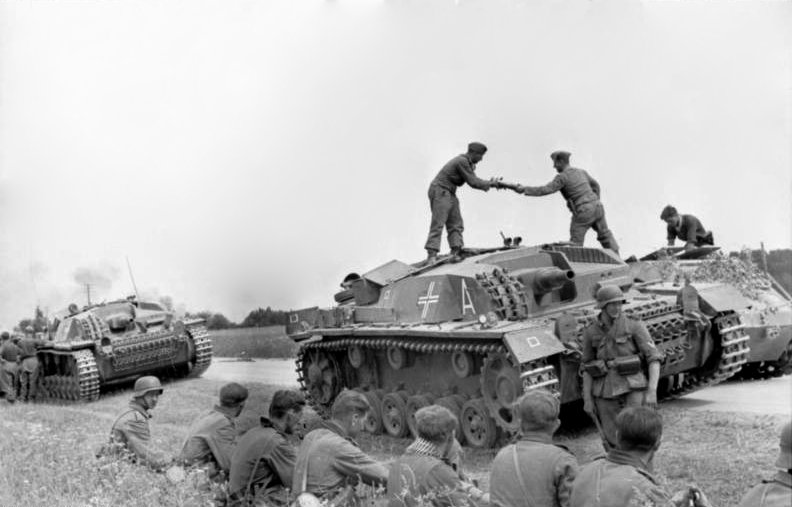
The panzer groups of Army Group Centre met east of Minsk on 28 June and took 290,000 prisoners in the Bialystok and Minsk pockets. Guderian's tanks are in Smolensk on 16 July, 650 kilometres in and two-thirds of the way to Moscow in three and a half weeks. Army Group North is on the Luga, sixty kilometres short of Leningrad.
— The turn south
Hitler overrules the army: Moscow waits, and Guderian's panzer group turns south from the Smolensk area on 25 August to meet Kleist behind Kiev. Army Group South has already destroyed the 6th and 12th Armies at Uman and reached the Dnieper along its length. Odessa is cut off and under siege by the Romanian Fourth Army.
— Kiev and Leningrad
Army Group North took Shlisselburg on 8 September and cut the last road into Leningrad; the city is to be starved rather than stormed. On the 16th the panzer groups met at Lokhvitsa 200 kilometres east of Kiev, and the city falls on the 19th. The pocket yields over 600,000 prisoners, the largest of the war, and the way east to Kharkov and the Donets is open.
— Typhoon
Army Group Centre attacks for Moscow with 1.9 million men and three panzer groups. Within a week it has closed twin pockets at Vyazma and Bryansk holding 660,000 prisoners and destroyed most of three Soviet fronts. Then the autumn rains come, the roads dissolve and the advance slows to a few kilometres a day.
— The high-water mark
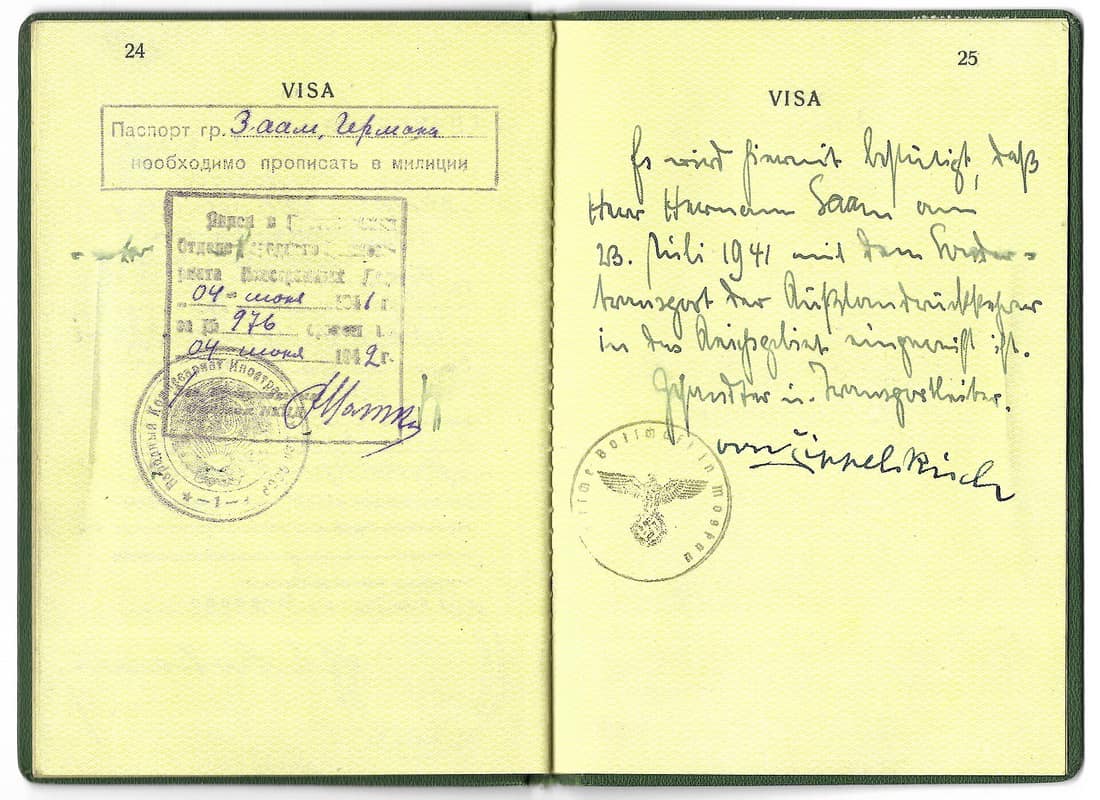
German reconnaissance reached Khimki on 2 December, twenty kilometres from the Kremlin, in minus 30 degrees and without winter clothing. Rostov has already been lost and given up again, the first German retreat of the war. On 5 December Zhukov attacks with divisions brought from the Far East, and Barbarossa is over: the Soviet Union has lost some three million men and is still fighting.