Pacific · United States and Philippines vs Japan
Battle of Manila
3 February 1945 – 3 March 1945
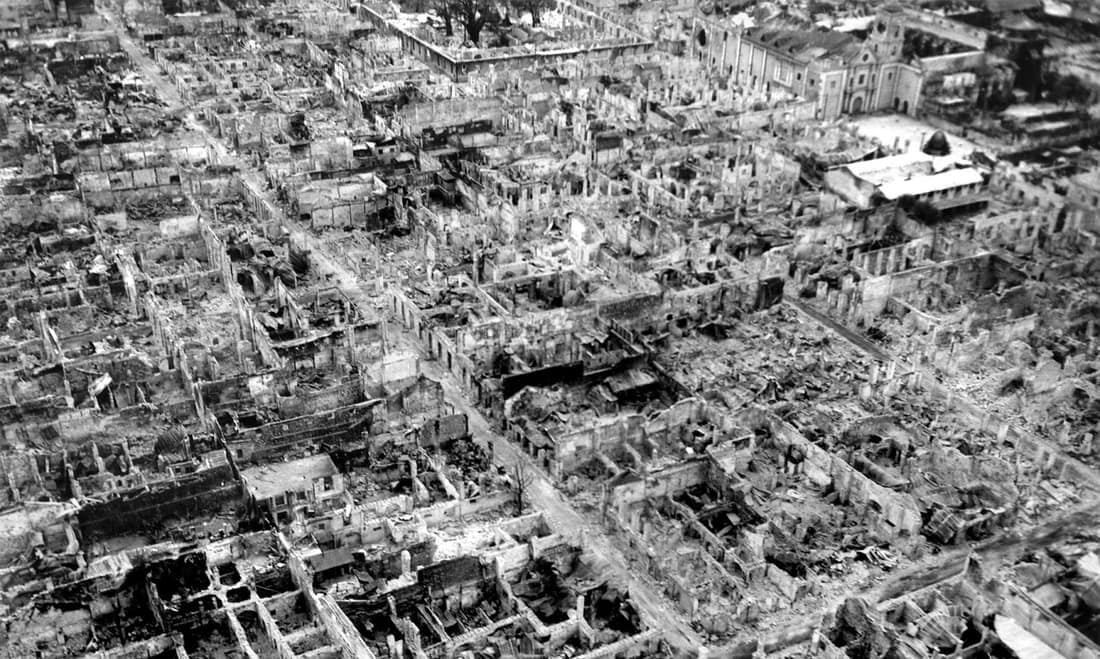
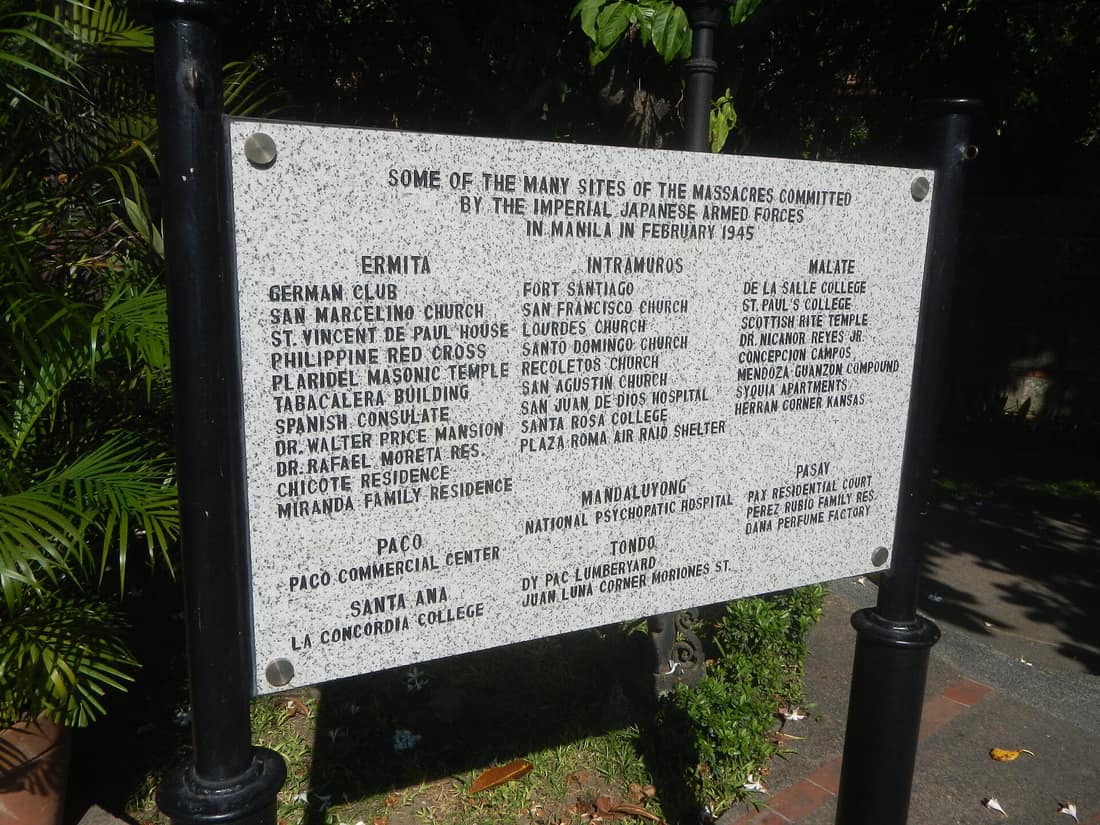
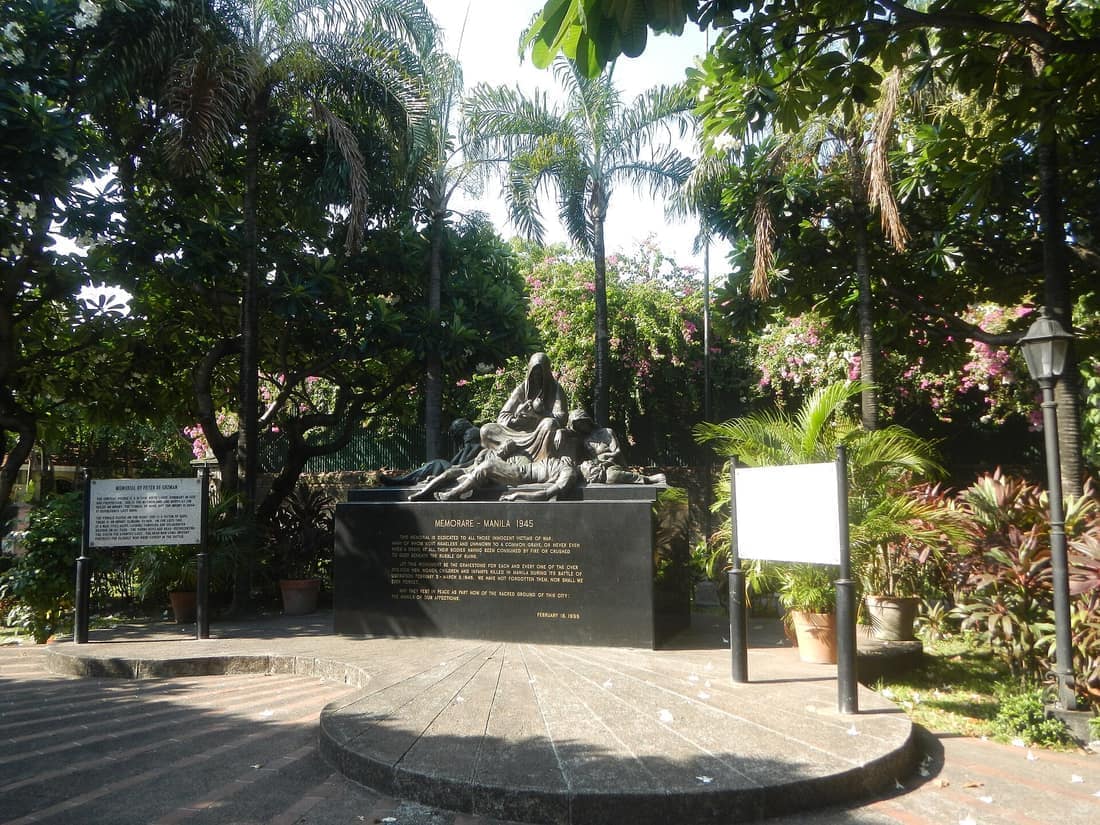
Against Yamashita's intentions, some 17,000 naval and army troops under Rear Admiral Iwabuchi fortified Manila and fought street by street for a month. American artillery destroyed much of the old city, and the Japanese massacred an estimated 100,000 Filipino civilians during the fighting. It was the only large urban battle of the Pacific war.
Explore Battle of Manila on the interactive map · Wikipedia
Day by day
— Santo Tomas
A flying column of the 1st Cavalry Division reaches the northern edge of the city in the evening and breaks into the internment camp at Santo Tomas University, where 3,700 civilians have been held for three years. The 37th Division comes in behind it and frees the prisoners at Old Bilibid the next day. Yamashita had ordered Manila given up; Iwabuchi's 17,000 naval and army troops intend to hold it.
— The bridges go
The Japanese blow the bridges over the Pasig, including Quezon Bridge and Jones Bridge, and set demolition charges through the districts south of the river. The systematic killing of Filipino civilians in Ermita, Malate and Intramuros begins the same week and goes on until the end of the battle.
— The ring closed
The 11th Airborne, up from Nasugbu, takes Nichols Field after ten days against naval guns dug in around the runways, and joins hands with XIV Corps at Manila Bay. The city is surrounded. The 37th Division is across the Pasig at Malacanang and grinding west through Paco and Pandacan.
— Intramuros
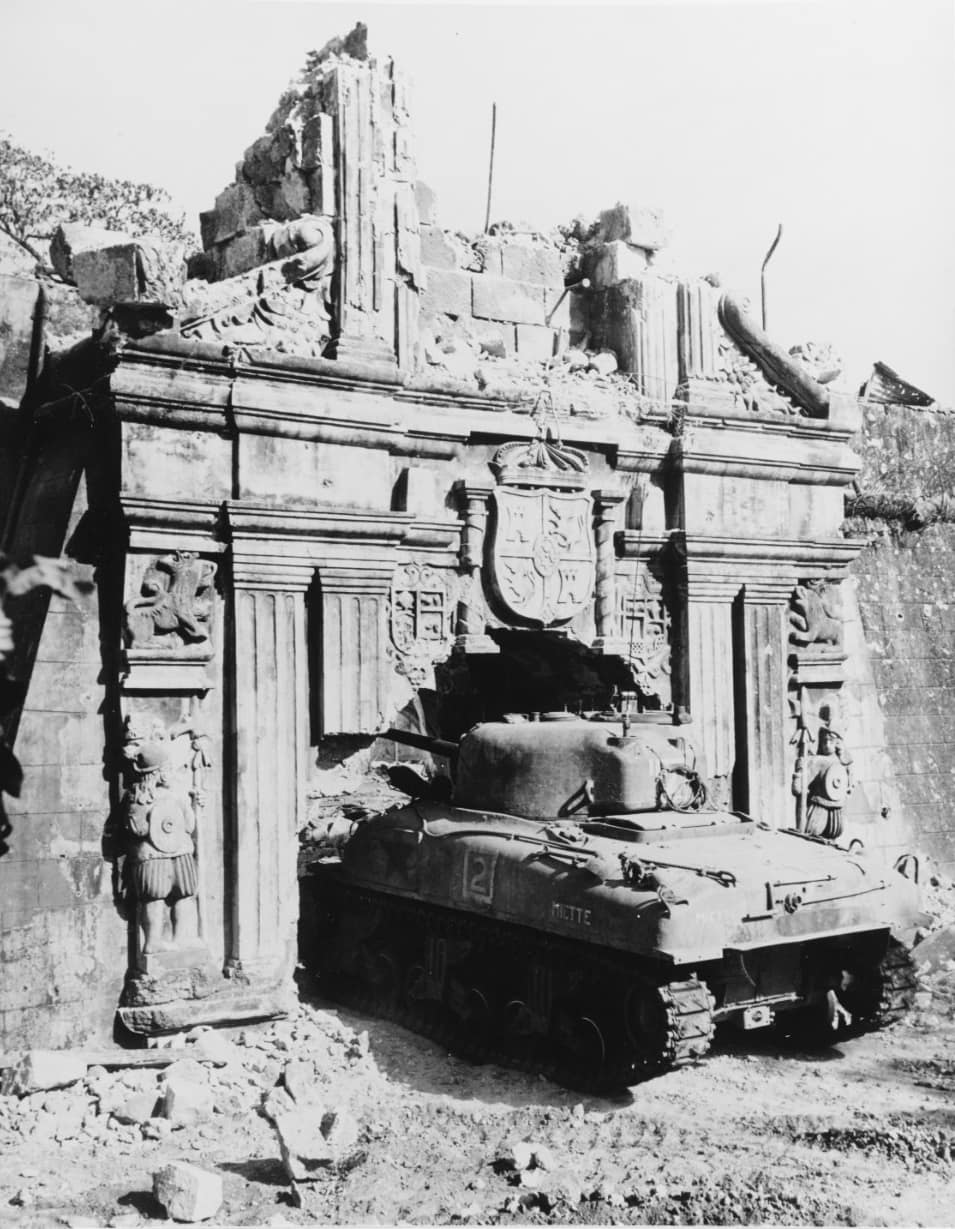
After an hour-long bombardment by 105mm and 155mm guns firing over open sights at the sixteenth-century walls, the 129th and 145th Infantry assault the walled city across the Pasig and through a breach in the eastern wall. It is cleared in a day. Artillery was used because the alternative was to send infantry against concrete building by building, and it destroyed most of old Manila.
— The government buildings
What is left of the garrison holds the reinforced-concrete blocks south of the walls: the Legislative, Finance and Agriculture buildings, taken floor by floor with tank fire and demolition charges. Iwabuchi is killed in the Agriculture Building on the 26th.
— The end
The Finance Building, the last Japanese position, falls on 3 March. About 1,000 Americans and almost the whole garrison of 16,000 were killed, and an estimated 100,000 Filipino civilians died in the shelling and the massacres. Manila was the most heavily damaged Allied capital of the war after Warsaw.