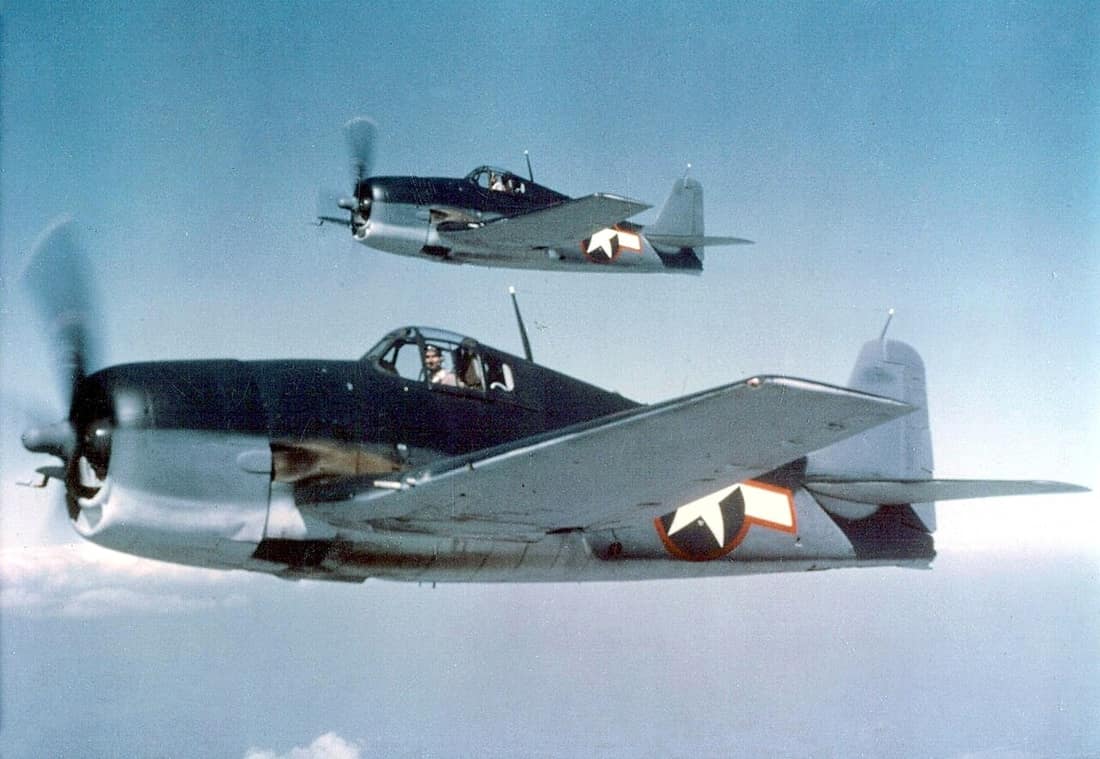
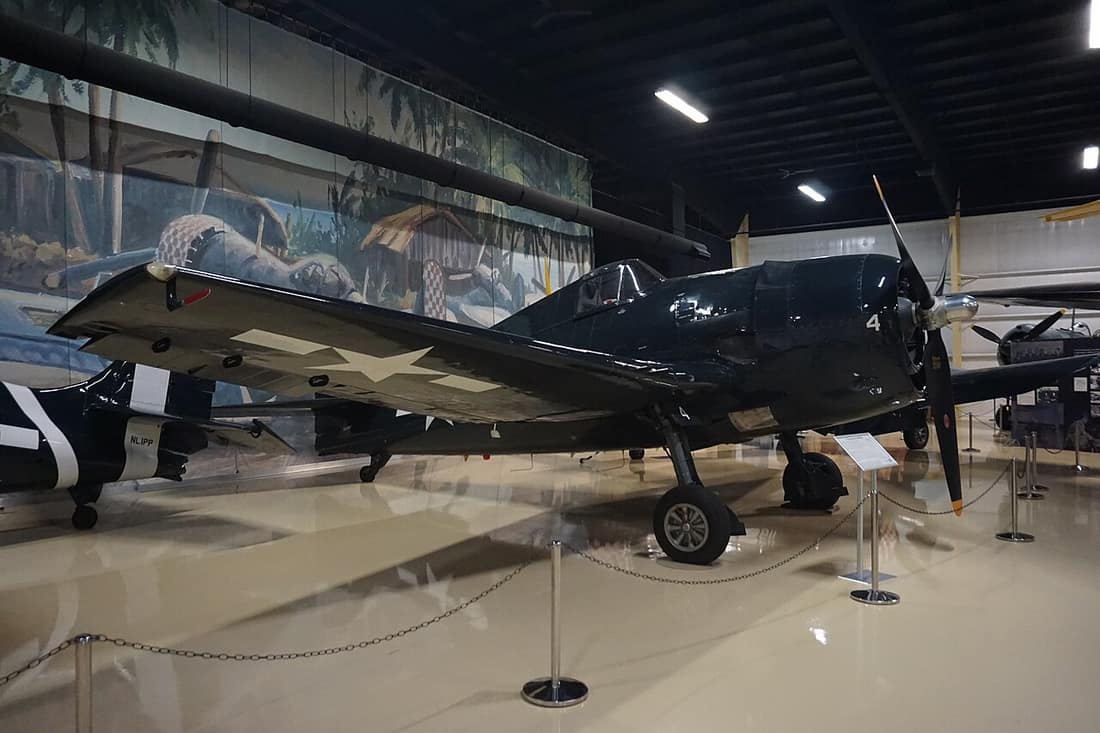
Designed after Grumman analyzed a captured Zero, the Hellcat paired a powerful engine with heavy armor to beat the Japanese fighter on its own terms. Flown by Essex-class carrier air groups from late 1943 on, it accounted for over 5,000 aerial victories, more than any other Allied fighter of the war. The Great Marianas Turkey Shoot in June 1944 was largely a Hellcat massacre of inexperienced Japanese pilots.
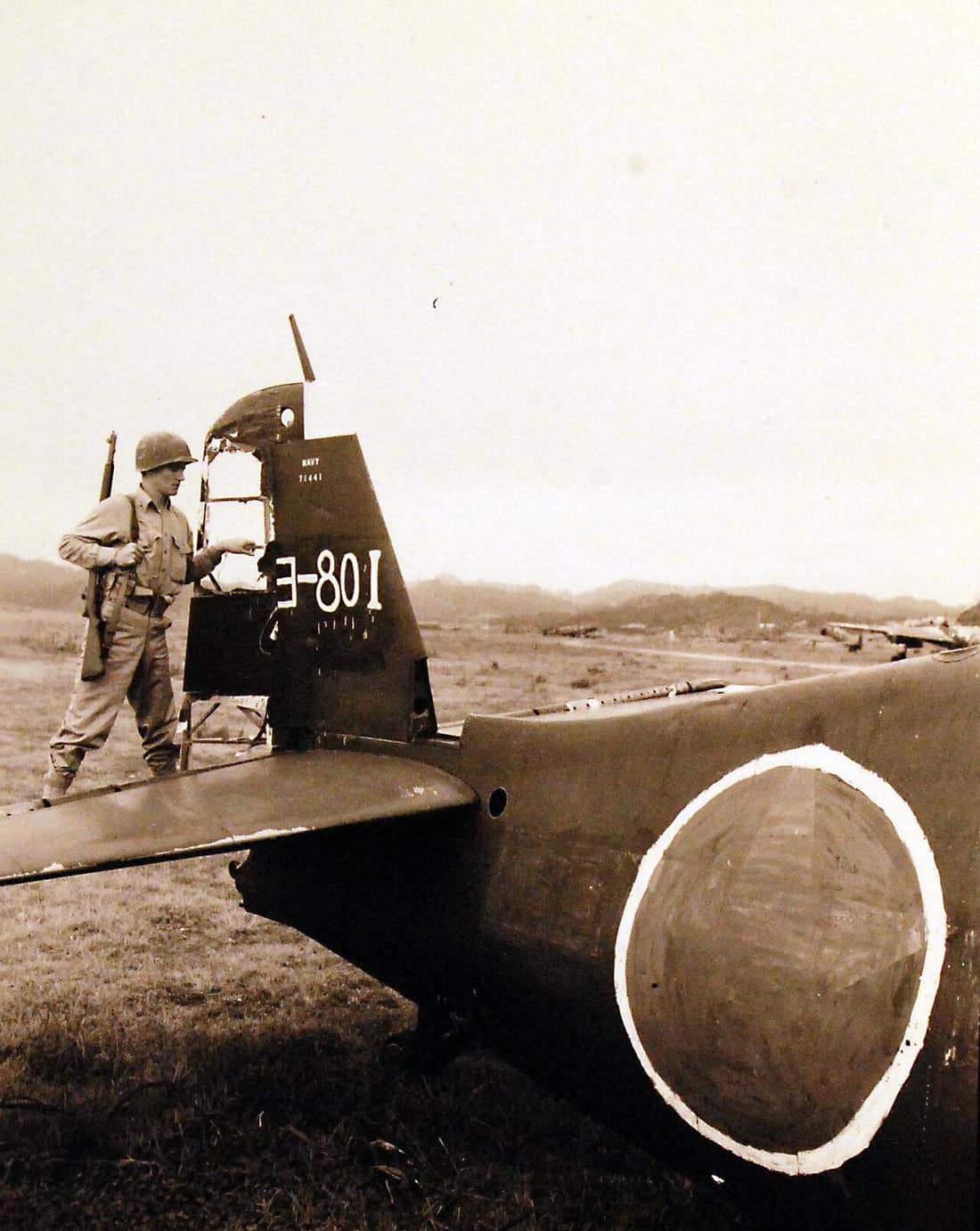
Two U.S. Navy Grumman F6F-3 Hellcats in tricolor camouflage, sea blue, intermediate blue, and insignia white.USN; · Public domain · source127-GW-1627-134956: Occupation of Japan, 1945. Surprise find to Marines of Marine Air Group 31, who flew up from Okinawa to occupy Yokosuka Naval Air Base 30 miles from Tokyo was this wrecked Grumman “Hellcat” fighter plNational Museum of the U.S. Navy · Public domain · sourceA Grumman F6F-5 Hellcat on display at the Air Zoo at Kalamazoo/Battle Creek International Airport in Portage, Michigan (United States).Michael Barera · CC BY-SA 4.0 · source

.jpg)
.jpg)