Pacific · United States vs Japan
Battle of Tarawa
20 November 1943 – 24 November 1943
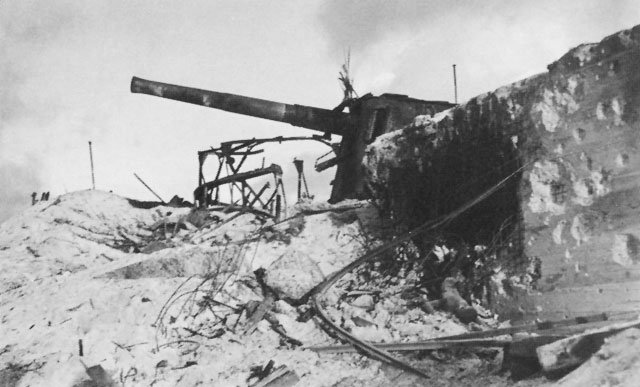
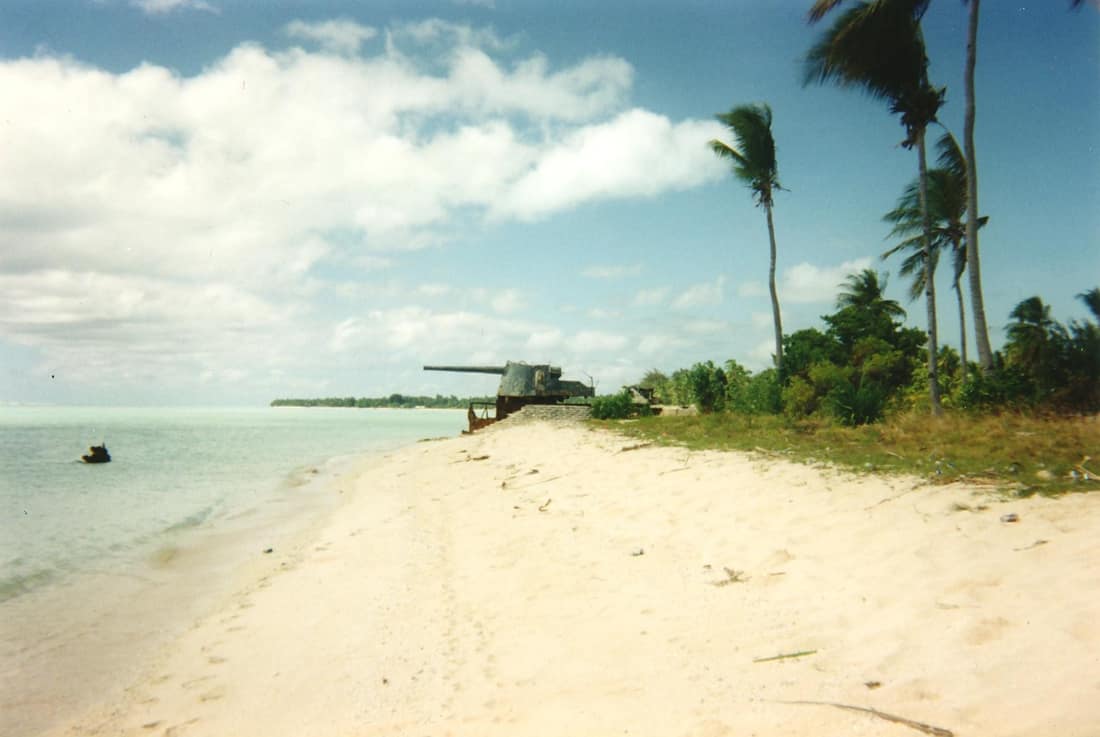
The 2nd Marine Division assaulted Betio, a fortified islet at the southern end of Tarawa atoll, to open the Central Pacific drive. An unexpectedly low tide left the landing craft on the reef and the Marines waded in under fire. The island was taken in 76 hours at a cost of about 1,000 Marines killed and nearly the whole garrison of 4,700; Makin was taken by the Army the same week.
Explore Battle of Tarawa on the interactive map · Wikipedia
Day by day
— The reef
The tide does not lift and the landing craft ground on the reef 500 metres out, so the assault waves wade in under machine-gun fire across open water. Only the amphibian tractors get men to the sand. By nightfall about 5,000 Marines are ashore in three shallow lodgements, 1,500 are dead or wounded, and Shoup is running the battle from beside a Japanese bunker on Red 2.
— Across the airfield
Naval gunfire kills Shibazaki and his staff and the defence loses its head. The 1st Battalion, 6th Marines lands over Green Beach in rubber boats, and from the Red beaches the Marines cross the airstrip to the south shore, splitting the island in two. The Pocket, a strongpoint between Red 1 and Red 2, holds out behind them.
— The counter-attacks
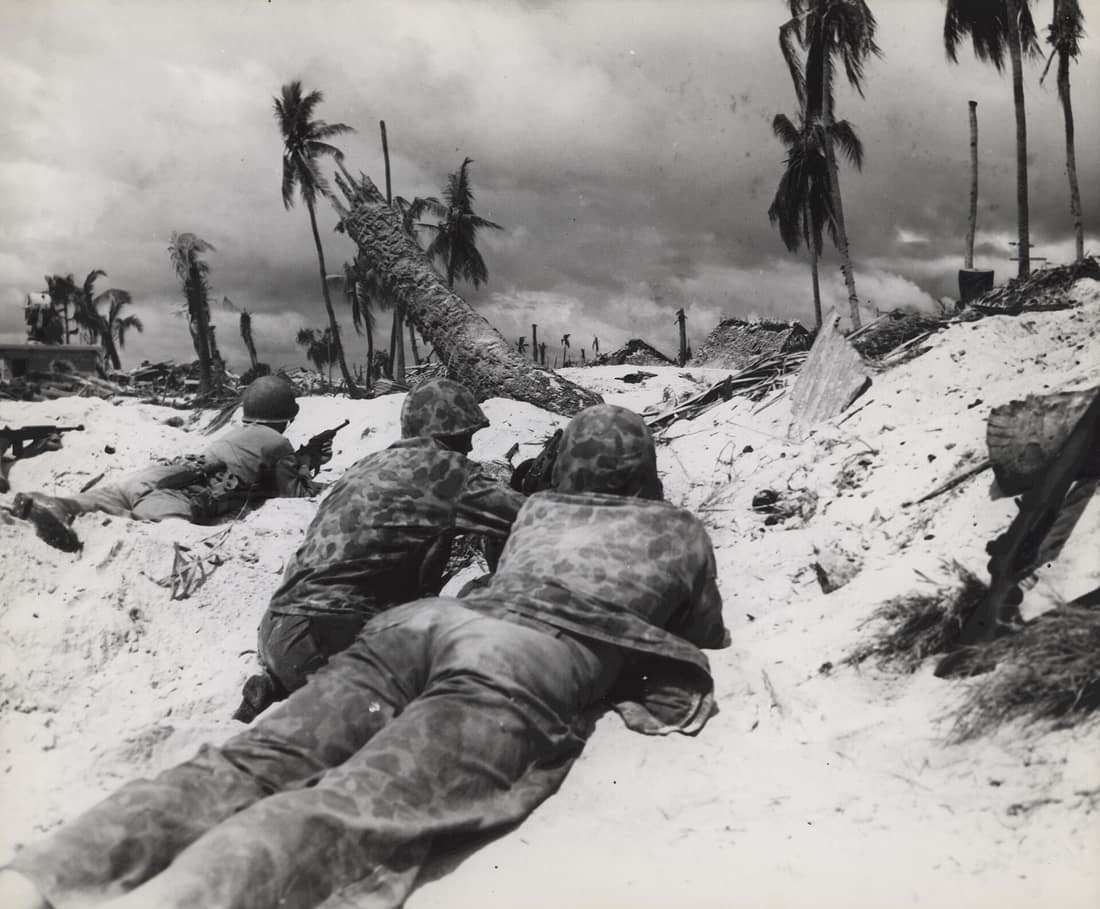
The 1st Battalion, 6th Marines drives east along the south shore and joins the men from Red 3, and the Pocket is finally burnt out. Between 19:30 and 04:00 the Japanese come out of the tail three times against the 1st Battalion's line, the last with some 300 men; they are stopped by artillery, naval gunfire and rifles at a few metres, leaving 325 dead in front of the position.
— Secured
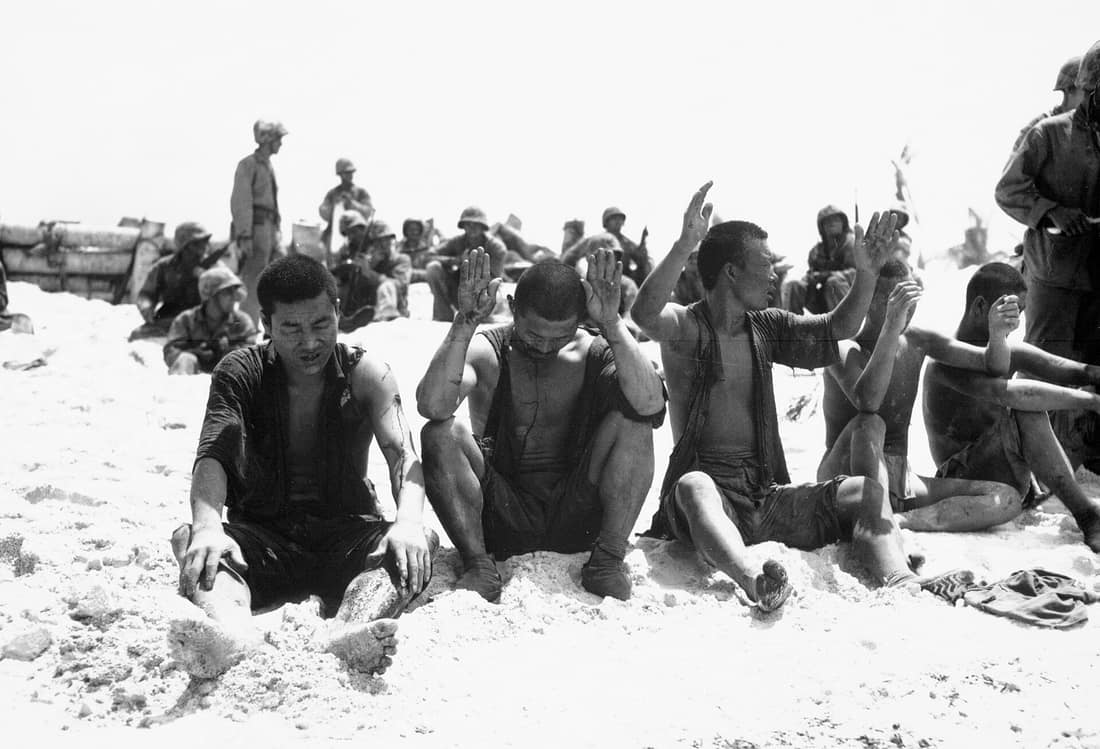
The 3rd Battalion, 6th Marines passes through at 08:00 with tanks and clears the tail to Takarongo Point by early afternoon, and Betio is declared secure at 13:12. It has taken 76 hours. Of 4,700 Japanese and Korean labourers on the island, 17 soldiers and 129 labourers are taken alive.
— The cost
About 1,000 Marines and sailors are dead and 2,300 wounded for an island of one square mile. The photographs and film of the dead in the shallows are released at home and cause an argument that runs to the end of the war. Before dawn the same morning, off Makin 160 kilometres to the north, the submarine I-175 sinks the escort carrier Liscome Bay with 644 men.
.jpg)