Pacific · United States and Australia vs Japan
Battle of Leyte Gulf
23 October 1944 – 26 October 1944
The Japanese navy committed almost everything it had left to destroy the Leyte invasion shipping, using its carriers as bait to draw Halsey's fleet north. Four separate actions followed: the sinking of the Musashi in the Sibuyan Sea, the destruction of Nishimura's force in Surigao Strait, Kurita's attack on the escort carriers off Samar and Halsey's destruction of Ozawa's carriers off Cape Engano. It was the largest naval battle of the war and left Japan without an effective fleet.
Explore Battle of Leyte Gulf on the interactive map · Wikipedia
Day by day
— Palawan Passage
Kurita's First Striking Force, five battleships and ten heavy cruisers, comes up the Palawan Passage from Brunei and runs into the submarines Darter and Dace before dawn. They sink the heavy cruisers Atago and Maya and cripple Takao; Kurita, whose flagship Atago was the first hit, swims to a destroyer. Ozawa's carriers are already steaming south from Japan with almost no aircraft aboard, to be seen and followed.
— The Sibuyan Sea
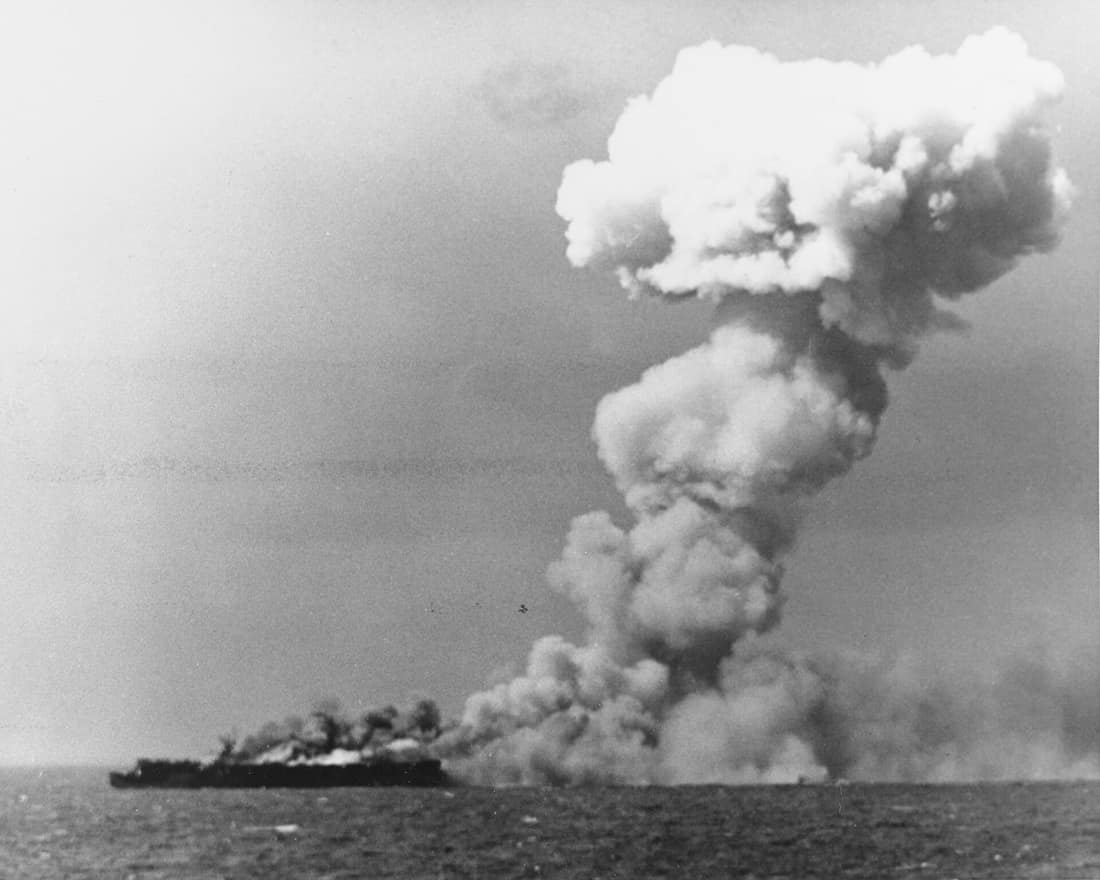
Five waves of strikes from Halsey's carriers hit Kurita in the Sibuyan Sea and concentrate on the battleship Musashi, which takes some nineteen torpedoes and seventeen bombs and goes down at 19:35. Kurita turns west for a time, then turns back east for the San Bernardino Strait after dark. A single bomb sets fire to the light carrier Princeton, lost that afternoon east of Luzon. Late in the day Halsey's scouts find Ozawa, and the whole of Third Fleet turns north.
— Three actions
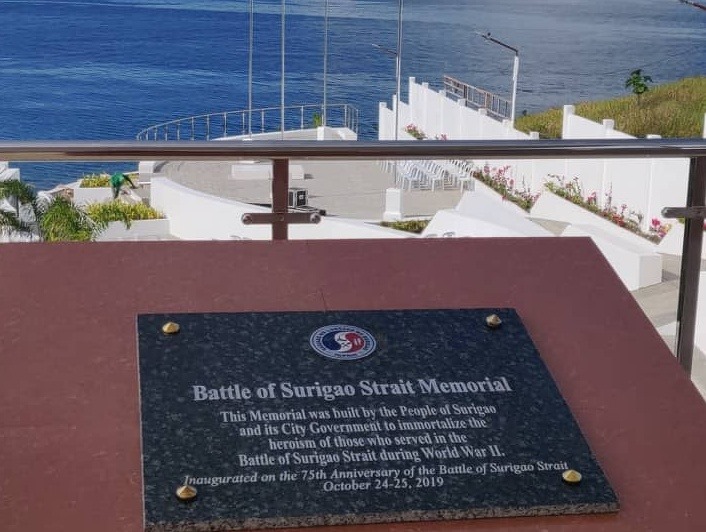
Before dawn Nishimura runs into Oldendorf's six battleships and the cruisers, among them the Australian Shropshire, at the north end of Surigao Strait; Fuso and Yamashiro are sunk and only one destroyer gets out. At 06:45 Kurita, unopposed at San Bernardino, falls on Sprague's six escort carriers off Samar and is fought off for two and a half hours by destroyers and aircraft before turning away. Off Cape Engano Halsey sinks Zuikaku, Zuiho, Chitose and Chiyoda. The first organised kamikaze attacks sink the escort carrier St. Lo.
— The retirement
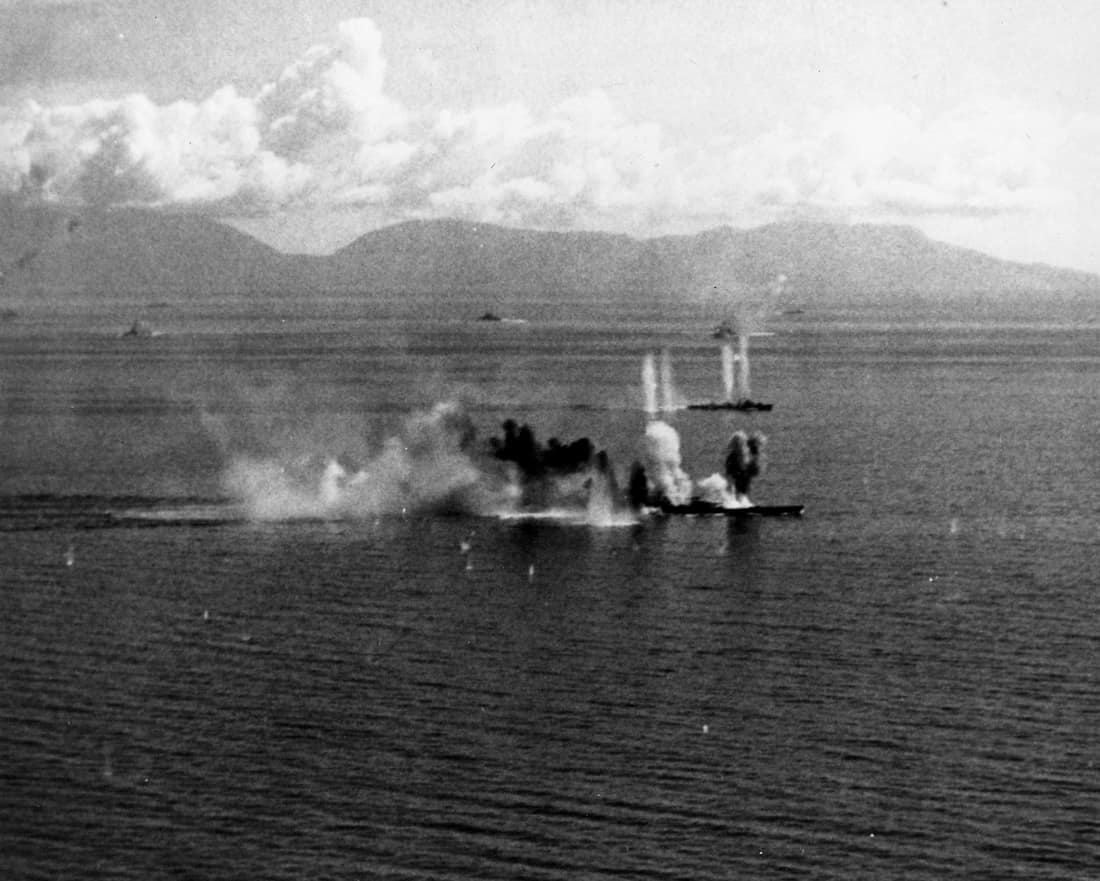
Kurita went back out through the San Bernardino Strait in the night and is caught in the Sibuyan Sea by carrier and land-based strikes, which sink the light cruiser Noshiro and a destroyer. What is left of his force reaches Brunei on the 28th. Japan has lost three battleships, four carriers, ten cruisers and eleven destroyers in four days, and has no fleet left that can be sent to sea.
_burning_on_24_October_1944_(80-G-287970).jpg)


.jpg)
Equipment in this battle
- Casablanca-class escort carrier
- Curtiss SB2C Helldiver
- Essex-class aircraft carrier
- Fletcher-class destroyer
- Fuso-class battleship
- Gato-class submarine
- Grumman F6F Hellcat
- Iowa-class battleship
- Ise-class battleship
- Kongo-class battlecruiser
- Mogami-class cruiser
- Myoko-class cruiser
- Nagato
- Takao-class cruiser
- Type 93 torpedo
- Yamato-class battleship
- Yokosuka D4Y Suisei
- Yukikaze
- Zuikaku