Pacific · United States and Britain vs Japan
Battle of Okinawa
1 April 1945 – 22 June 1945
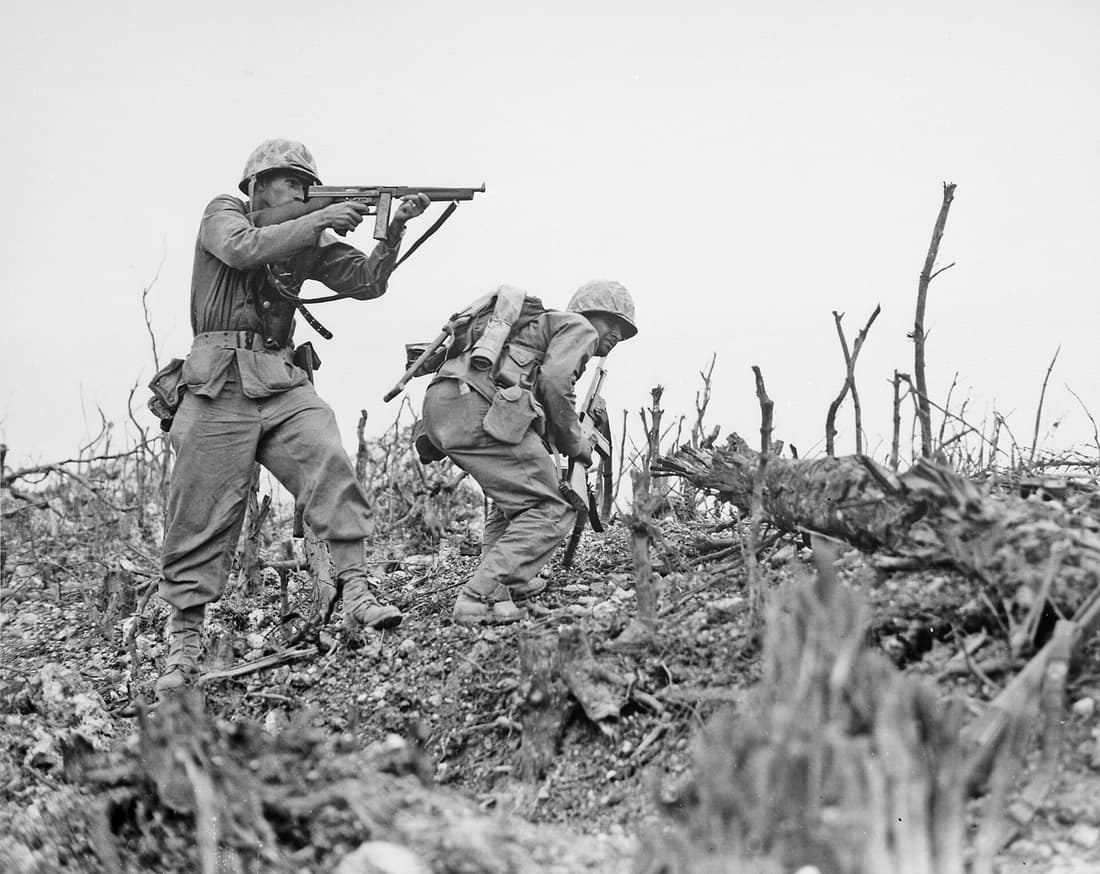
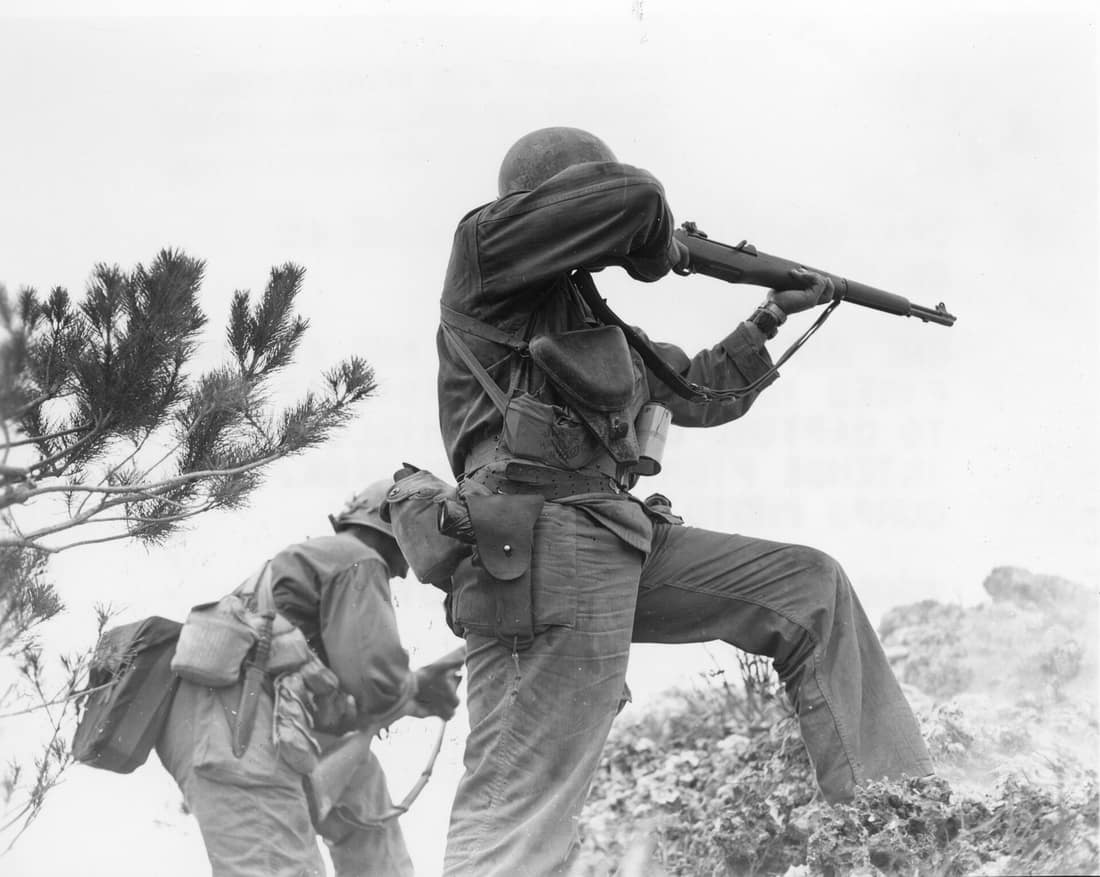
The largest amphibious operation of the Pacific war put Tenth Army ashore on Okinawa, 350 miles from Kyushu, on Easter Sunday. The Japanese 32nd Army fought from fortified ridge lines across the south of the island for nearly three months while kamikaze attacks sank 36 ships and damaged hundreds more offshore. About 12,500 Americans, over 100,000 Japanese soldiers and perhaps as many Okinawan civilians died.
Explore Battle of Okinawa on the interactive map · Wikipedia
Day by day
— Love Day
Two Marine and two Army divisions land on the Hagushi beaches on Easter Sunday against almost no opposition and take the Yontan and Kadena airfields by the afternoon. Ushijima has left the beaches empty on purpose: his 32nd Army is dug into the limestone ridges across the southern third of the island. By dark 60,000 men are ashore.
— Kikusui
The first mass kamikaze attack of the campaign, some 355 aircraft in a wave the Japanese call Kikusui No. 1, sinks six ships and damages more than twenty off the island; the radar pickets to the north and west take the worst of it. The next day the battleship Yamato, sent south with fuel for one way only and no air cover, is sunk by carrier aircraft 200 miles to the north. Ashore, the 6th Marines are driving north up the Ishikawa isthmus.
— The Shuri line
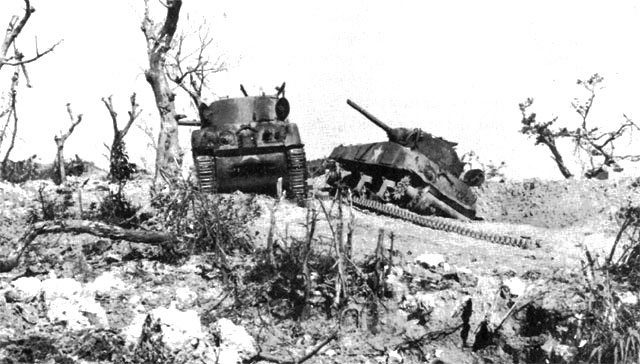
Three divisions attack the Shuri line behind the heaviest artillery preparation of the Pacific war, 324 guns firing for forty minutes, and get almost nowhere: the guns cannot reach into the reverse-slope caves. Kakazu Ridge holds and the 27th Division loses 22 tanks in a day. In the north the 6th Marines have cleared the Motobu peninsula and the 77th Division has taken most of Ie Shima, where Ernie Pyle was killed on the 18th.
— The counter-offensive
Ushijima is talked into coming out of his caves and attacks along the whole front behind an artillery barrage, with small amphibious landings on both coasts to get behind the American line. Both landings are wiped out on the beaches and the attack is broken in two days for the loss of some 5,000 men and most of the artillery he had been firing from cover. He does not try it again.
— Shuri
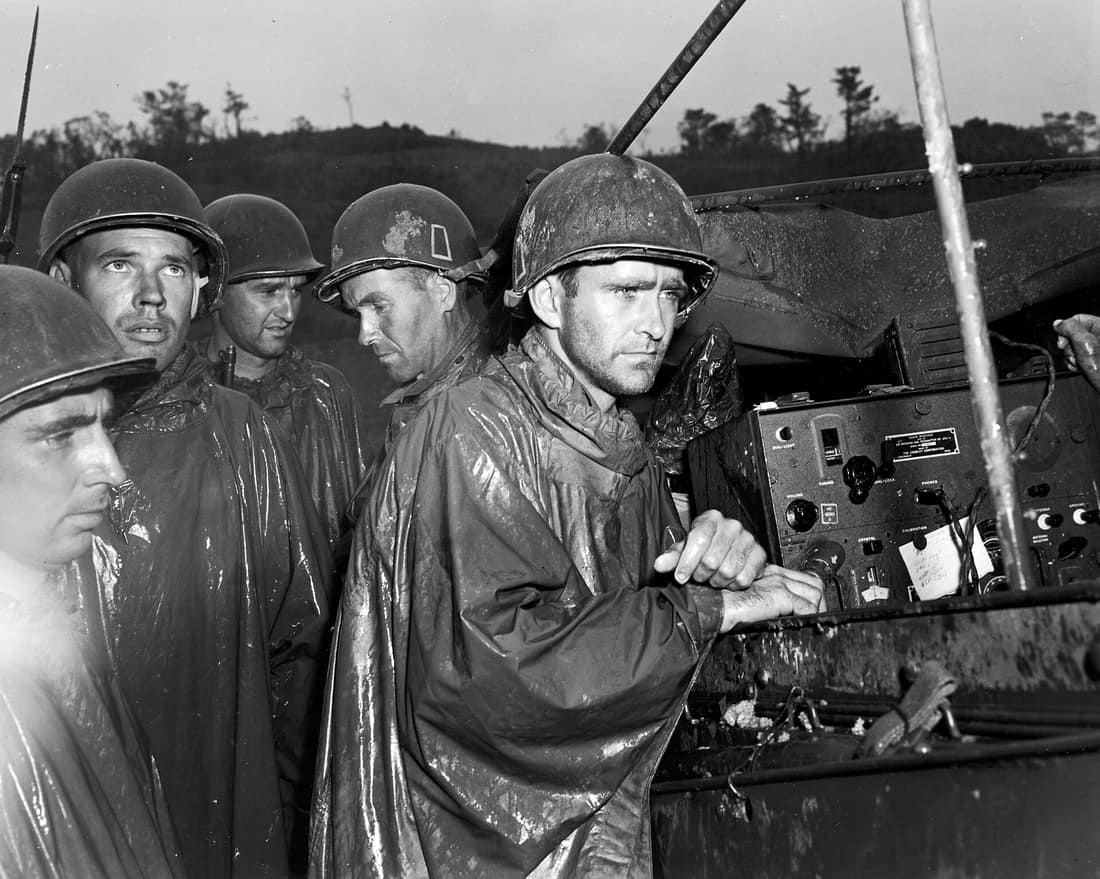
A company of the 5th Marines walks into the ruins of Shuri Castle to find it empty: Ushijima pulled his army out southwards through the rain over the previous week, taking most of his men with him. The 6th Marines have fought through Naha and Sugar Loaf Hill; the ground between is mud deep enough to stop tracked vehicles.
— The last ridges
The last position is the Kiyan peninsula, where the 32nd Army and thousands of civilians are pressed into the southern cliffs. General Buckner was killed by shellfire at a forward post on the 18th. Ushijima and his chief of staff kill themselves in the cave at Mabuni before dawn on the 22nd. The campaign cost about 12,500 American dead, over 100,000 Japanese soldiers and perhaps as many Okinawan civilians.