Pacific · United States vs Japan
Battle of Saipan
15 June 1944 – 9 July 1944
Two Marine divisions and an Army division landed on Saipan in the Marianas, the first Japanese territory with a large civilian population to be invaded and within B-29 range of Tokyo. The garrison of 30,000 fought for the mountainous interior for three weeks and ended with the largest banzai charge of the war. Hundreds of civilians killed themselves at the northern cliffs, and the loss of the island brought down the Tojo government.
Explore Battle of Saipan on the interactive map · Wikipedia
Day by day
— The beaches
Two Marine divisions land on a six-kilometre front south of Garapan at 08:44 with the beaches registered by Japanese artillery on Mount Tapotchau. Some 8,000 men are ashore by nightfall in a lodgement a kilometre deep, at a cost of about 2,000 casualties. This is the first invasion of Japanese territory with a large civilian population on it.
— The tank attack
Saito throws the 9th Tank Regiment at the beachhead in the small hours, 37 tanks with infantry riding on them; bazookas, half-tracks and naval star shell destroy about 31 of them in an hour near Charan Kanoa. Two regiments of the 27th Division came ashore the evening before and turn south for Aslito Field, which falls on the 18th. Out to the west the Japanese fleet is coming to break the invasion up.
— Tapotchau
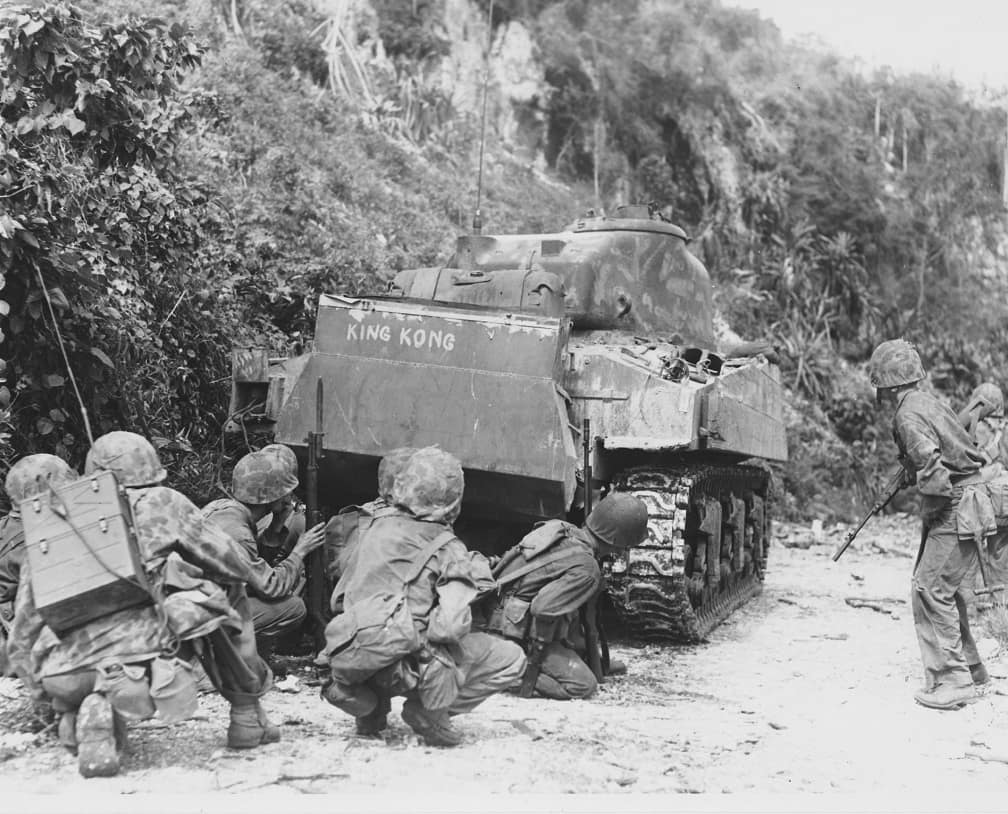
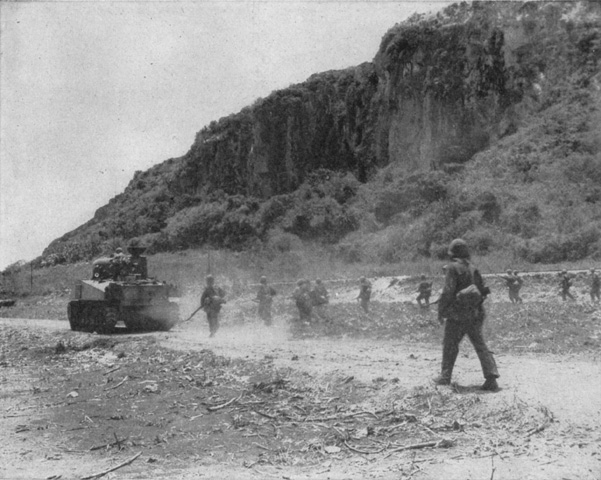
The line now runs across the island and grinds north through cane and limestone: the 2nd Marines on the west, the 27th Division in the ground its men call Death Valley and Purple Heart Ridge, the 4th Marines on the east. Holland Smith relieved Ralph Smith of the 27th on 24 June, a quarrel between the services that outlives the battle. The 2nd Marine Division takes the 473-metre summit of Tapotchau on the 27th.
— The last charge
Saito issues a final order, tells his men there is no difference between life and death, and kills himself on the 6th; Nagumo, who commanded at Pearl Harbor and Midway, does the same. At 04:45 some 3,000 Japanese, including walking wounded, come down the coastal flat at Tanapag into two battalions of the 105th Infantry and overrun them. The charge is stopped near Tanapag by artillery firing over open sights, and 4,300 bodies are counted.
— Marpi Point
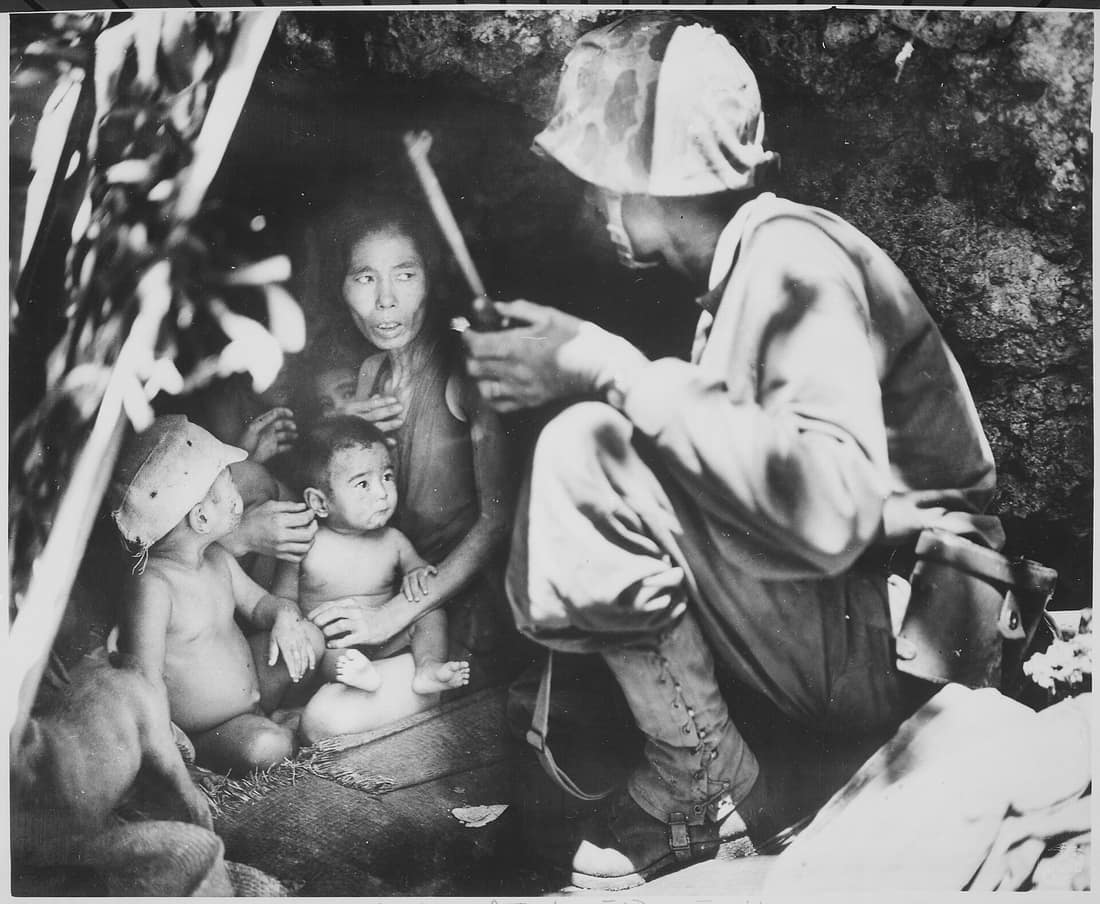
Marpi Point is reached and the island declared secure at 16:15. Over the next days hundreds of Japanese civilians, told what the Americans would do to them, throw themselves and their children from the cliffs while interpreters call to them through loudhailers. Of a garrison of about 30,000 fewer than a thousand are taken alive; the Americans lose 3,100 dead. B-29s begin flying to Tokyo from these fields in November, and the Tojo government falls on 18 July.