Western Europe · United Kingdom, United States, Canada and Poland vs Germany
Liberation of Belgium
2 September 1944 – 4 February 1945
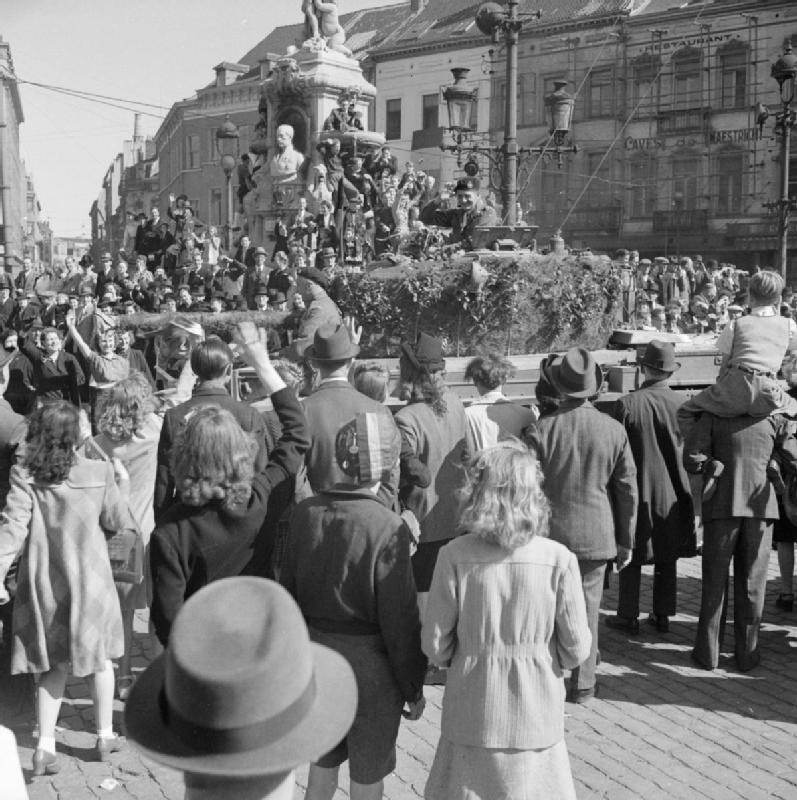
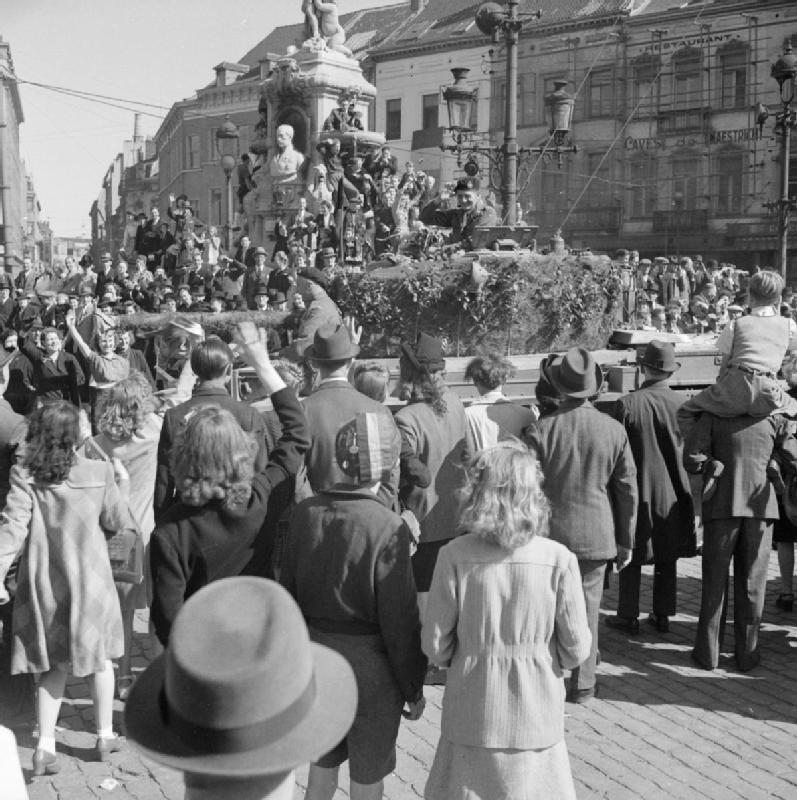
Allied armour crossed into Belgium from northern France in the first days of September 1944, and British tanks reached Brussels on 3 September and Antwerp the next day to a rapturous welcome, capturing Antwerp's docks intact. Fighting flared again in the Ardennes during the Bulge before the last Belgian village, Krewinkel, was cleared in early February 1945.
Explore Liberation of Belgium on the interactive map · Wikipedia
Day by day
— Into Belgium
After a pursuit of four hundred kilometres from the Seine, British and American columns cross the frontier into Hainaut. Behind them the US First Army is closing on Mons, where the remains of five German divisions will be cut off in the next three days.
— Brussels and Antwerp
The Guards Armoured Division covers 120 kilometres in a day and enters Brussels on the evening of the 3rd. Next afternoon the 11th Armoured reaches Antwerp, where the Resistance has kept the dock gates and cranes from being blown. The Germans still hold both banks of the Scheldt below the city, so the port cannot be used.
— To the German border
A patrol of the 5th Armored Division crosses into Germany near Stolzembourg on 11 September, the first Allied troops on German soil; Roetgen falls the next day. Liege, Namur and the Ardennes towns are free. Only the Scheldt approaches in the north-west and a strip of border country still hold out.
— The Ardennes again
At 05:30 three German armies attack out of the Eifel into the Belgian Ardennes on a front of 130 kilometres, aiming at the Meuse crossings and then Antwerp. The east cantons, freed in September, are fought over a second time.
— The bulge
The 2nd Panzer Division runs dry at Celles, six kilometres short of the Meuse, and is destroyed there. Bastogne, surrounded since the 21st, is relieved from the south on the 26th. Nearly a million men are fighting in the Belgian Ardennes in the deepest snow of the war.
— Krewinkel
The last German troops are cleared from Krewinkel, a hamlet in the east cantons above St Vith, and no Belgian ground remains in German hands. Antwerp, opened to shipping in November, is by then landing more tonnage than any other port in Europe.