Western Europe · France and United States vs Germany
Liberation of Paris
19 August 1944 – 25 August 1944
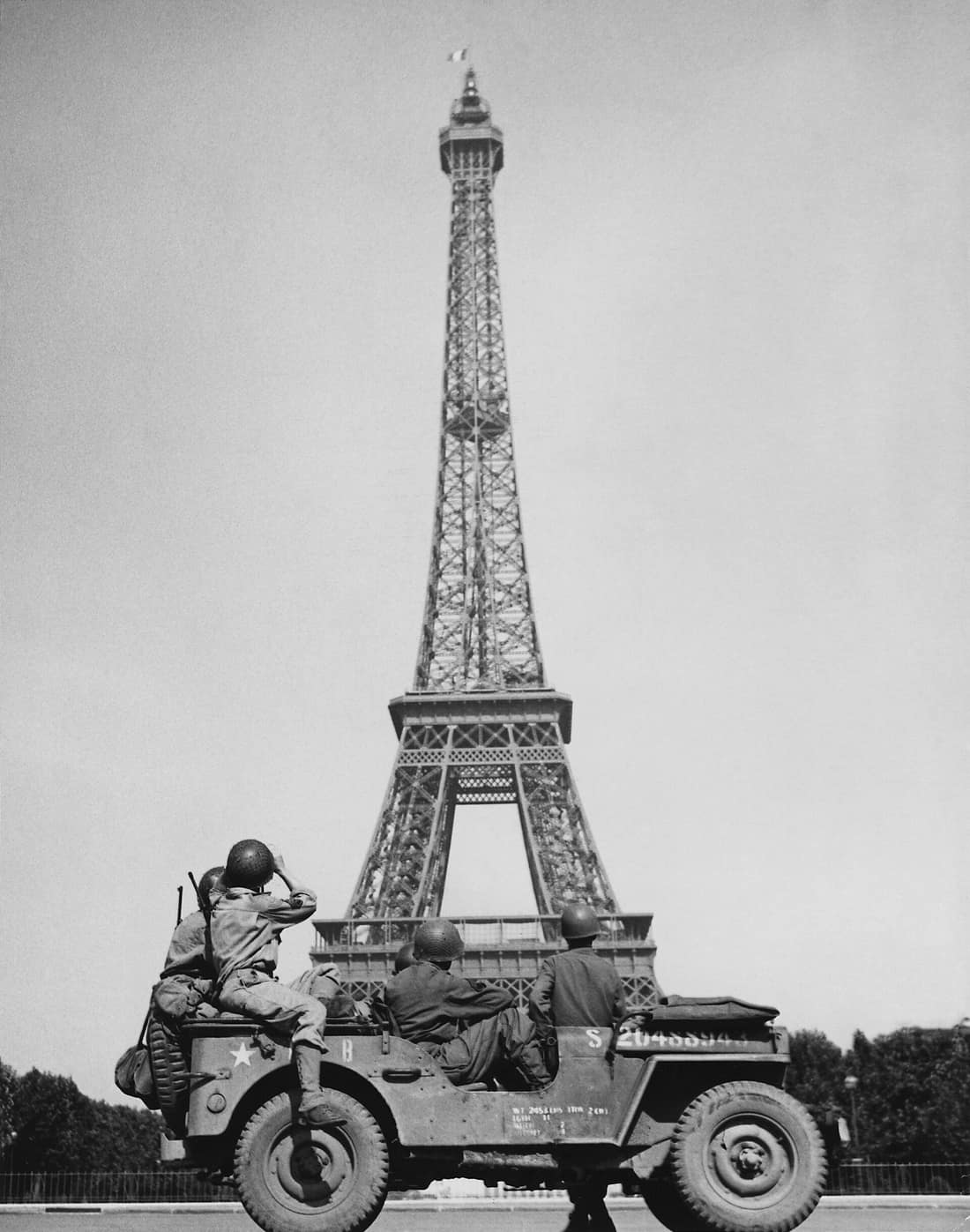
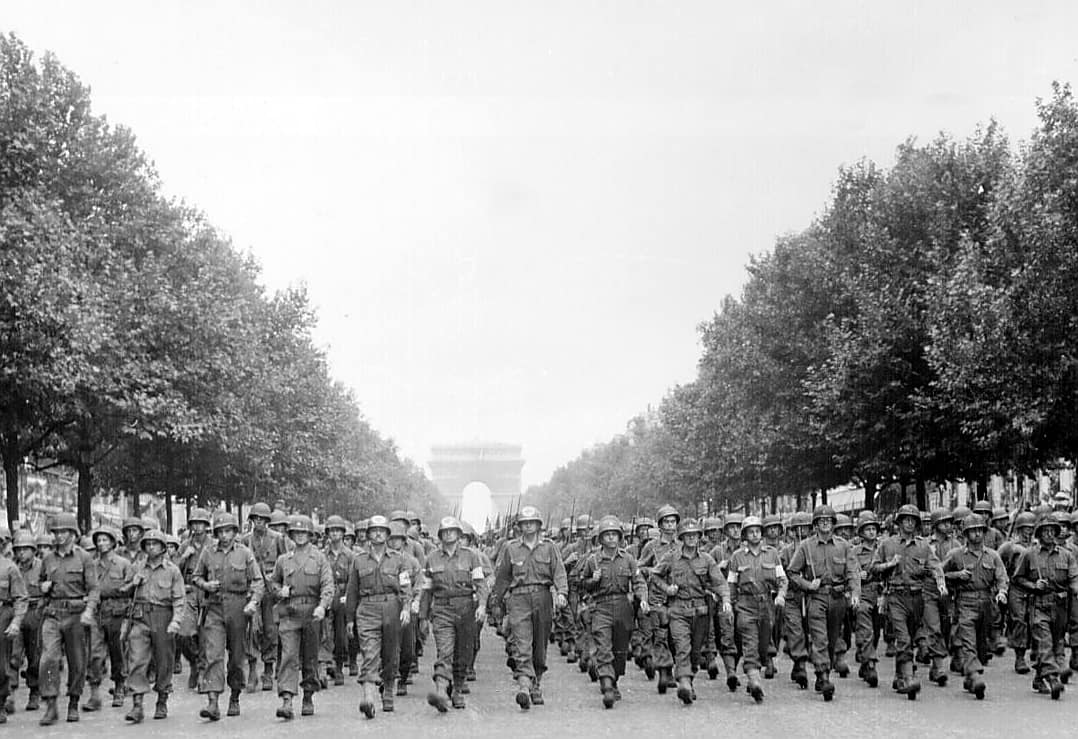
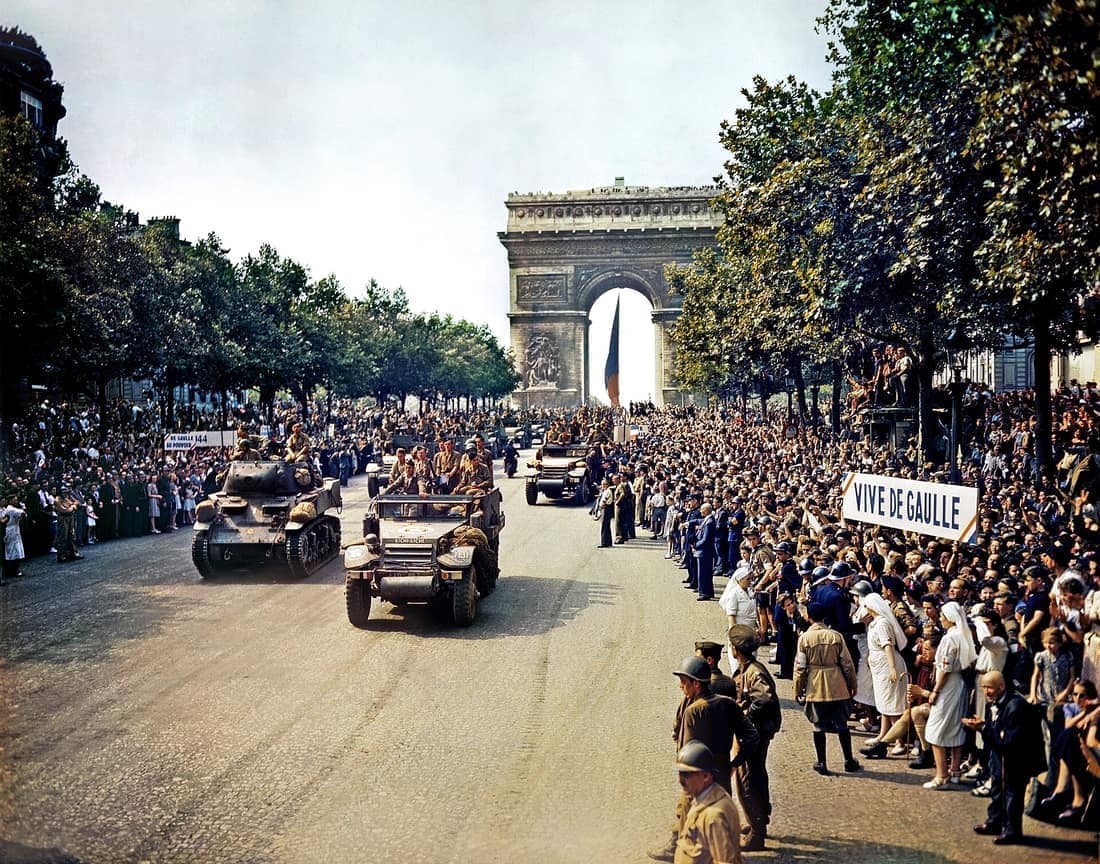
The Paris police and Resistance rose on 19 August. Eisenhower diverted Leclerc's French 2nd Armoured Division to the city and its first tanks reached the Hotel de Ville on the night of 24 August. The garrison commander Choltitz surrendered on 25 August without carrying out orders to destroy the city.
Explore Liberation of Paris on the interactive map · Wikipedia
Day by day
— The rising
The Paris police, on strike since the 15th, seize the Prefecture on the Ile de la Cite and the Resistance puts up barricades across the city. Choltitz has about 20,000 men and orders from Hitler to leave Paris a field of ruins. The nearest Allied troops are Haislip's XV Corps, thirty kilometres away on the Seine at Mantes.
— Eisenhower decides
A truce brokered by the Swedish consul Nordling is breaking down and the Resistance is short of ammunition. Told the city is on the edge of a massacre, Eisenhower gives up his plan to bypass Paris and orders Leclerc's 2e Division Blindee in, with the US 4th Infantry Division alongside. The 2e DB moves 200 kilometres from Argentan to Rambouillet in a day.
— Dronne's detachment
Leclerc attacks from Rambouillet on two axes. Langlade's group through Trappes and Versailles is held up at the anti-tank screen around Jouy; Billotte's group through Longjumeau spends the day fighting at the Croix de Berny. At dusk Leclerc sends Captain Dronne with three tanks and a dozen half-tracks by the back roads, and at 21:22 they pull up outside the Hotel de Ville.
— Choltitz surrenders
The 2e DB enters from the south and west at dawn and the 4th Division from the south-east. The German strongpoints at the Ecole Militaire, the Palais Bourbon and the Hotel Meurice fall one by one; Choltitz is taken at the Meurice at about 14:30 and signs the surrender at the Gare Montparnasse. De Gaulle speaks at the Hotel de Ville that evening.

.jpg)