Western Europe · United States and France vs Germany
Operation Nordwind
31 December 1944 – 25 January 1945
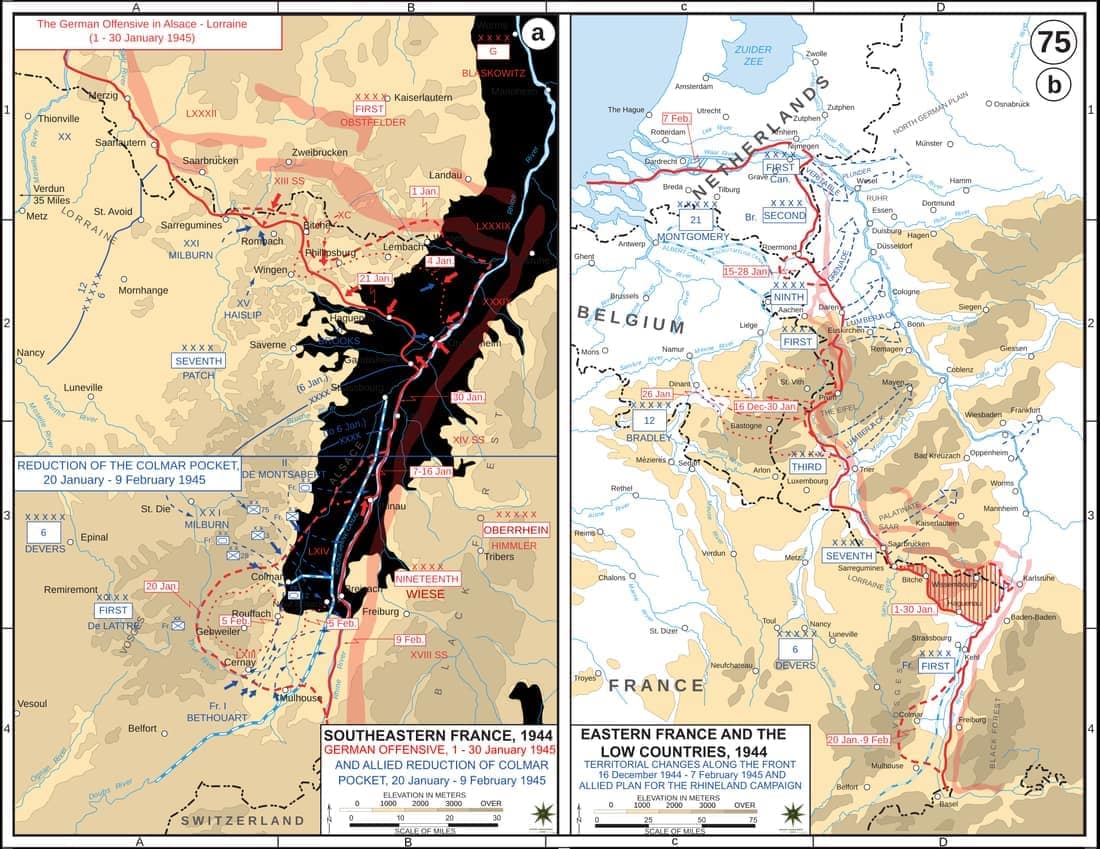
As the Ardennes offensive stalled, Hitler launched a second western offensive into Alsace and Lorraine, aiming to destroy the US Seventh Army and retake Strasbourg. Bitter fighting around the twin villages of Rittershoffen and Hatten held the German attack short of the city, and by late January the offensive was spent.
Explore Operation Nordwind on the interactive map · Wikipedia
Day by day
— Nordwind
At 23:00 on the last night of the year eight German divisions attack a front the Seventh Army has stretched to 200 kilometres to release Patton for the Ardennes. The main effort comes down the Low Vosges towards the Saverne gap, to cut off the divisions on the Alsace plain.
— Over the Rhine
The 6th SS Mountain Division is in Wingen-sur-Moder and the Vosges attack has come twenty kilometres. Before dawn on the 5th the 553rd Volksgrenadiers cross the Rhine in assault boats at Gambsheim, twenty kilometres north of Strasbourg, and dig in behind the American line.
— Hatten and Rittershoffen
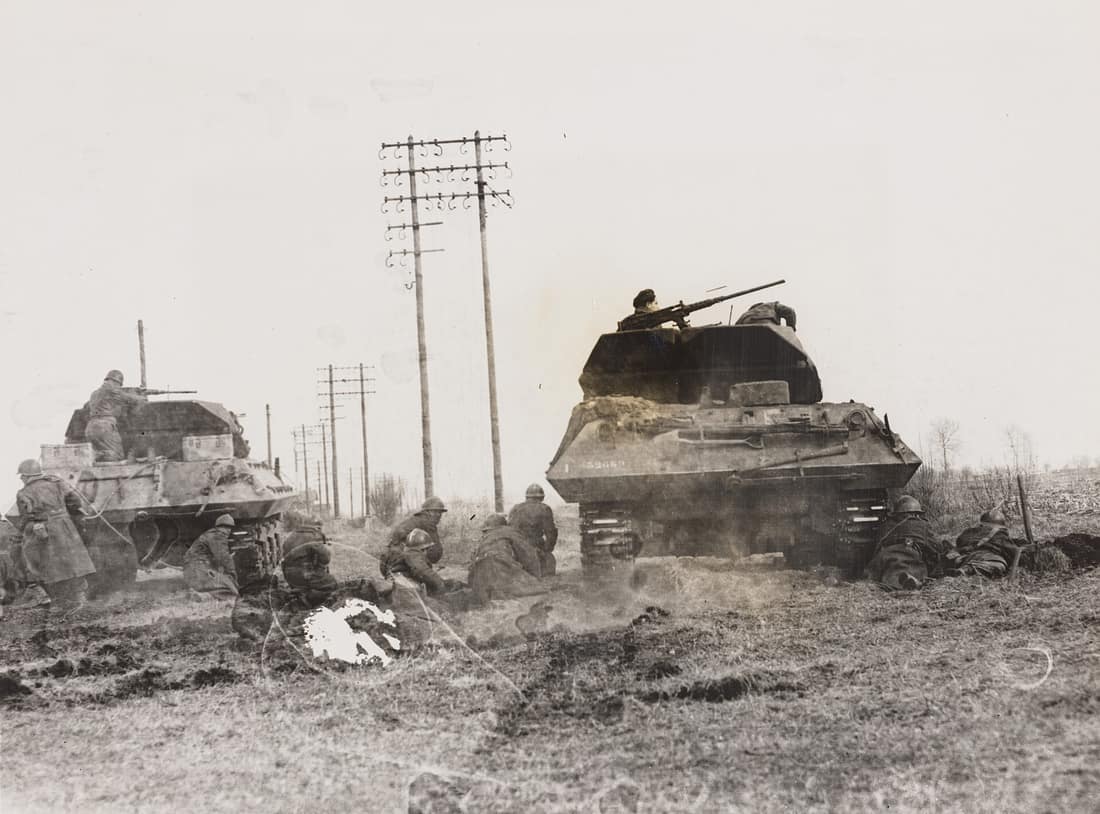
The 21st Panzer and 25th Panzergrenadier Divisions come out of the Bienwald at the twin villages of Hatten and Rittershoffen. The 79th Division and the 14th Armored hold them house by house for a fortnight, artillery firing over open sights down the street. Men who saw both said it was worse than the Ardennes.
— Back to the Moder
Devers pulls the Seventh Army back to the Moder on the night of the 20th, giving up Hatten, Rittershoffen and the ground north of Haguenau but keeping the line whole. Strasbourg, which Eisenhower had been ready to give up and de Gaulle would not, is never reached.
— Spent
The last attacks across the Moder at Schweighouse and Neubourg are stopped by the 222nd Infantry near Haguenau, and Army Group G goes over to the defence. Nordwind cost the Germans some 23,000 men and the last of their reserves in the west; the Americans lost about 15,000. Strasbourg stays Allied.