Western Europe · United Kingdom, Canada and United States vs Germany
Rhine crossing: Operations Plunder and Varsity
23 March 1945 – 27 March 1945
The 21st Army Group's set-piece crossing of the Lower Rhine near Wesel and Rees began on the night of 23 March behind the heaviest bombardment in the west. Operation Varsity, the largest airborne drop ever made in one place on a single day, landed two divisions beyond the river the next morning. Patton had slipped across at Oppenheim the night before.
Explore Rhine crossing: Operations Plunder and Varsity on the interactive map · Wikipedia
Day by day
— Plunder
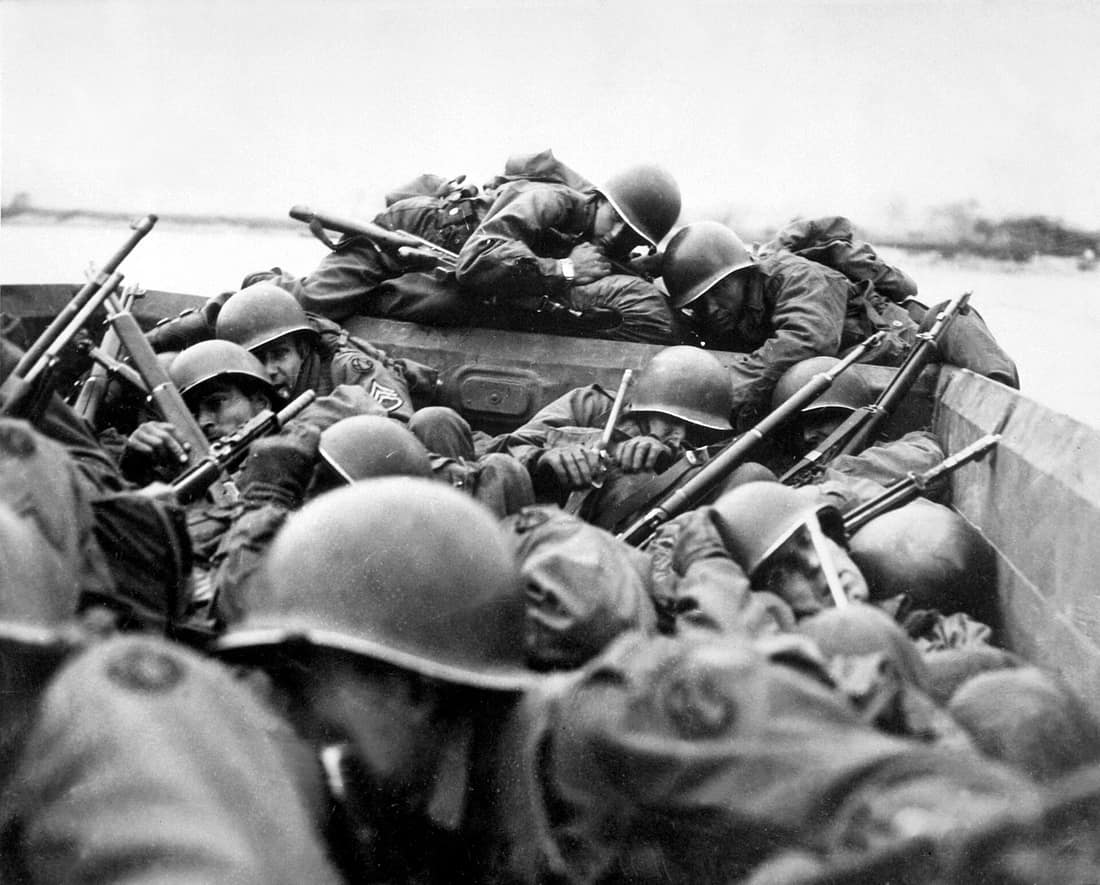
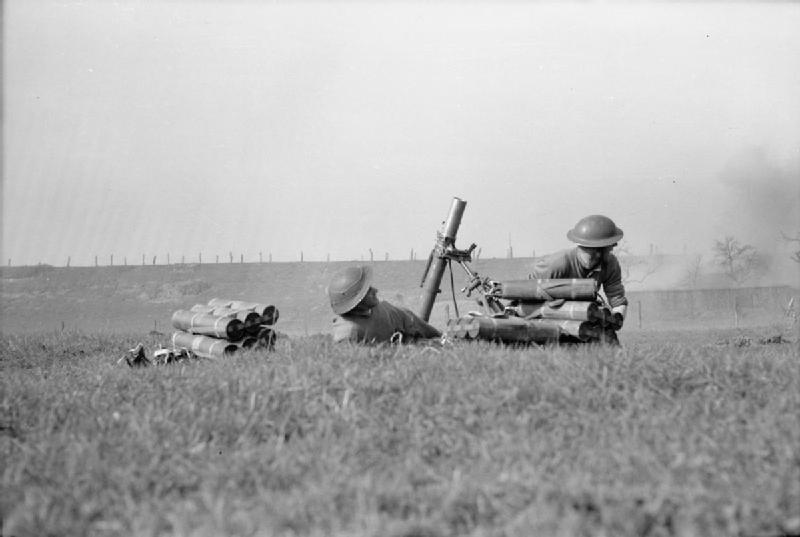
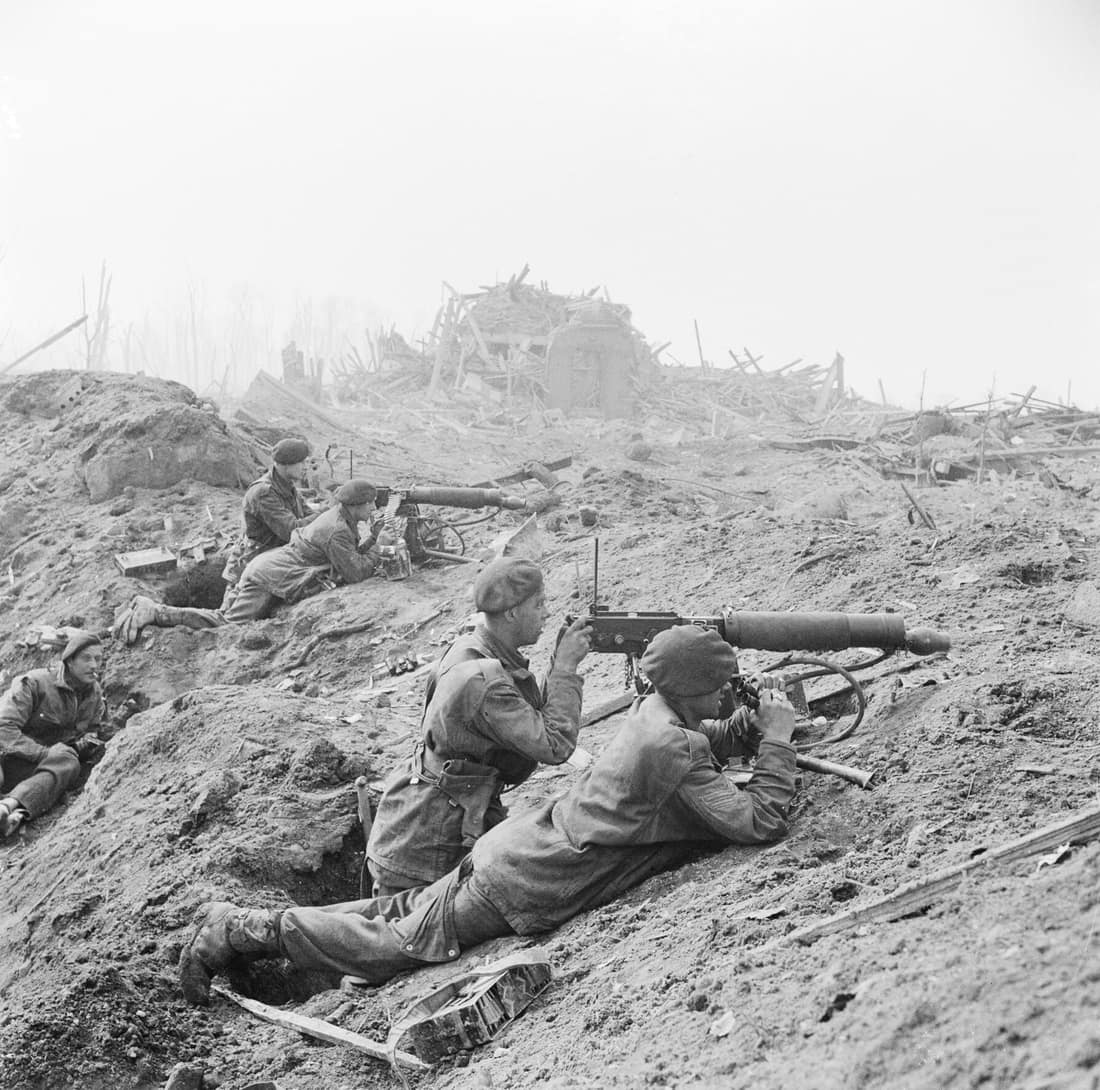
The bombardment opens at 17:00 with more than 3,000 guns; two hundred kilometres upstream, Patton's Third Army had already slipped over at Oppenheim the night before without a preliminary shot. At 21:00 the 51st Highland Division crosses at Rees in Buffaloes, and at 22:00, ten minutes after 200 Lancasters flatten Wesel, 1 Commando Brigade lands in the ruins. The US Ninth Army goes over south of the town at 02:00.
— Varsity
At 10:00 some 1,700 transports and 1,300 gliders put the British 6th and US 17th Airborne Divisions down on the Diersfordter Wald and the Issel bridges, in a single lift and only a few kilometres beyond the river so that the guns on the west bank can still reach them. It is the largest airborne operation ever flown in one day. The flak is heavy and it costs about 2,700 casualties in a morning.
— One bridgehead
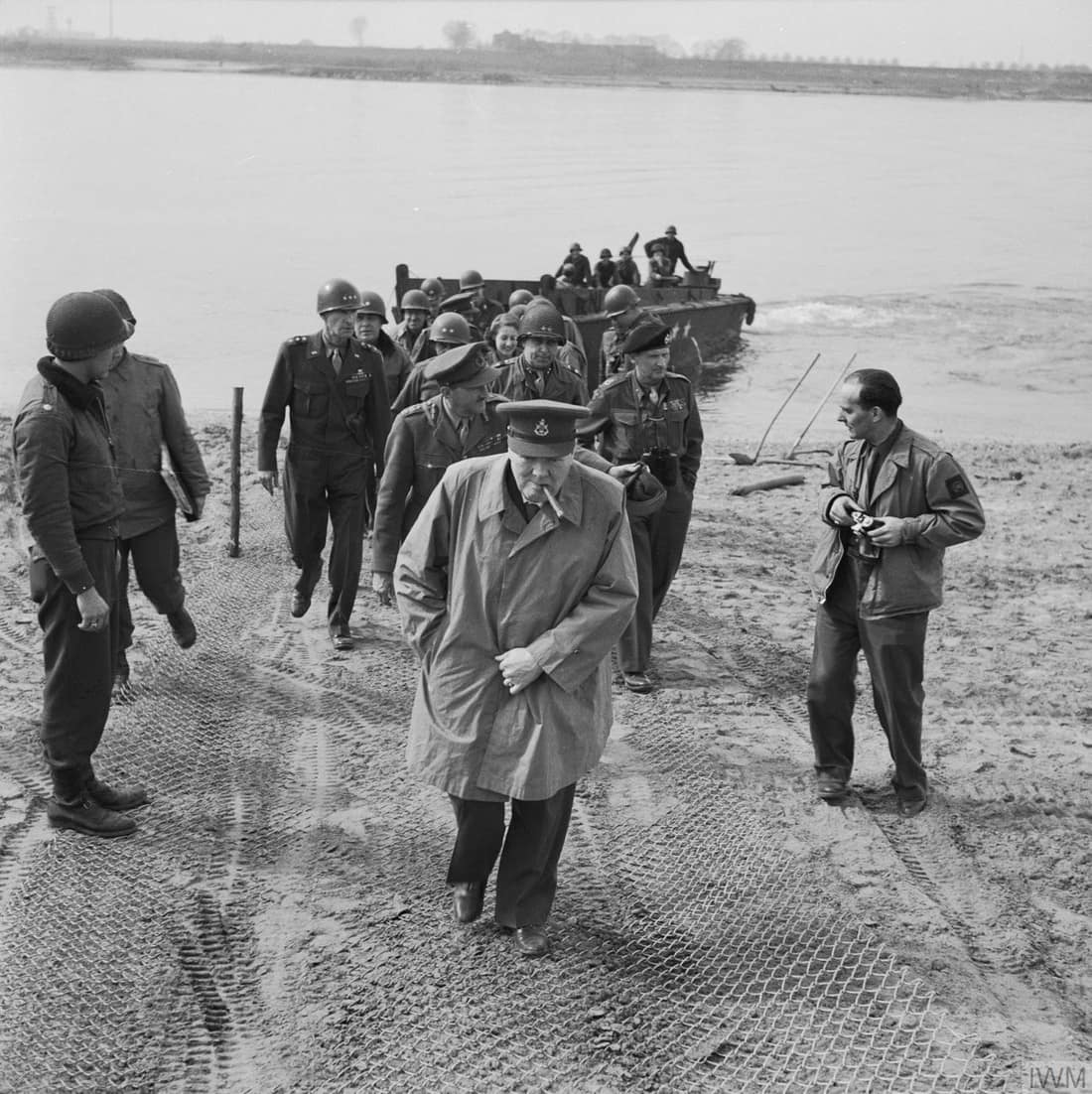
The airborne divisions met the 15th Scottish coming up from Bislich on the afternoon of the 24th, and by the 25th the separate crossings are a single bridgehead. Engineers have Class 40 bridges over the river at Wesel and Rees. The Germans have nothing left to counter-attack with but the remains of the 116th Panzer.
— Break-out
The bridgehead is some thirty miles wide and twenty deep, with twelve bridges across the river behind it. The Guards Armoured and the US 2nd Armored pass through for the north German plain and the eastern side of the Ruhr. There is no continuous German line left in front of them.