Mediterranean and North Africa · United States and Britain vs Vichy France
Operation Torch
8 November 1942 – 16 November 1942
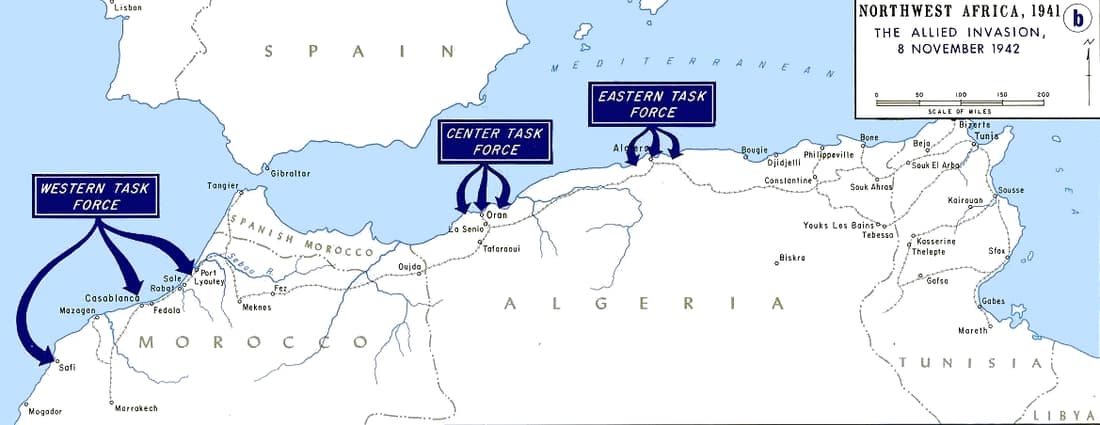
Anglo-American forces landed at Casablanca, Oran and Algiers, the first major American ground operation against the European Axis. Vichy resistance ended within three days after Admiral Darlan ordered a ceasefire, and the race for Tunisia began.
Explore Operation Torch on the interactive map · Wikipedia
Day by day
— Three landings
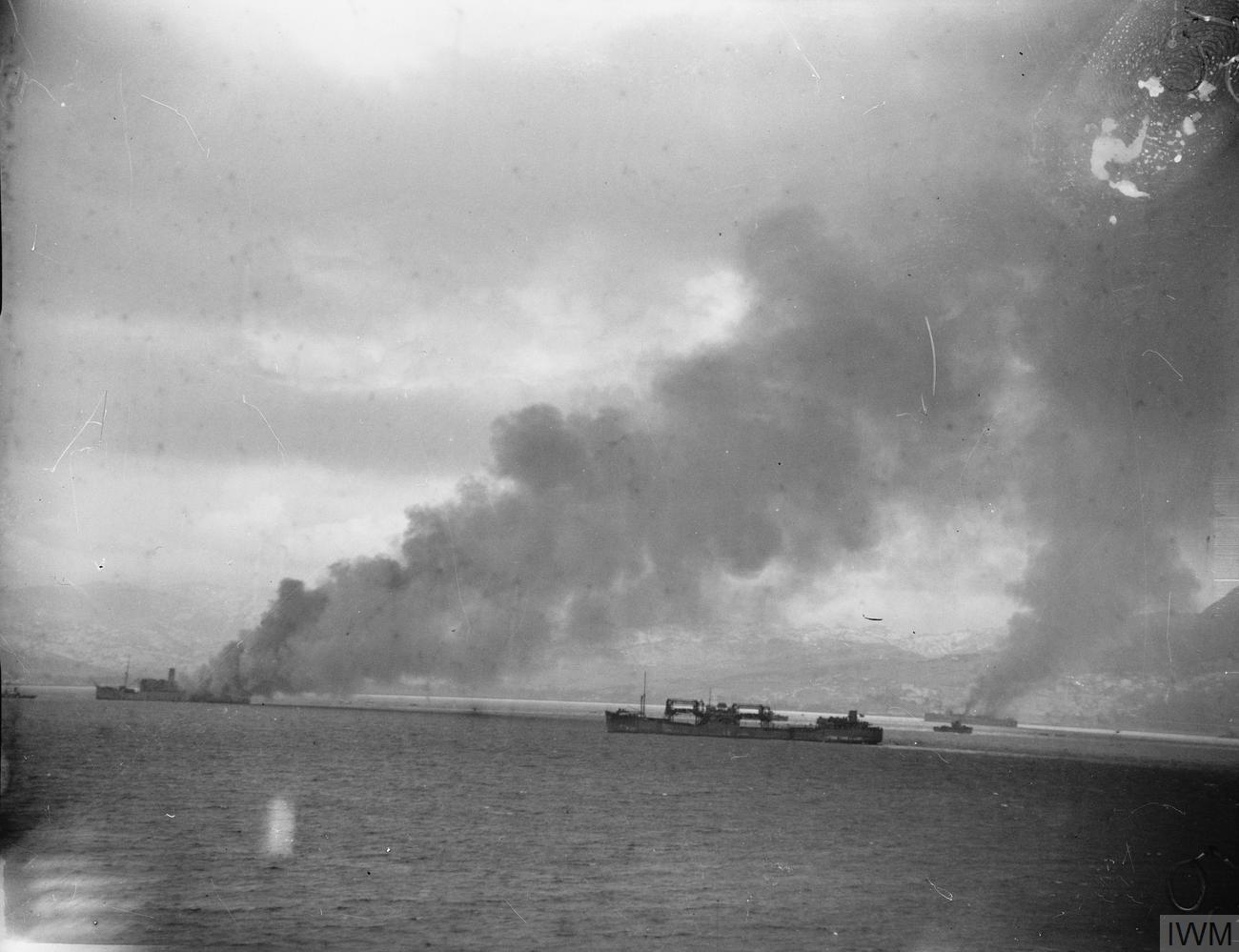
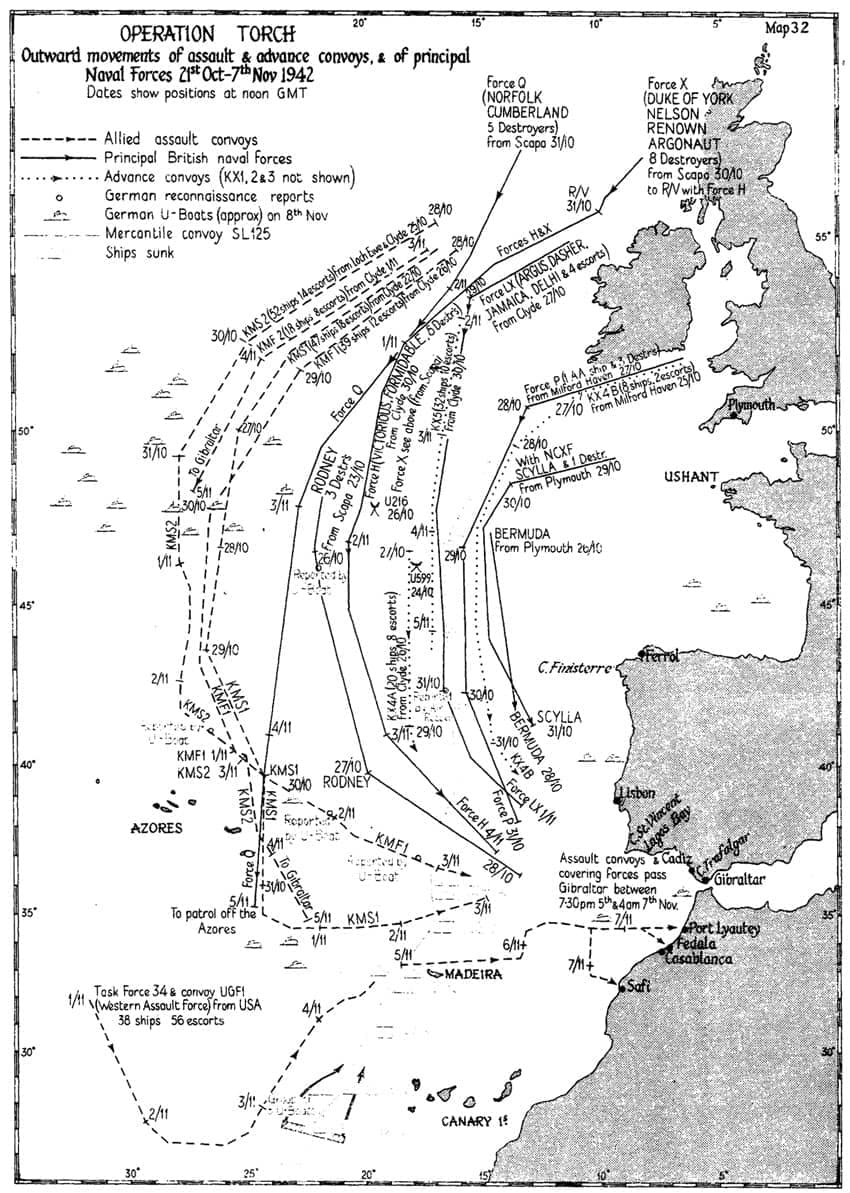
Three task forces come ashore before dawn: Patton's, sailed straight from Virginia, at Safi, Fedala and Port Lyautey in Morocco; Fredendall's at Arzew and either side of Oran; Ryder's, with a British brigade and commandos, at Sidi Ferruch and east of Algiers. Nobody knows whether the French will fight. At Oran they fight hard: the two cutters of Operation Reservist are shot to pieces going into the harbour, and off Casablanca the immobilised battleship Jean Bart trades fire with the Massachusetts.
— Tunis
Algiers surrendered on the evening of the 8th and Darlan, in the city by chance, is negotiating for the rest. Six hundred kilometres east, the first German transport aircraft land at El Aouina outside Tunis, and Kesselring begins a build-up the Allies have made no plan to prevent. Tunis is 800 kilometres from Algiers by one road and one single-track railway.
— The ceasefire
Oran surrendered at noon on the 10th, and Darlan, threatened with arrest, ordered all French forces in North Africa to cease fire that afternoon. Casablanca stops on the morning of the 11th, minutes before Patton's bombardment is due to open. The three days cost about 1,300 Allied and 1,350 French casualties; Germany answers by occupying the whole of Vichy France the same day.
— The race for Tunis
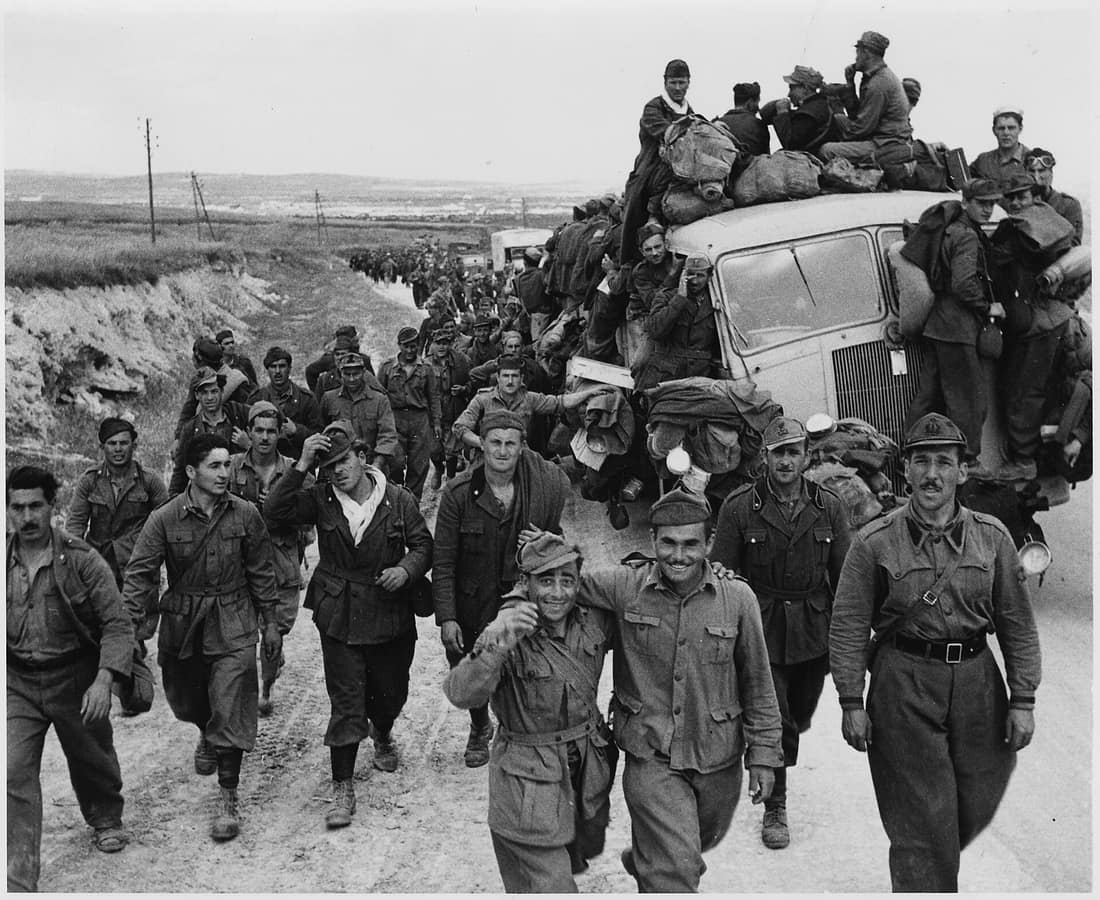
Anderson's First Army goes east with what it can carry: a brigade group by sea to Bougie and Bone, paratroops onto the airfields at Souk el Arba and Youks-les-Bains, and Blade Force, a light armoured column, up the road for Medjez el Bab. It is two brigades against a bridgehead being reinforced by air at a thousand men a day, in weather about to break. The leading troops meet German paratroops at Djebel Abiod on the 17th.