Western Europe · United States vs Germany
Capture of the bridge at Remagen
7 March 1945 – 17 March 1945
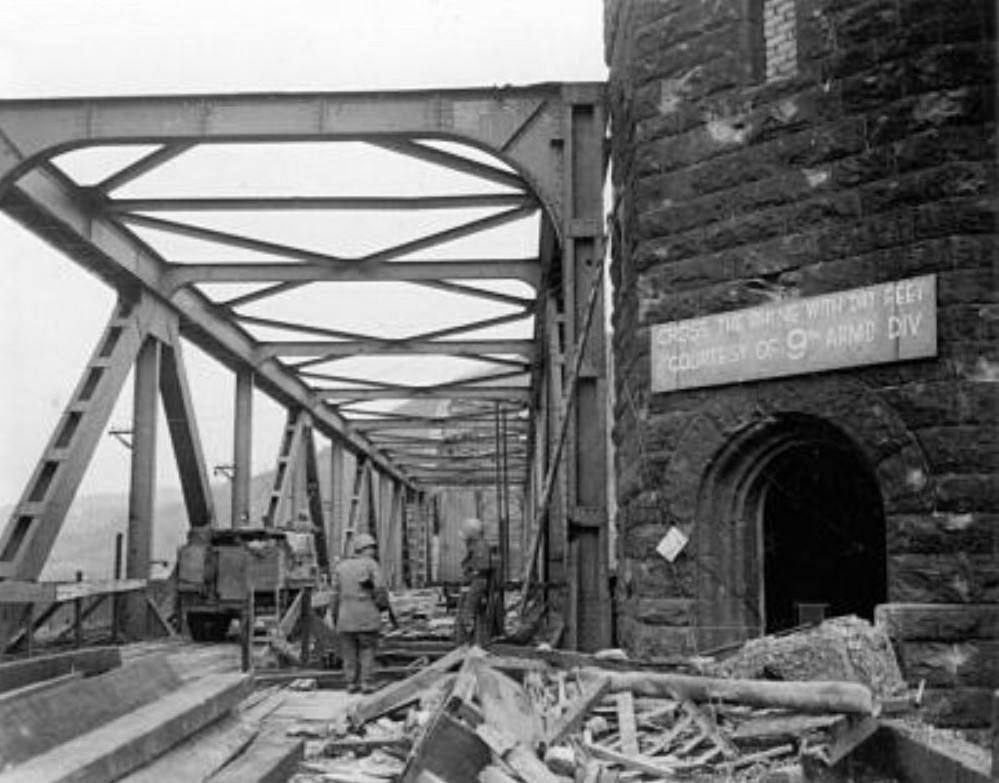
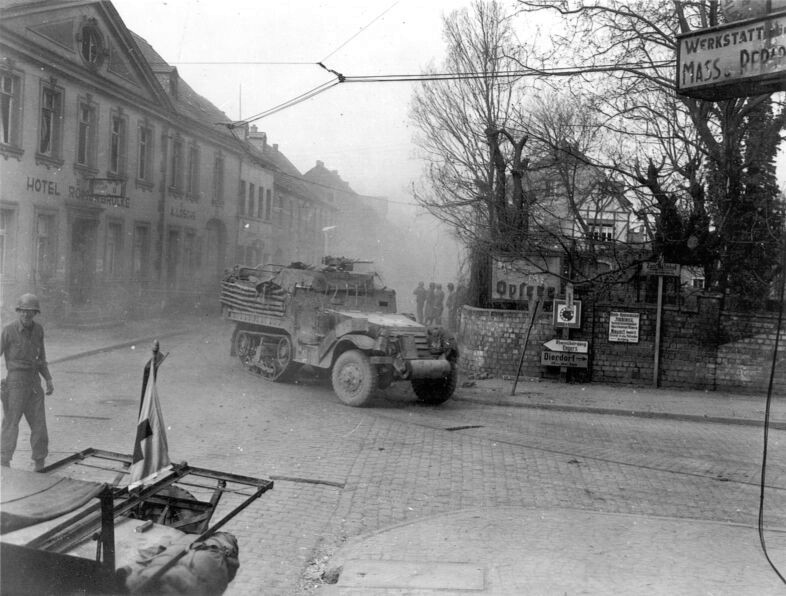
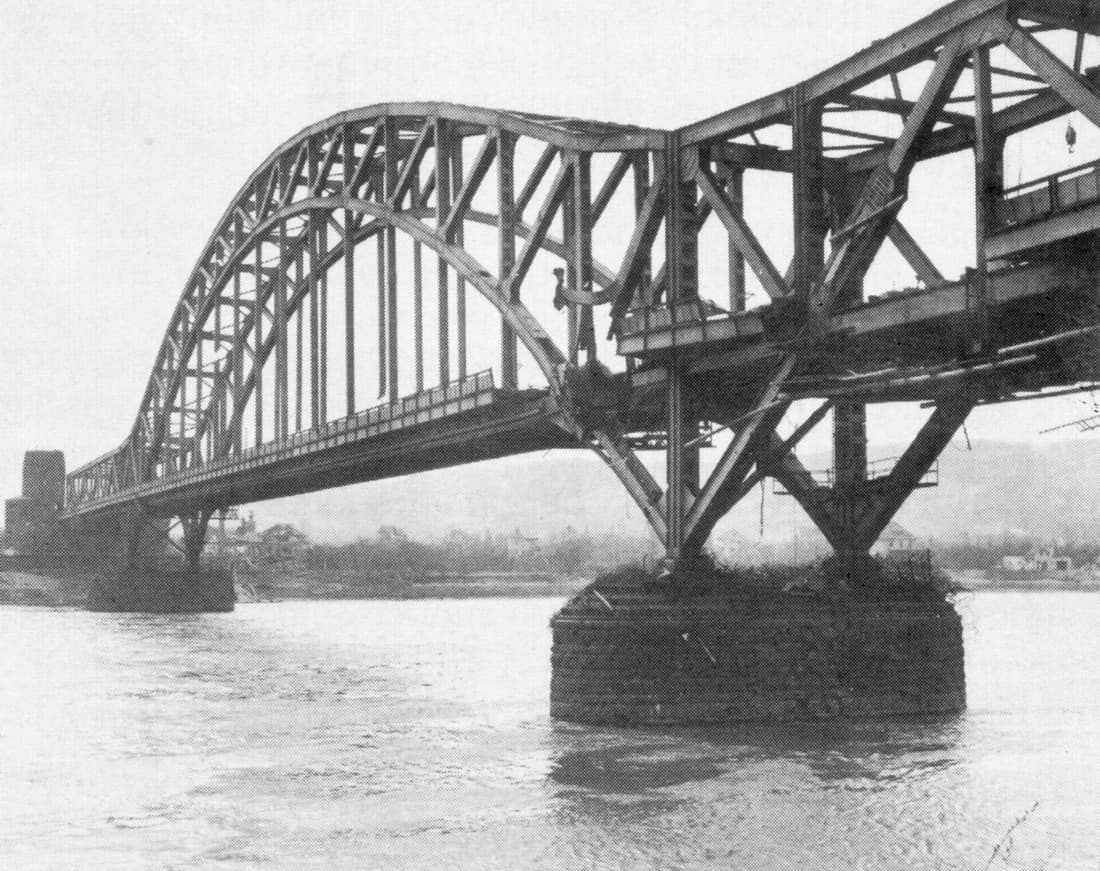
A task force of the US 9th Armored Division found the Ludendorff railway bridge still standing and rushed it as the demolition charges partly failed. Eisenhower poured five divisions across in ten days. The weakened bridge collapsed on 17 March, but pontoon bridges had already replaced it.
Explore Capture of the bridge at Remagen on the interactive map · Wikipedia
Day by day
— The bridge still stands
A task force of the 9th Armored Division comes over the hill above Remagen at about 15:50 and sees the Ludendorff railway bridge still up. The demolition charges fire only in part; Lieutenant Timmermann's company is on the far bank by 16:00 and cuts the wires on the rest. Eight thousand men are over by midnight.
— Across in force
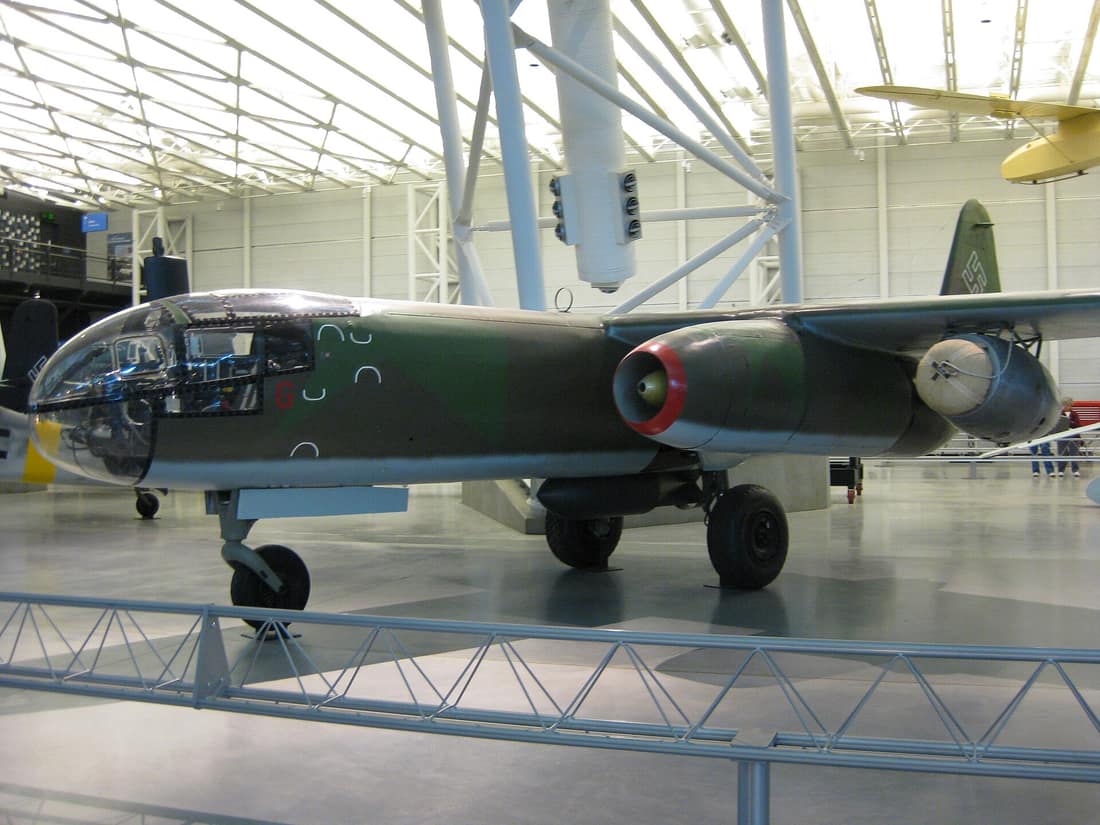
Engineers work day and night laying pontoon bridges alongside while Stukas, Me 262 jets and long-range guns work on the crossing. Hitler dismisses Rundstedt over it and has four officers shot for failing to destroy the bridge. The bridgehead is about three kilometres deep.
— Widening
Five divisions are over. The Germans commit the 11th Panzer and fire eleven V-2 rockets at the bridge, the only time the weapon is aimed at a tactical target; one falls three hundred metres away and kills three Americans. Eisenhower holds the bridgehead to about twenty-five miles by ten while the main crossings are prepared elsewhere.
— The bridge falls
At about 15:00 the Ludendorff bridge, worked on for ten days by bombs, shells, rockets and the traffic of an army, twists and drops into the Rhine, killing 28 engineers. Six tactical bridges are already carrying the load, and three corps stand in the bridgehead ready for the break-out east.