Western Europe · United Kingdom, Canada and United States vs Germany
Rhineland offensive (Veritable and Grenade)
8 February 1945 – 11 March 1945
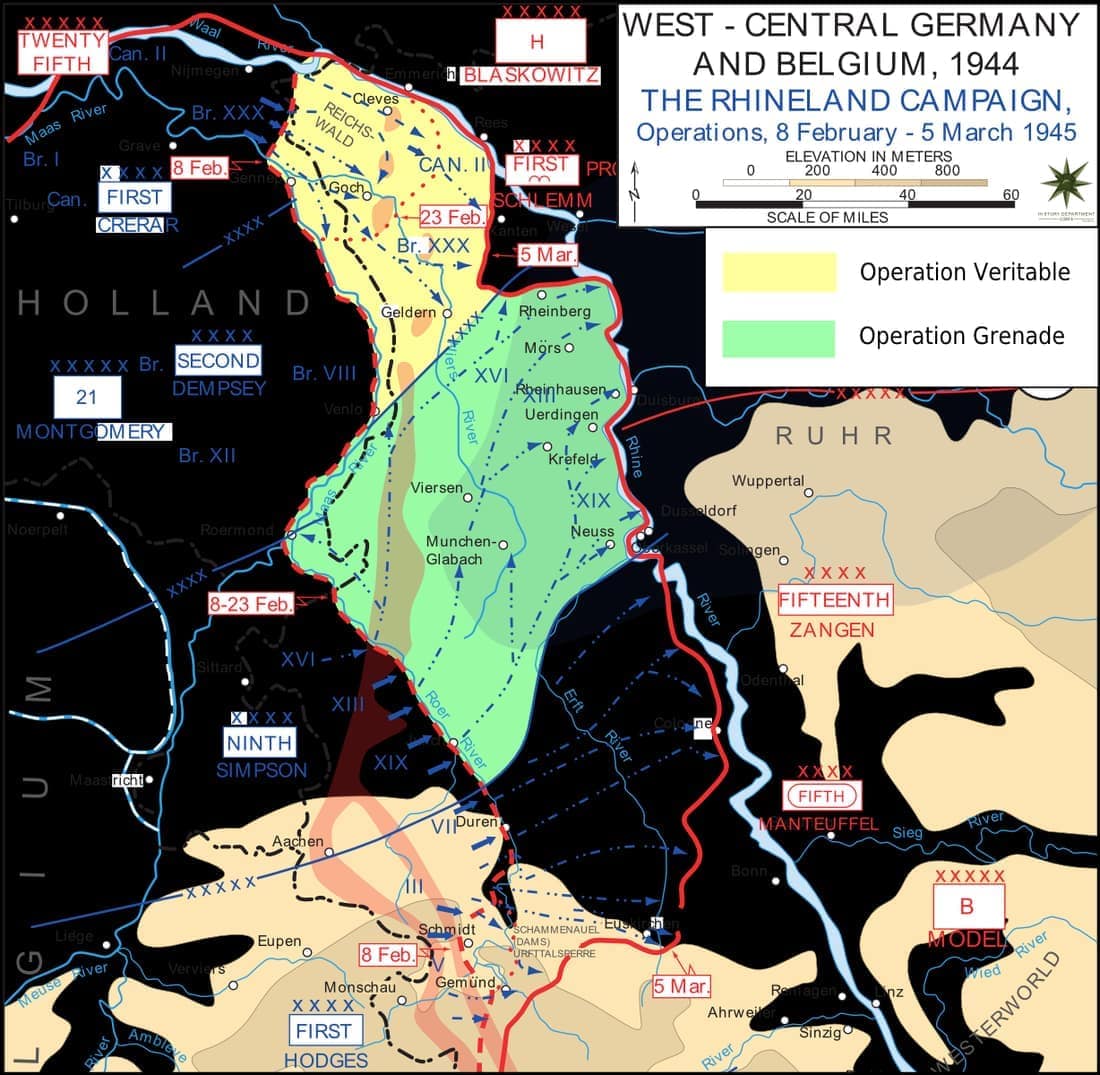
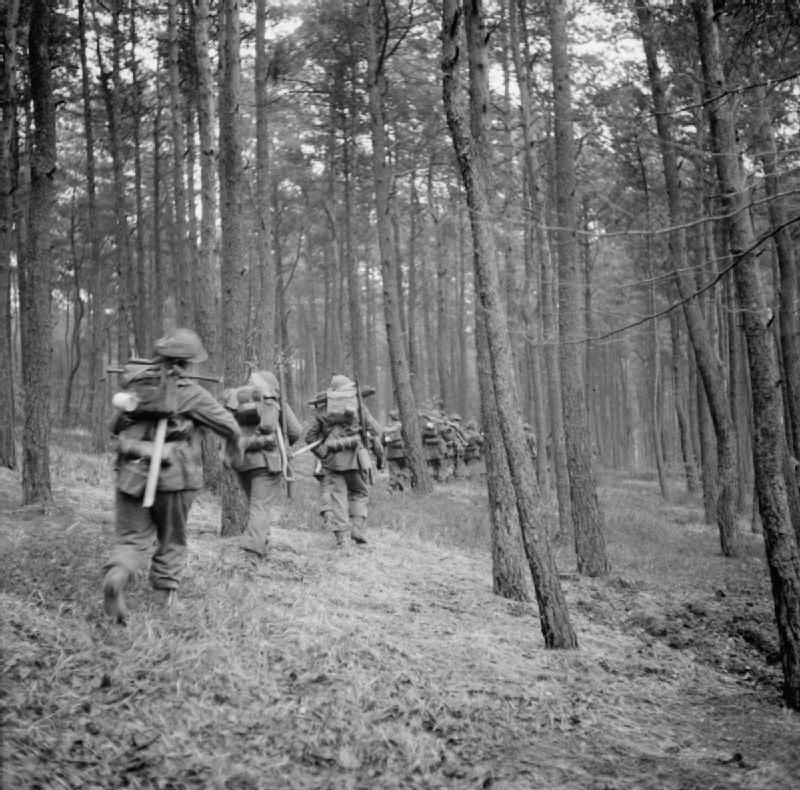
Montgomery's 21st Army Group attacked south-east through the flooded Reichswald while the US Ninth Army, delayed two weeks by the flood the Germans let out of the Roer dams, crossed the river and swung north to meet it. Farther south the US First and Third Armies cleared the Eifel. By 11 March the west bank of the Rhine from Nijmegen to Koblenz was in Allied hands.
Explore Rhineland offensive (Veritable and Grenade) on the interactive map · Wikipedia
Day by day
— Veritable
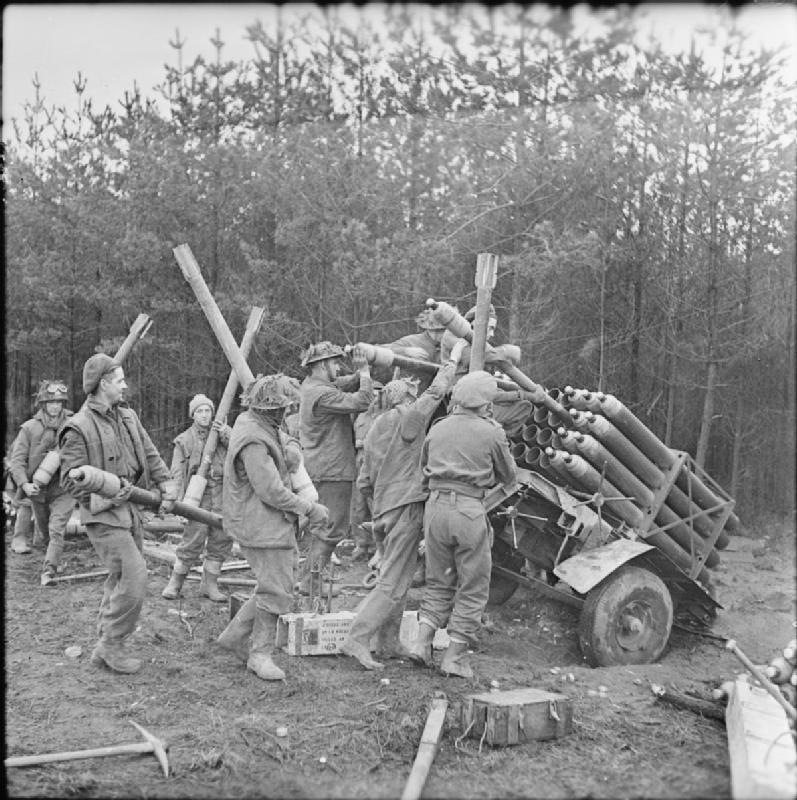
A thousand guns open at 05:00 and the First Canadian Army attacks south-east out of the Nijmegen salient into the Reichswald. The Germans have opened the Rhine dykes and much of the ground between the Maas and the river is under a metre of water; Buffaloes carry the infantry forward.
— Grenade
The Germans opened the Roer dams on 9 February and the flood held the Ninth Army on the west bank for a fortnight. At 03:30 on the 23rd, behind 2,000 guns, thirteen battalions cross the falling river in assault boats and are over in strength by nightfall.
— Geldern
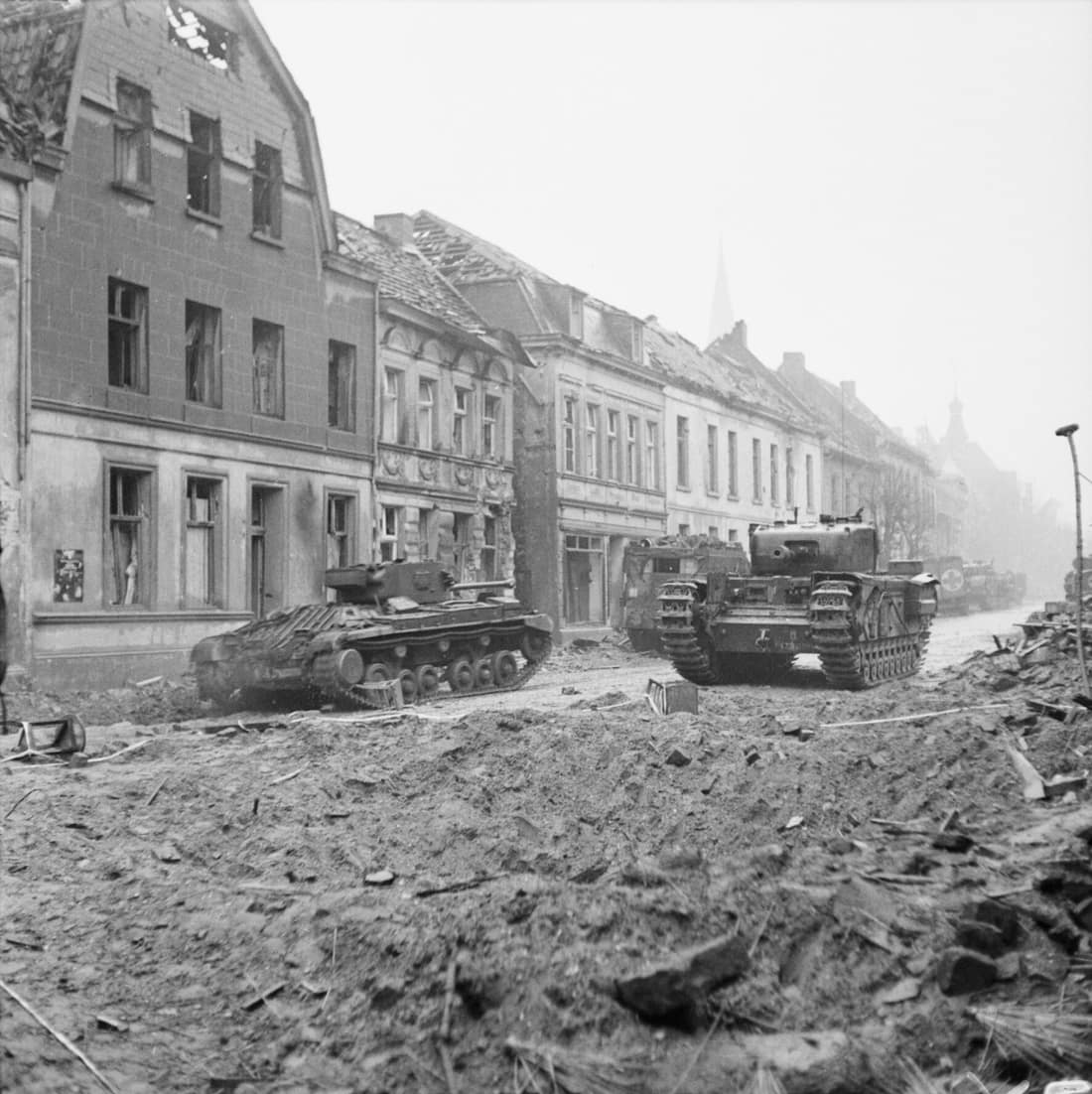
The Ninth Army has run north-east across open country at the pace of its tanks, and meets the British coming south at Geldern. Everything west of the Rhine below Wesel is now Allied except the bridgehead the Germans are holding to get their men over.
— Cologne and Remagen
The 3rd Armored Division takes Cologne on the 6th: the first great German city in Allied hands, and mostly rubble. The next afternoon a task force of the 9th Armored comes over a hill above Remagen to find the Ludendorff railway bridge still standing, and gets a company across before the charges can be fired.
— The west bank
The Germans blow the last bridges at Wesel on the 10th and pull what is left of First Parachute Army over the river. From Nijmegen to Koblenz the west bank is Allied. Veritable and Grenade cost the two armies about 23,000 men between them; the Germans lost some 90,000, more than half of them prisoners.