China, Burma and India · Soviet Union and Mongolia vs Japan
Soviet Invasion of Manchuria
9 August 1945 – 2 September 1945
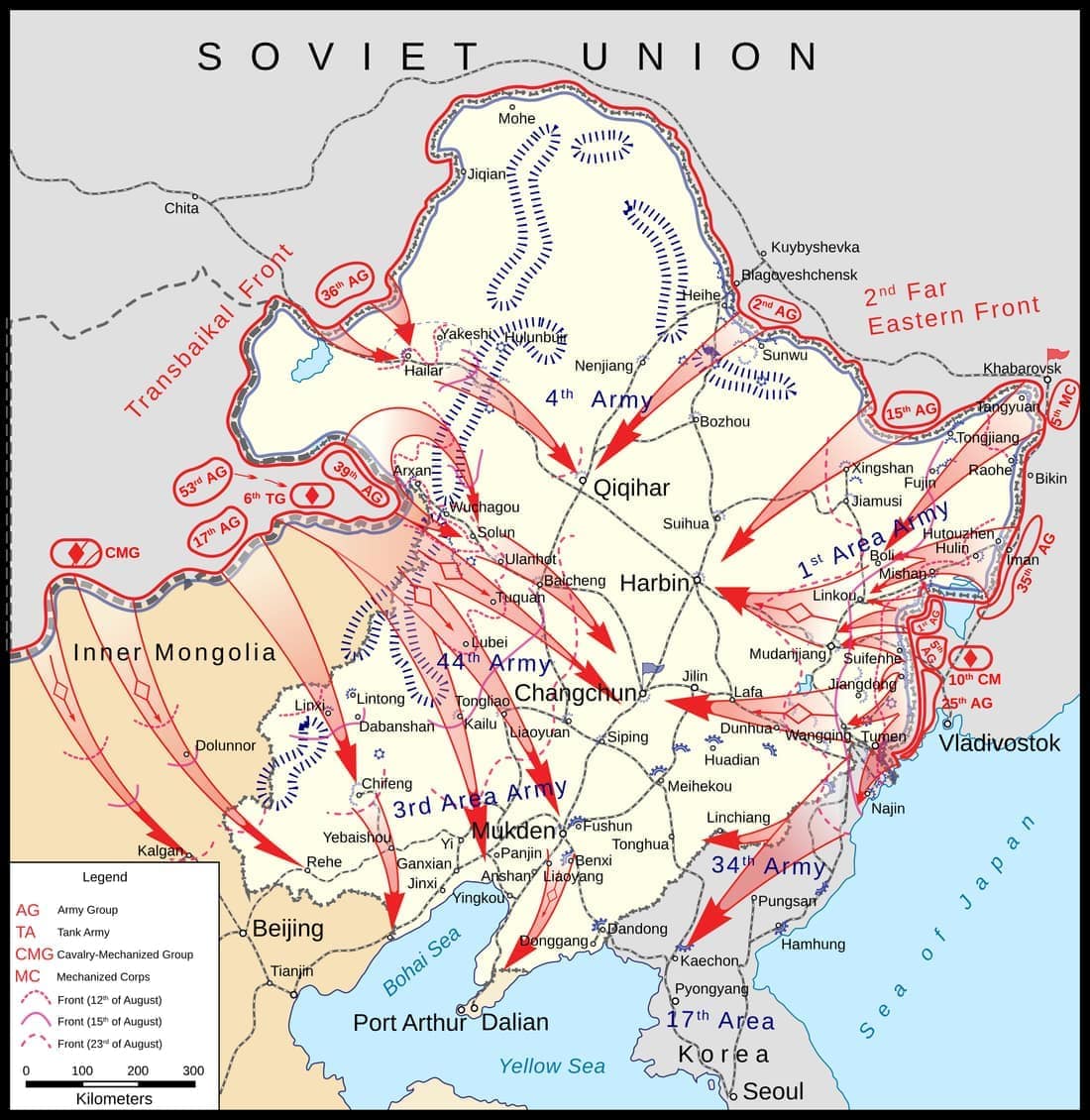
Honouring the Yalta pledge to join the Pacific war within three months of Germany's defeat, over a million Soviet and Mongolian troops attacked the Japanese Kwantung Army in Manchukuo on three fronts at once. The hollowed-out Kwantung Army, stripped of its best units to reinforce the Pacific, collapsed within days. The loss of Japan's last major continental army, alongside the atomic bombings, was decisive in Tokyo's decision to surrender.
Explore Soviet Invasion of Manchuria on the interactive map · Wikipedia
Day by day
— The Yalta pledge
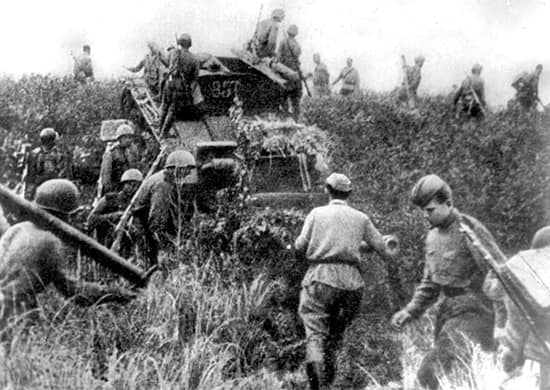
Three months to the day after Germany's surrender, and ten minutes past midnight Trans-Baikal time, over a million Soviet and Mongolian troops cross into Manchukuo from Mongolia, over the Amur and out of the Maritime Province. There is no opening bombardment and heavy rain is falling. Nagasaki is bombed the same morning.
— The Emperor speaks
The 6th Guards Tank Army has crossed the Greater Khingan and is out on the plain, and the hardest fighting of the campaign is at Mudanjiang. The Emperor's recording is played at noon Tokyo time, but Kwantung Army headquarters passes on no ceasefire and the fighting continues. On Karafuto, invaded on the 11th, the Soviet 56th Rifle Corps is grinding through the Koton fortifications.
— Manchuria gone
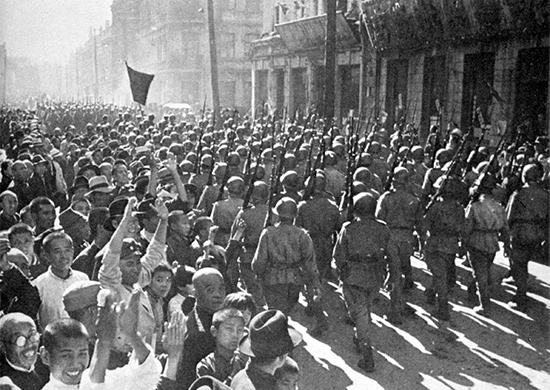
Yamada ordered the surrender on the 17th and airborne parties fly ahead of the columns to take it at Harbin, Changchun, Mukden and Qiqihar. At Mukden they find the Manchukuo emperor Puyi waiting for an aeroplane. Some 600,000 men go into captivity and most are sent to Siberia; the puppet state ceases to exist.
— Karafuto and Korea
Toyohara is occupied on the 25th and southern Sakhalin, Japanese since 1905, is Soviet again. The 25th Army has come down the Korean coast and reached Pyongyang on the 24th; it stops on the 38th parallel agreed with Washington. Landings on the Kurils that began at Shumshu on the 18th are working down the chain.
— Tokyo Bay
The instrument of surrender is signed aboard the Missouri on the morning of the 2nd, and the Kuril landings finish in the following days. In twenty-four days the Soviet Union has destroyed Japan's last army on the mainland for about 12,000 dead of its own, and taken Manchuria, northern Korea, southern Sakhalin and the Kurils. Korea is divided at the 38th parallel as a temporary convenience.