China, Burma and India · British Commonwealth and China vs Japan
Japanese Conquest of Burma
22 January 1942 – 28 May 1942
The Japanese 15th Army entered Burma from Thailand and within seven weeks took Rangoon, the port on which the whole country and the Burma Road to China depended. Chinese armies under Stilwell joined the defence but were outflanked in turn. The British and Indian forces retreated nearly a thousand miles to India ahead of the monsoon, the longest retreat in British Army history.
Explore Japanese Conquest of Burma on the interactive map · Wikipedia
Day by day
— Into Burma
The 55th Division attacks through the Kawkareik pass from Thailand, where Japanese troops have been ashore since December and the Thai army is now an ally. Two brigades of raw troops hold the whole of southern Burma; Moulmein is given up across the Salween on 31 January.
— The Sittang bridge
With most of the 17th Indian Division still on the east bank and Japanese troops close to the western end, the bridge over the Sittang is blown at 05:30. The men who get across swim for it; the division comes out with 3,484 men and 1,420 rifles and no guns or lorries at all. The road to Rangoon is open.
— Rangoon
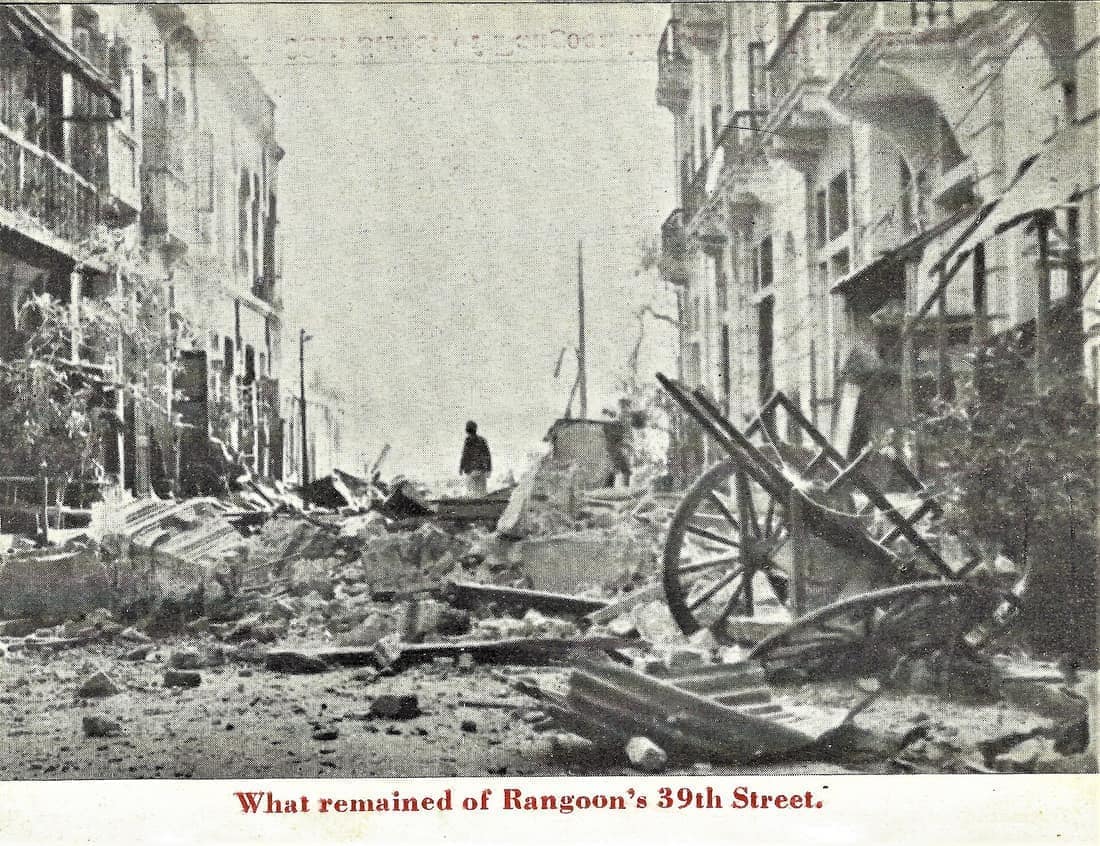
Rangoon was abandoned on the 7th under a scorched-earth plan and the Japanese walk into it on the 8th. The garrison marching north finds the road blocked at Taukkyan and gets out only because the Japanese, having orders to encircle the city, lift the block for a few hours. With the port gone, everything that follows is a retreat.
— Yenangyaung
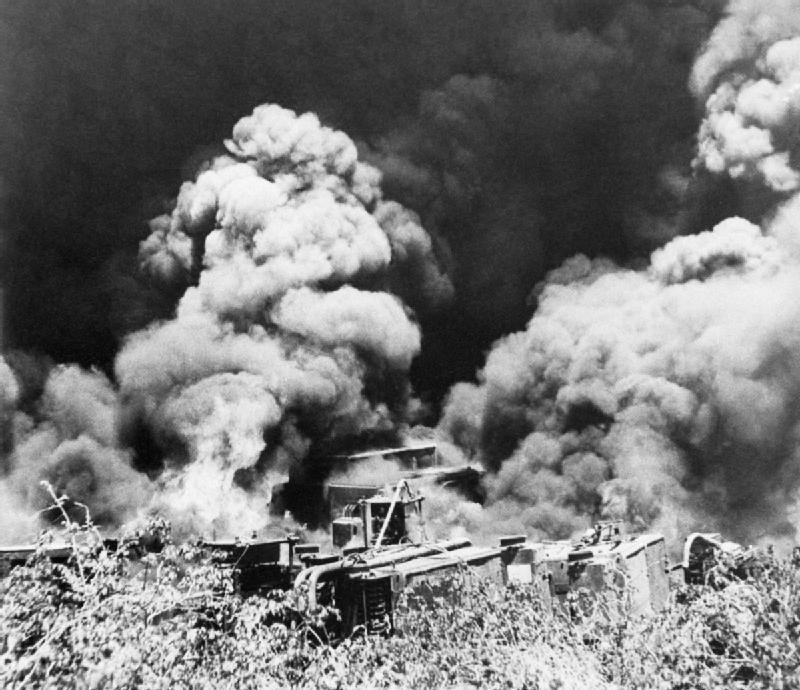
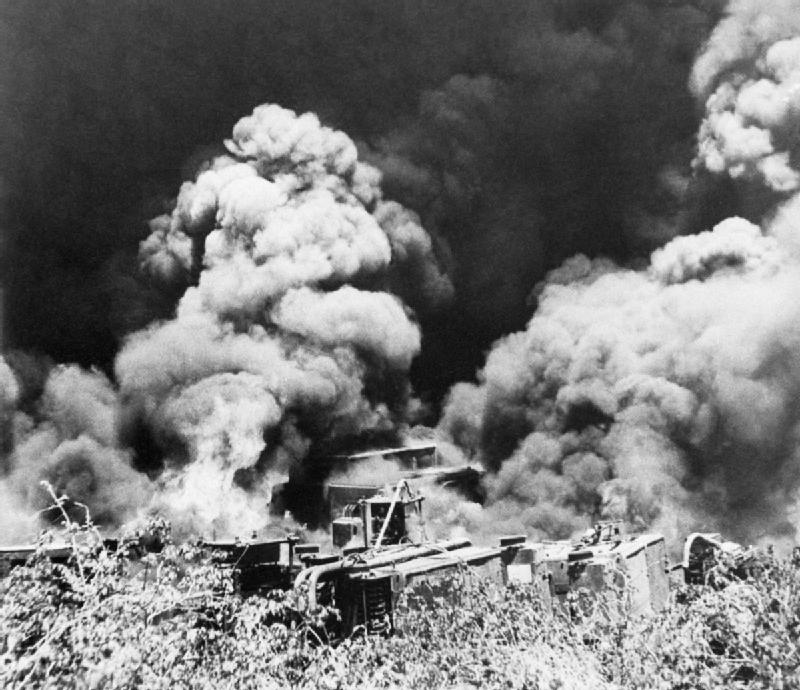
The oilfields are demolished on the 16th, a million gallons of crude burning behind the retreat. The 1st Burma Division is cut off south of the Pin Chaung and fights its way out on the 19th with the Chinese 38th Division attacking from the north. On the Sittang the Chinese 200th Division has held Toungoo for a fortnight and broken out; two fresh Japanese divisions are now ashore.
— Lashio
The 56th Division has driven three hundred miles up the Shan states in a fortnight and takes Lashio, the Burmese end of the Burma Road: the Chinese armies are cut off from China and Stilwell's supply line is gone. Mandalay is given up the next day and the Ava bridge over the Irrawaddy blown behind the last of the retreat.
— To India
Burcorps crossed the Chindwin at Shwegyin and Kalewa in the middle of the month, burning its last vehicles on the bank, and the rearguard walks into Imphal as the monsoon breaks. It has come nine hundred miles in three months, the longest retreat in the history of the British Army. Stilwell walks out to India with a column of 114; the Chinese Fifth Army goes north into the Hukawng valley and loses thousands to the jungle.