China, Burma and India · British Commonwealth vs Japan
Reconquest of Burma
14 January 1945 – 3 May 1945
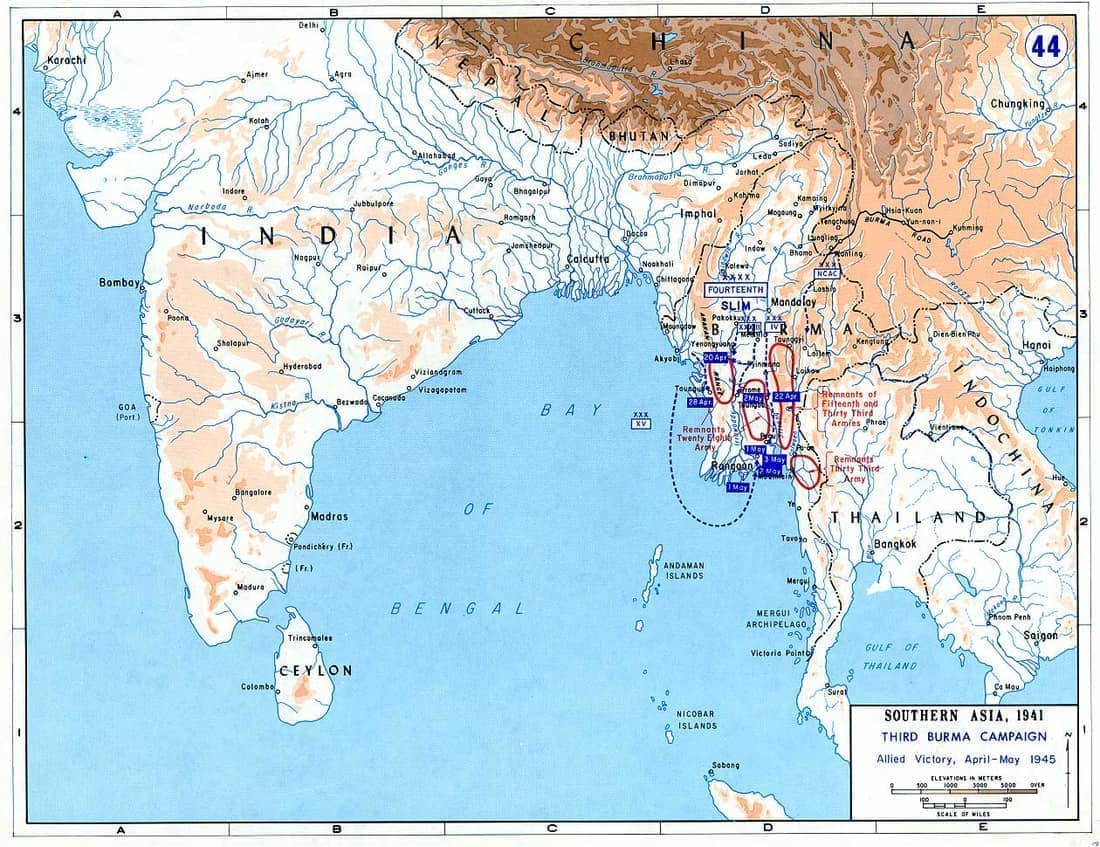
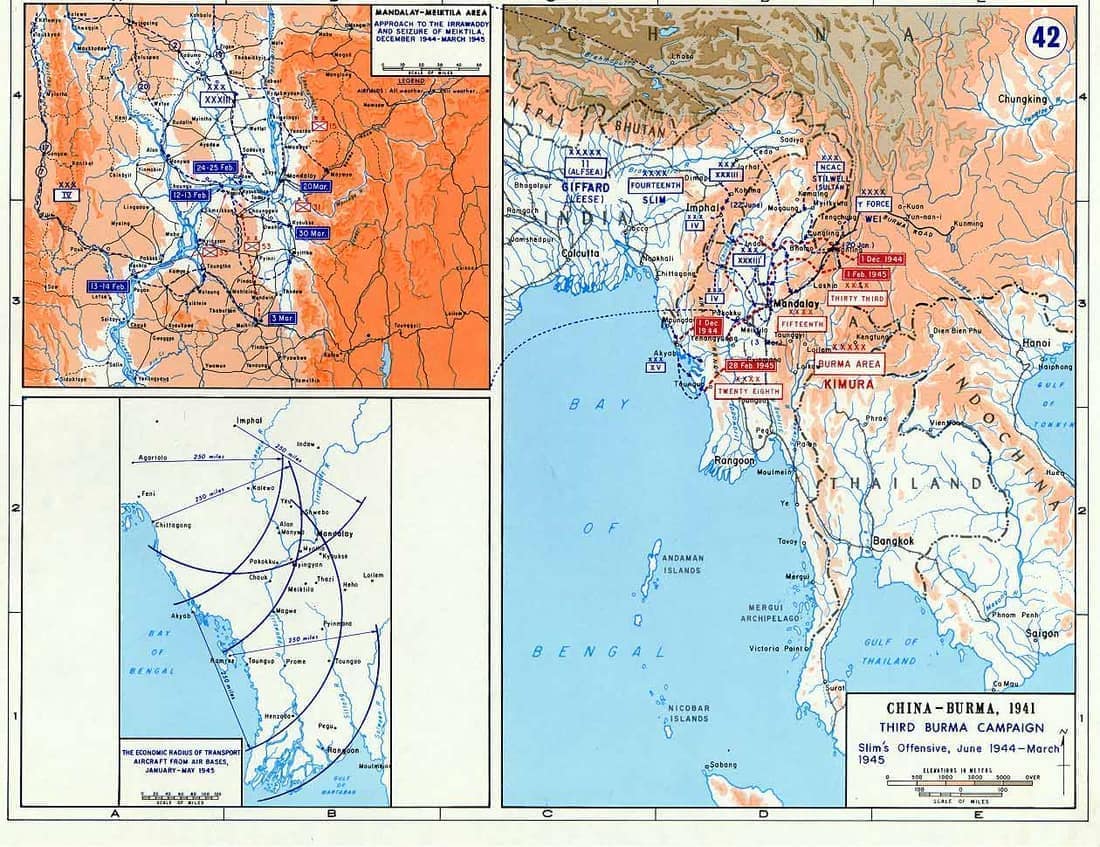
The Fourteenth Army crossed the Irrawaddy on a broad front and, while the Japanese massed to defend Mandalay, sent an armoured column to seize their supply centre at Meiktila. Both cities fell in March and the Japanese armies broke up in the race south for Rangoon. The capital was taken from the sea and air on 3 May, two days after the monsoon broke.
Explore Reconquest of Burma on the interactive map · Wikipedia
Day by day
— The first crossing
The 19th Indian Division gets a bridgehead over the Irrawaddy at Kyaukmyaung, north of Mandalay, and holds it against a month of night attacks. That is what Slim intends: the crossing that shows, drawing Kimura's reserves north while IV Corps moves in radio silence down the Gangaw valley towards the river two hundred miles to the south.
— Nyaungu
The 7th Indian Division crosses at Nyaungu on the 14th in the widest opposed river crossing of the war, over eleven hundred metres of water in boats whose outboards keep failing. The Japanese, watching Mandalay, have left the reach thinly held. Behind the bridgehead the 17th Indian Division and the 255th Tank Brigade are waiting to break out for Meiktila.
— Meiktila
The 17th Indian Division and the tanks come out of the bridgehead on 21 February, cross eighty miles of dry country and take Meiktila on 3 March after four days of house-to-house fighting. It is the airfield and supply centre for both Japanese armies on the front, and losing it leaves them with the Fourteenth Army in their rear.
— Mandalay
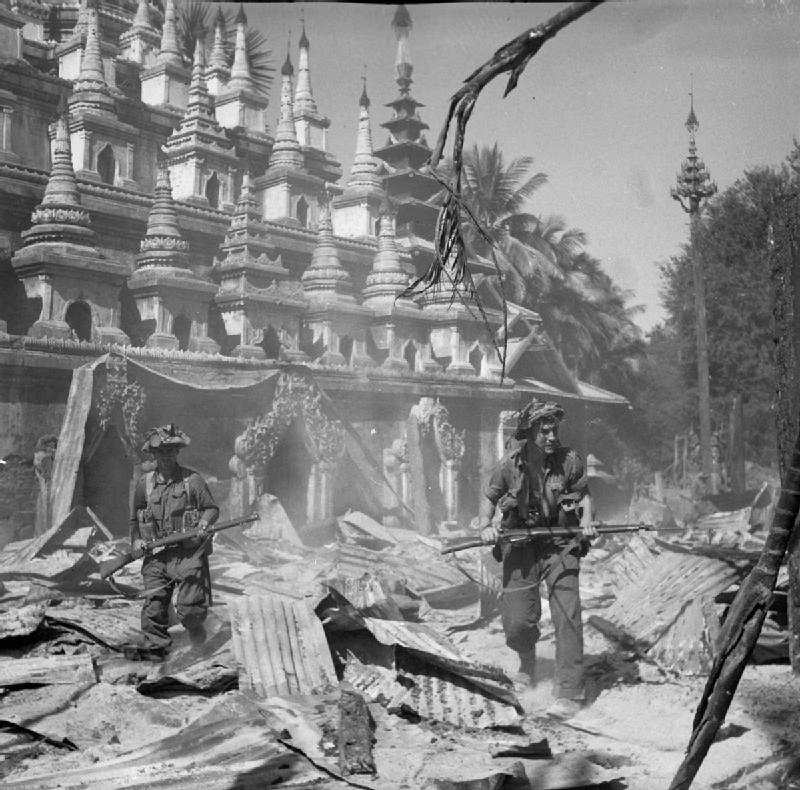
The 19th Division fights into Mandalay from the north and takes Mandalay Hill; Fort Dufferin, whose walls are eight metres of earth behind brick, holds until the 20th and is found empty when the assault goes in. Honda's counter-attacks on Meiktila are called off on the 29th, and with both his cities gone Kimura has no line left in central Burma.
— The race south
Pyawbwe is taken on the 10th and with it the last organised force between the Fourteenth Army and Rangoon. Two columns go down the country at twenty miles a day, IV Corps on the railway through Toungoo and XXXIII Corps down the Irrawaddy on Prome, with the monsoon due in three weeks and the army at the end of a very long air lift.
— Rangoon
The Gurkha parachute battalion drops at Elephant Point on 1 May and clears the guns at the river mouth; the 26th Indian Division comes up the estuary on the 2nd, the day the monsoon breaks. The Japanese have already gone: a pilot reads a message painted on the jail roof telling him so, lands at Mingaladon and walks into the city. Rangoon is occupied on the 3rd, and the two forces meet on the Prome road on the 6th.