Western Europe · United Kingdom vs Germany
Battle of Berlin (air)
18 November 1943 – 31 March 1944
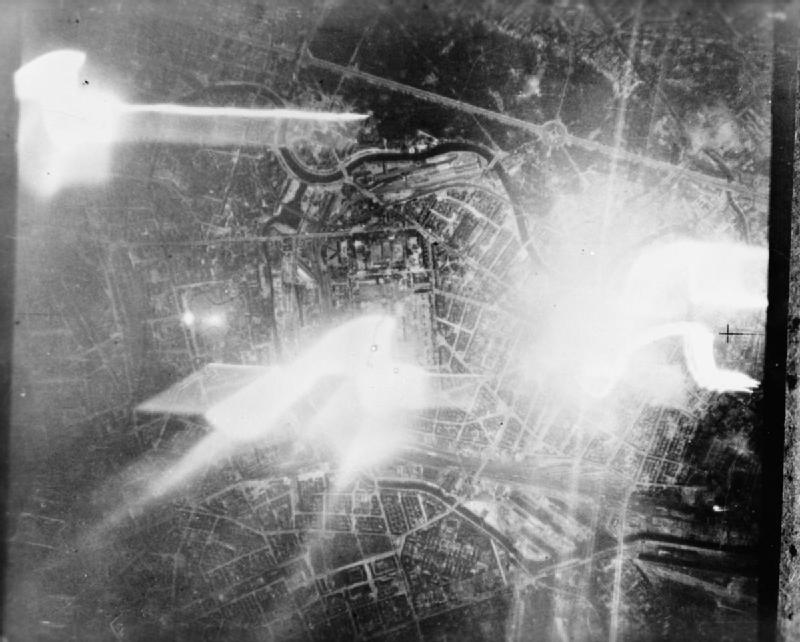
Harris's winter offensive sent sixteen major raids against Berlin and others against distant targets, hoping to end the war by bombing. The capital was heavily damaged but not knocked out, and Bomber Command lost more than 1,000 aircraft to flak and night fighters. The catastrophic Nuremberg raid ended the offensive.
Explore Battle of Berlin (air) on the interactive map · Wikipedia
Day by day
— Harris opens
Harris tells Churchill that Bomber Command can wreck Berlin from end to end if the Americans will come in on it, and that it will cost between them 400 to 500 aircraft and will cost Germany the war. The Americans will not, and the offensive is fought by night alone. It opens on 18 November with 440 Lancasters over a Berlin covered in cloud, while 395 aircraft go to Mannheim to split the defence.
— The heaviest night
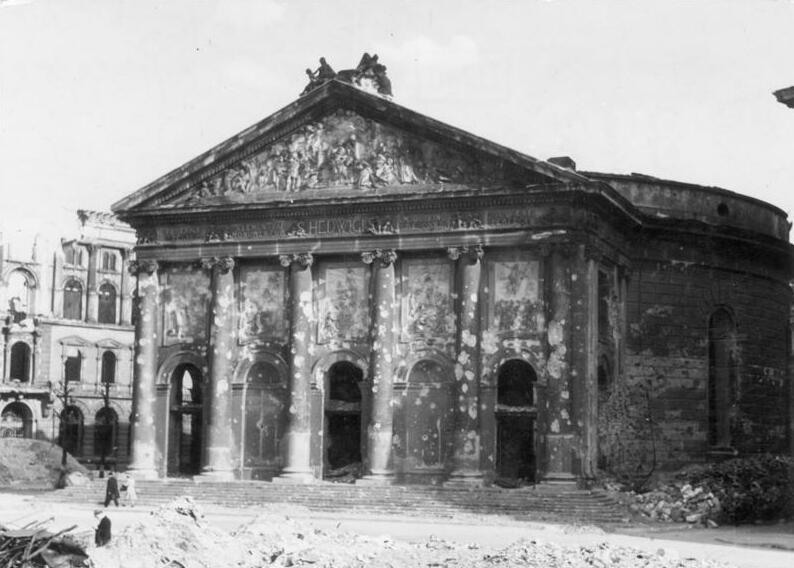
764 aircraft attack in dry, clear weather with a good ground-marked aiming point, and this is the most destructive raid Berlin suffers in the whole war. The western districts burn from the Tiergarten out through Charlottenburg to Spandau; the Kaiser Wilhelm Memorial Church is left the ruin that still stands. Some 175,000 people are made homeless in a night and the ministries of the government quarter are hit.
— The winter attrition
Sixteen major raids go to Berlin between November and March, and others to Leipzig, Frankfurt, Stuttgart and Magdeburg to keep the defences guessing. The Germans learn to feed whole night fighter squadrons into the stream rather than hold them in boxes, and to home on the bombers' own radar and radio. On the night of 28 January, 46 of 677 aircraft do not come back.
— The last Berlin raid
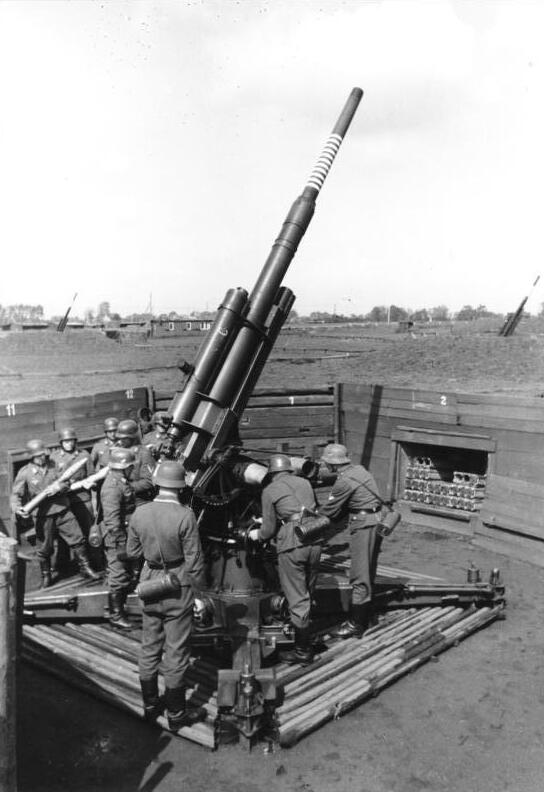
811 aircraft go to Berlin on the night of 24 March and meet a jet-stream wind nobody has forecast, which drives the stream south of its track and strings it out across the flak. 72 aircraft are lost, most of them to guns rather than fighters, and the raid is scattered. Berlin has taken more than 10,000 tons of bombs and is still working; the city has not been wrecked from end to end and the war has not ended.
— Nuremberg
795 aircraft are sent to Nuremberg on a clear, moonlit night on a long straight leg, and the German controllers put them together over the Belgian beacons and follow them for 250 kilometres. 95 aircraft are lost and 545 men killed: the worst night in the history of Bomber Command. The offensive ends there, and from April the command is put under Eisenhower for the invasion.