Pacific · United States vs Japan
Battle of Kwajalein
31 January 1944 – 4 February 1944
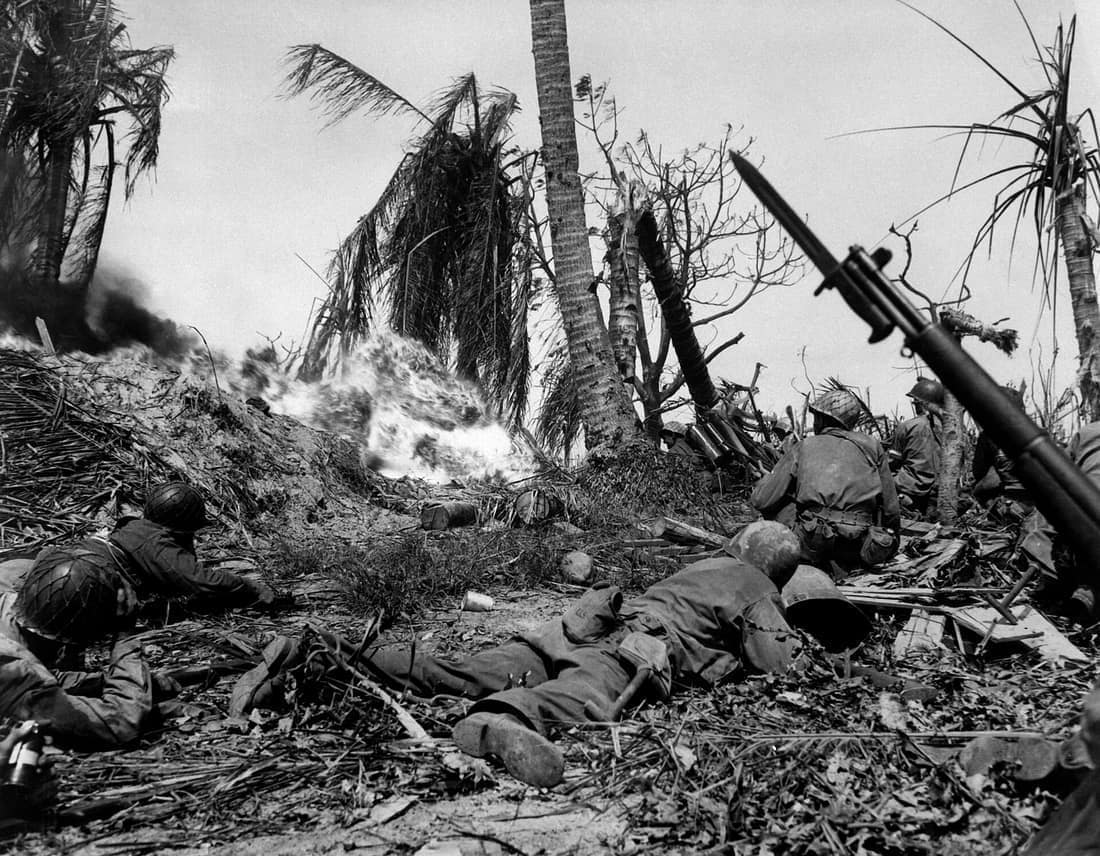
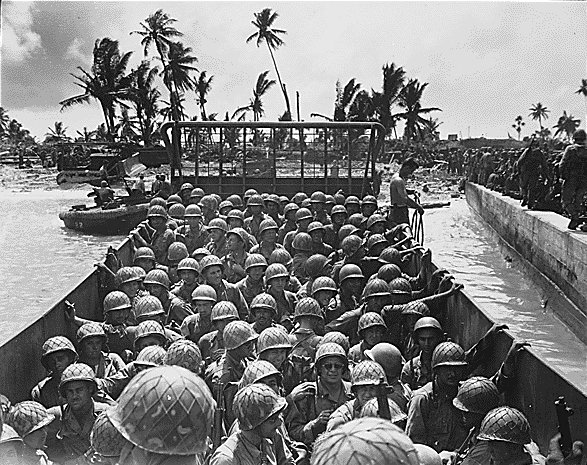
Applying the lessons of Tarawa, the Americans took the largest atoll in the Marshalls with far heavier preliminary bombardment and amphibious tractors for every wave. Marines took Roi-Namur at the northern end and the Army's 7th Division took Kwajalein island in the south. Eniwetok followed later in the month.
Explore Battle of Kwajalein on the interactive map · Wikipedia
Day by day
— The small islands first
Nothing is landed on the objectives themselves. Marines take Mellu and Ennuebing off Roi-Namur and soldiers take Enubuj and Ennylabegan off Kwajalein, and by evening the artillery is ashore on all four with the guns laid on tomorrow's beaches. Majuro, 400 kilometres to the south-east, has been occupied the same day and found empty.
— The lagoon side
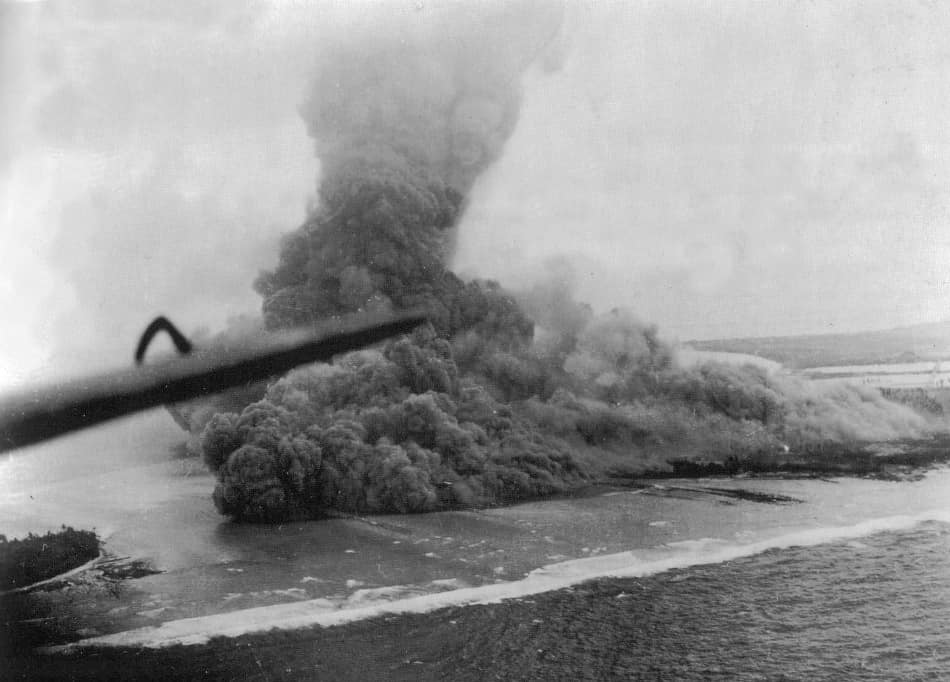
The heaviest bombardment yet fired in the Pacific runs for two days and leaves Roi-Namur, in one officer's phrase, looking as though it had been picked up and dropped. Both landings come in from the lagoon in amphibian tractors at about 11:30: the 4th Marine Division on Roi-Namur, the 7th Infantry Division on Kwajalein. Roi's airfield is taken the same afternoon.
— Roi-Namur
Namur, wooded and full of concrete, takes longer than Roi. A demolition party throws a satchel charge into what turns out to be a torpedo warhead magazine on the afternoon of the 1st; the explosion kills or wounds a hundred Marines. The island is secured at 14:18 on 2 February. On Kwajalein the soldiers are about a third of the way up the island.
— Kwajalein secured
The 7th Division works up the four-kilometre island by daylight and digs in at dusk rather than fight in the dark, and declares it secure on the afternoon of the 4th. Of about 8,000 Japanese on the atoll, 265 are taken prisoner; the Americans lose 372 dead. The method is settled now, and Eniwetok falls to it on 17 February.