Western Europe · United Kingdom and United States vs Germany
Bombing of Hamburg
24 July 1943 – 3 August 1943
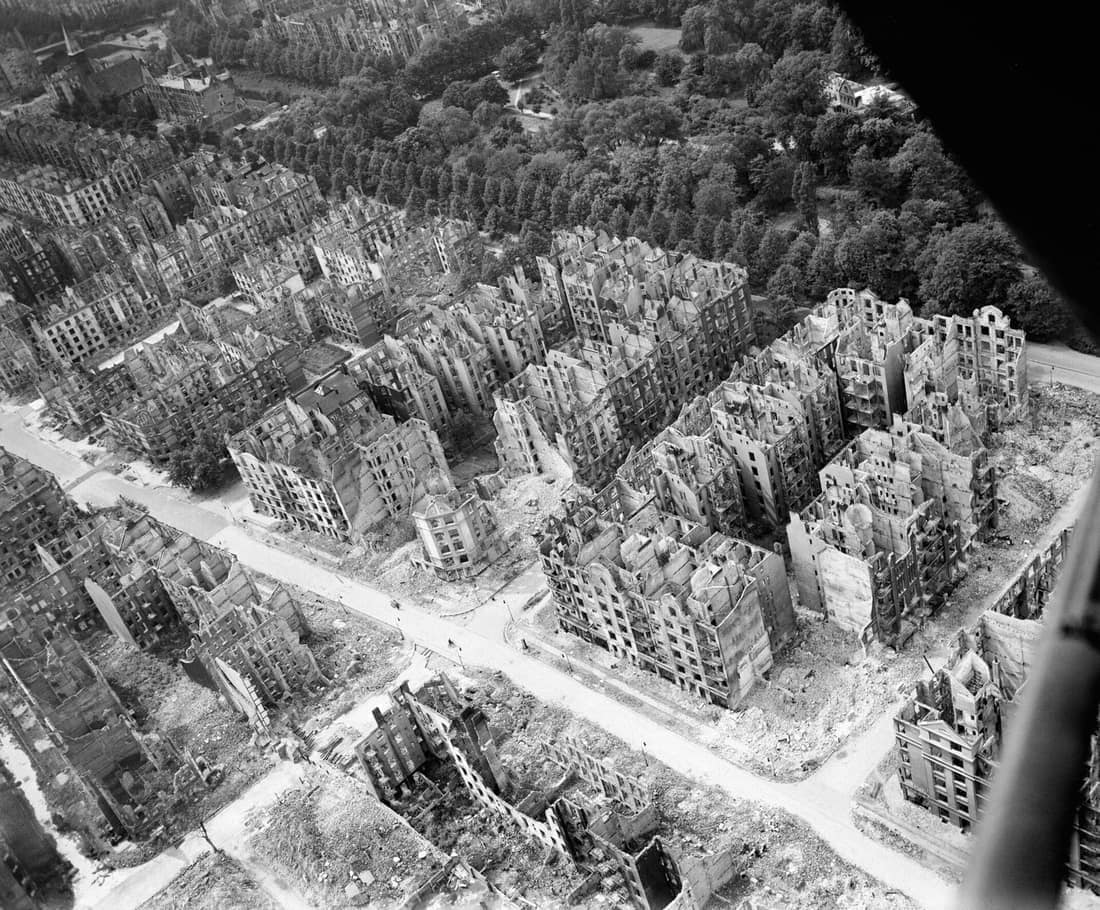
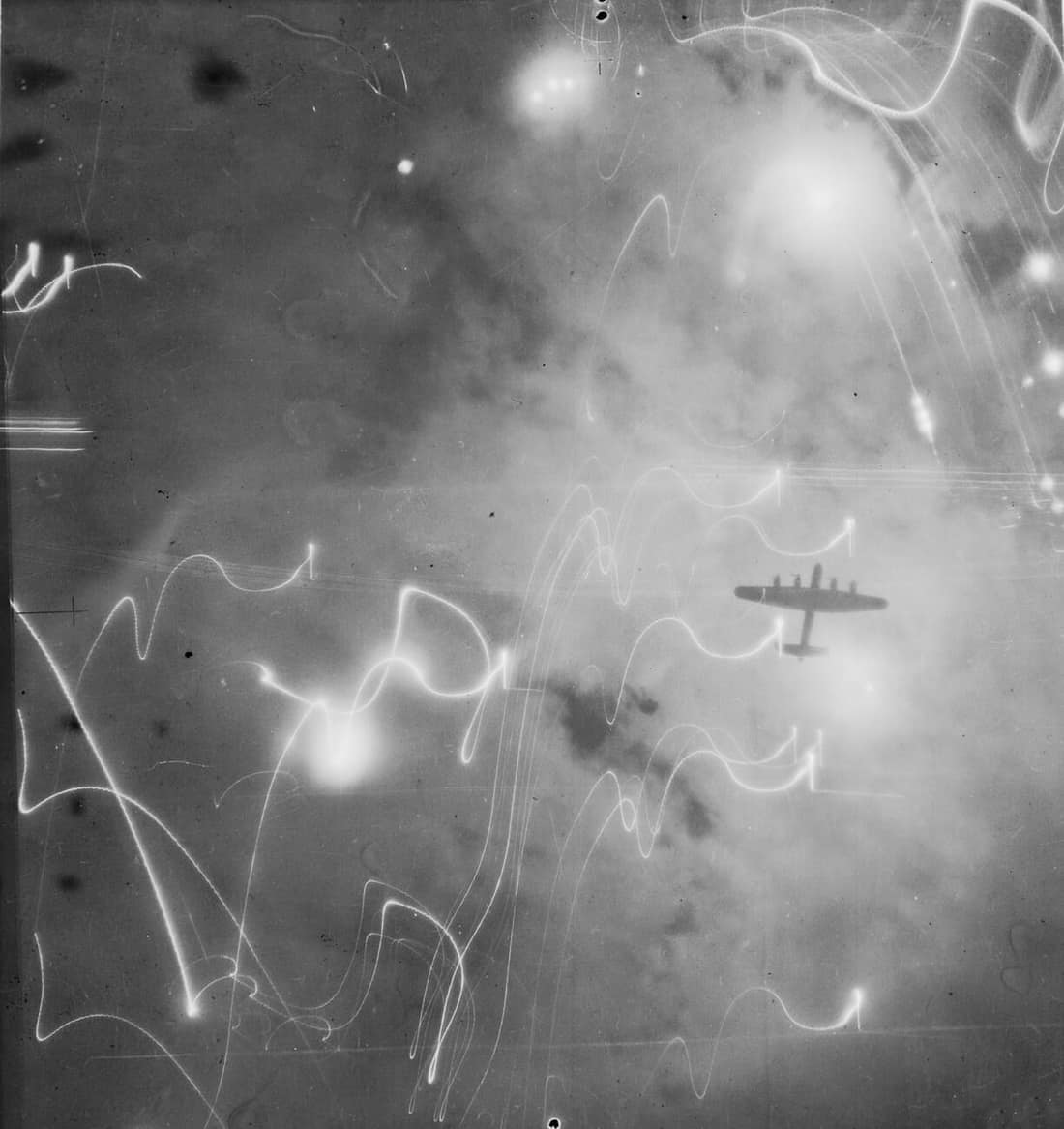
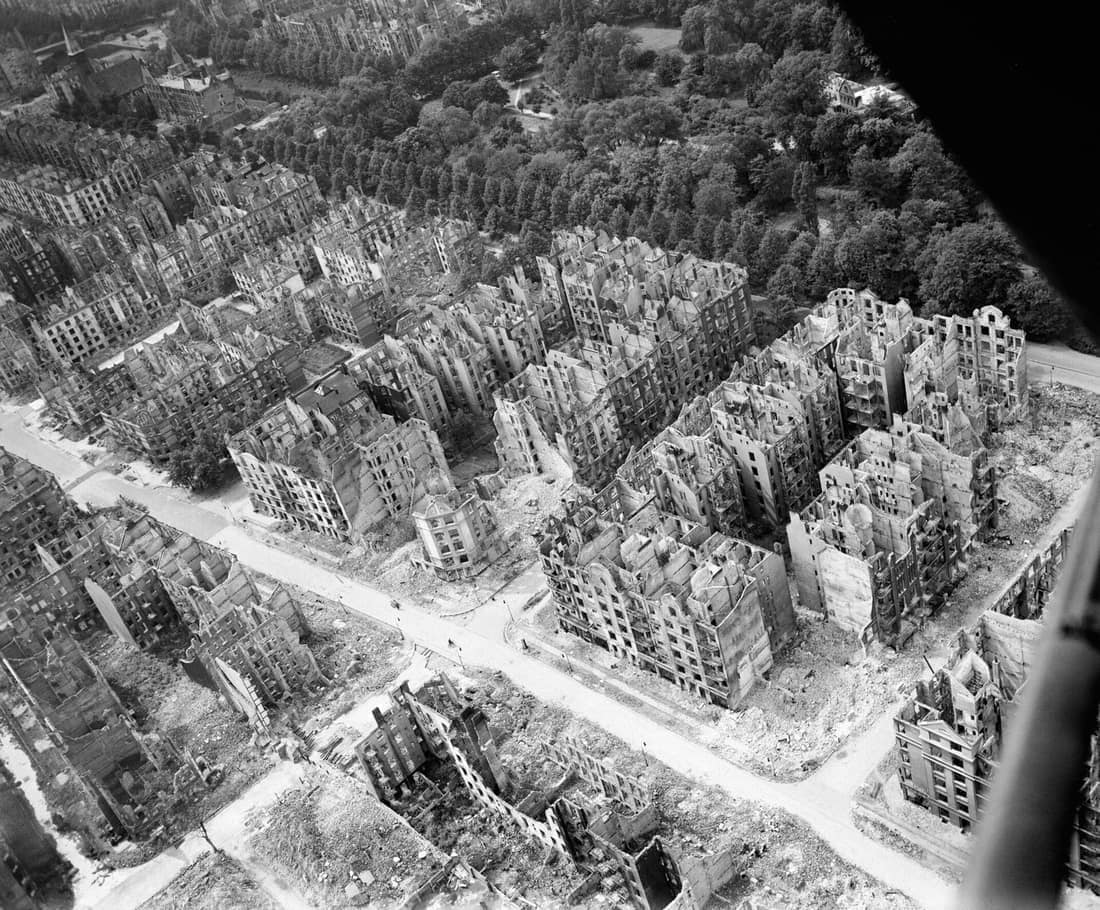
Operation Gomorrah struck Hamburg with four RAF night raids and two USAAF day raids in eight days, the first use of Window to blind German radar. On the night of 27-28 July dry conditions and concentrated incendiaries produced a firestorm that killed some 18,000 people in a night, about half the raid's 37,000 dead.
Explore Bombing of Hamburg on the interactive map · Wikipedia
Day by day
— Window
791 aircraft come in from the north-west on the night of 24 July, and on the way each throws out bundles of aluminium strips cut to half the wavelength of the German radar. The whole defensive system, the ground control, the searchlights and the gun-laying sets alike, sees thousands of bombers where there are hundreds; twelve aircraft are lost out of a normal expectation of fifty. 1,500 people are killed in the first raid, and the Eighth Air Force bombs the shipyards by day on the 25th and 26th.
— The firestorm
787 aircraft attack a city that has had no rain for weeks, the marking creeps back over the dense working districts east of the Alster and the incendiaries fall into fires already burning. Around one in the morning the separate fires draw together into a single column: winds of hurricane force pull people off the streets into the flames and the air in the cellars turns to carbon monoxide. Some eight square kilometres burn out and most of the campaign's 37,000 dead are killed in this one night.
— Gomorrah ends
A third heavy raid on 29 July burns the districts north of the firestorm. The fourth, on the night of 2 August, flies into thunderstorms and icing and scatters its bombs across Schleswig-Holstein; four aircraft are lost to the weather. About a million people have left the city, carrying what they saw to the rest of Germany, and Speer tells Hitler that six more Hamburgs would end the war.