Eastern Front · Soviet Union vs Germany and Romania
Crimean Offensive
8 April 1944 – 12 May 1944
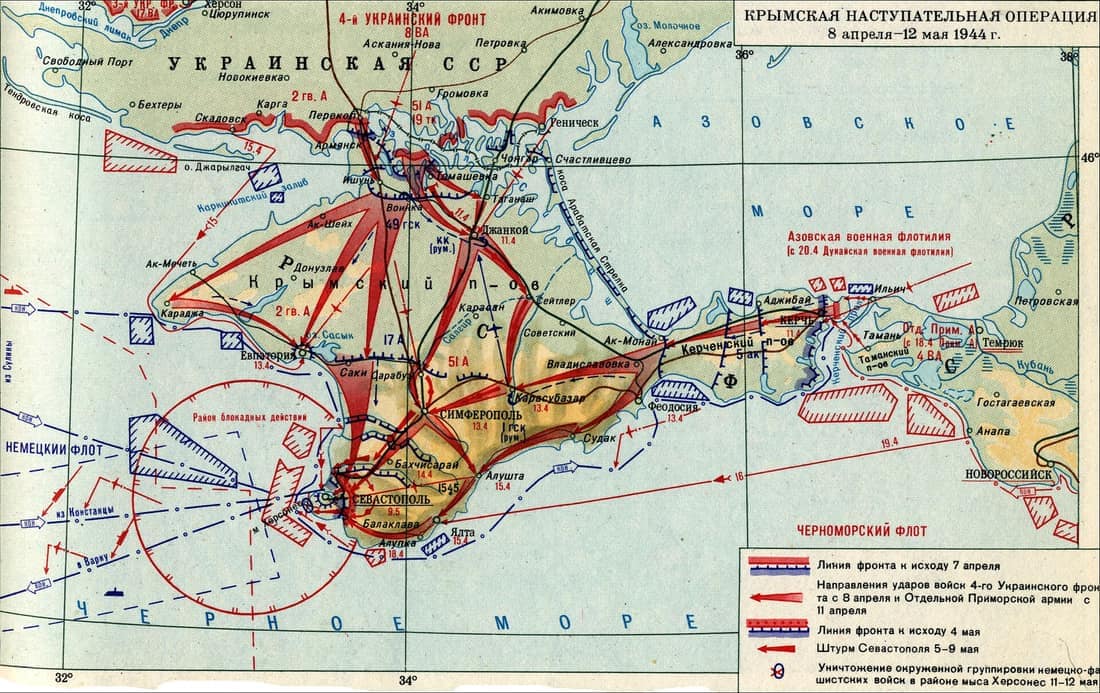
The 4th Ukrainian Front broke through the Perekop and Sivash positions while the Separate Coastal Army attacked from Kerch, driving the German 17th Army back into Sevastopol. The city fell in three days of assault and the remnants were caught at Cape Chersonese.
Explore Crimean Offensive on the interactive map · Wikipedia
Day by day
— Perekop and the Sivash
The 17th Army has been cut off in the Crimea since November, held there on Hitler's orders as a shield for the Romanian coast. At 08:00 Tolbukhin's 4th Ukrainian Front opens a two-and-a-half hour bombardment and attacks the Perekop isthmus with the 2nd Guards Army and the bridgehead beyond the Sivash with the 51st, over causeways built through the salt shallows in winter.
— Kerch and Dzhankoy
The Ishun positions gave way on the 10th and the 19th Tank Corps is loose in the steppe; it takes Dzhankoy and the railway junction today. V Corps, in danger of being cut off 300 kilometres to the east, abandons Kerch in the night and the Coastal Army enters the city.
— The retreat to the fortress
Simferopol falls to the 19th Tank Corps this morning and Feodosia to the Coastal Army; Yevpatoria goes the same day. The 17th Army is running west in two columns, one down the Simferopol road and one along the Yalta coast with the partisans of the Yaila mountains on its flank. By the 18th the whole army is inside the Sevastopol perimeter.
— Sapun Ridge
Three armies have spent a fortnight closing up, bringing forward the guns and waiting on ammunition. At 10:30 the Primorsky and 51st Armies attack the Sapun ridge, the wall of high ground that shuts off Sevastopol from the east, behind 400 guns to the kilometre. It is carried by nightfall.
— Sevastopol
The city is clear by evening. It had held out for 250 days in 1941 and 1942; it is taken back in three. What is left of the 17th Army falls back onto the last few kilometres of the Chersonese headland to wait for ships that mostly do not come.
— Cape Chersonese
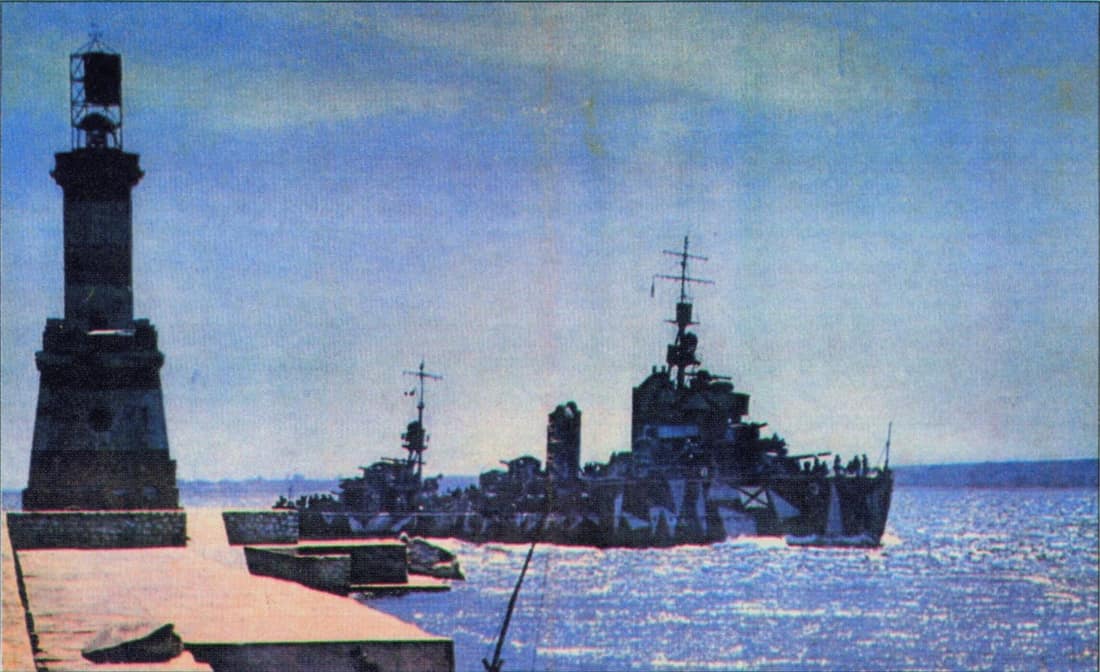
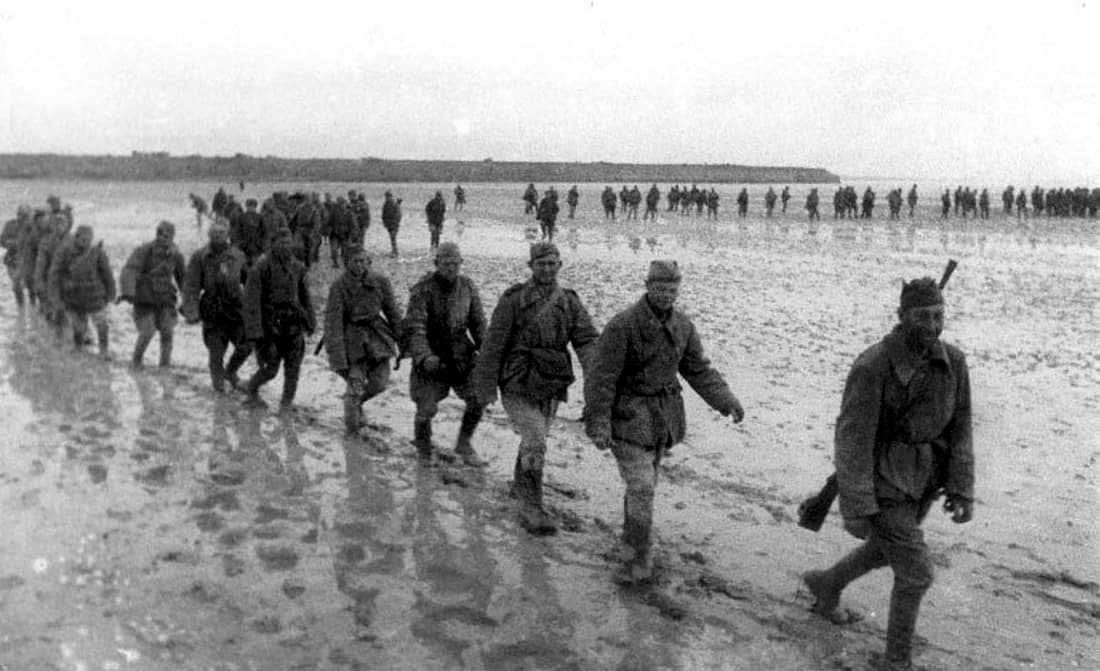
The last position on the headland is overrun in the early morning and about 21,000 men surrender on the beaches and the cliffs. The evacuation by sea cost the Germans and Romanians thousands more drowned in ships sunk on the run to Constanta. The Black Sea coast is Soviet again from the Dniester to the Kerch strait.