Mediterranean and North Africa · British Commonwealth vs Germany and Italy
Operation Crusader
18 November 1941 – 30 December 1941
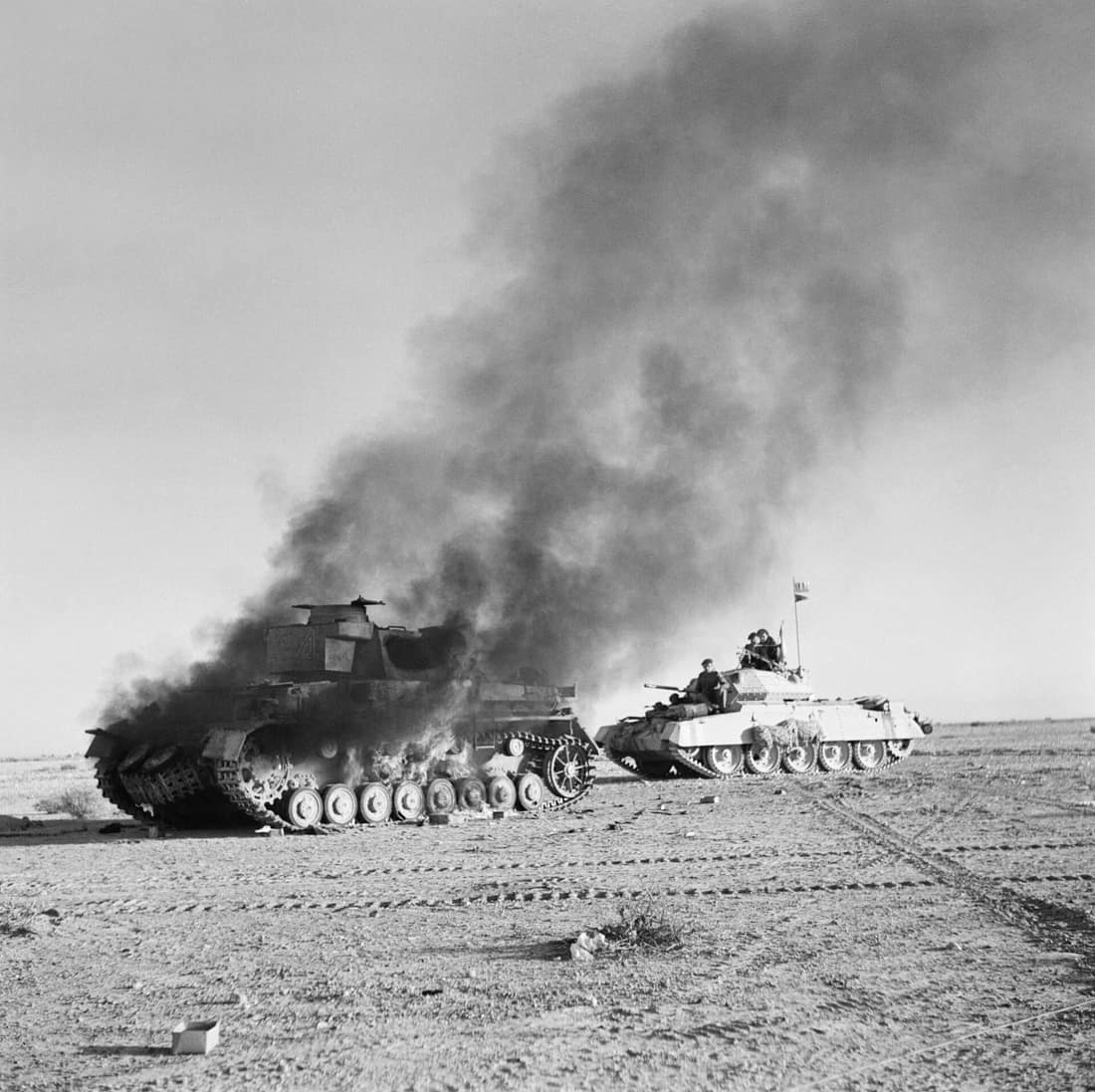
The newly formed Eighth Army attacked to relieve Tobruk in a confused armoured battle around Sidi Rezegh. Rommel's dash to the Egyptian frontier failed to break the British, and short of supplies he abandoned Cyrenaica and fell back to El Agheila.
Explore Operation Crusader on the interactive map · Wikipedia
Day by day
— Across the wire
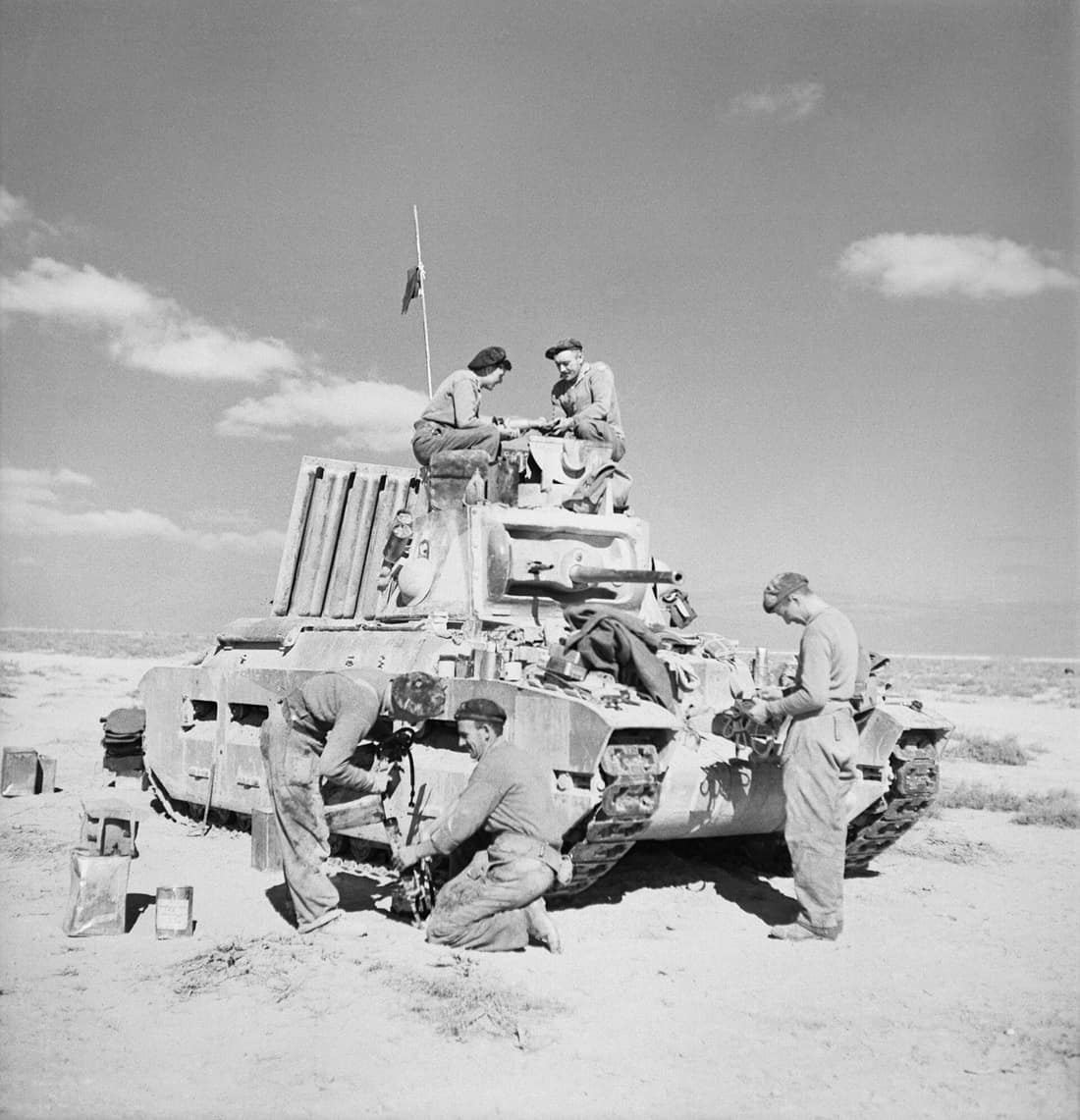
In rain and low cloud the new Eighth Army crossed the frontier wire unseen: XXX Corps with 450 tanks swinging west and north into the desert to find the panzers, XIII Corps pinning the frontier garrisons at Halfaya and Sidi Omar. Rommel, preparing his own attack on Tobruk, thought it a raid and did nothing for two days. On the 19th the 7th Armoured Brigade reached the airfield at Sidi Rezegh, 15 kilometres from the fortress.
— Totensonntag
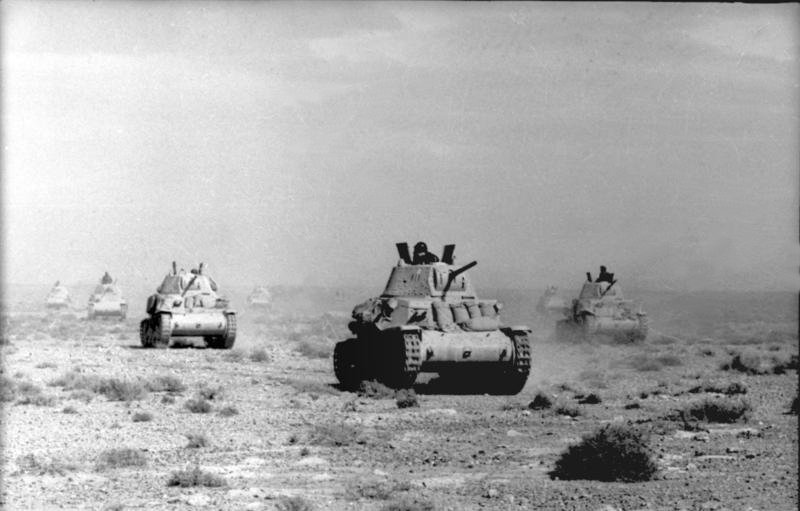
The armoured battle broke into pieces around the Sidi Rezegh escarpment, brigade against division, and the British lost tanks faster than they could count them. On the Sunday of the Dead the 15th and 21st Panzer, with the Ariete coming up from the south, drove straight over the 5th South African Brigade in the open and destroyed it: 3,400 men lost in an afternoon. The Afrika Korps was down to about 90 runners itself, and Cunningham wanted to break off the battle.
— The dash to the wire
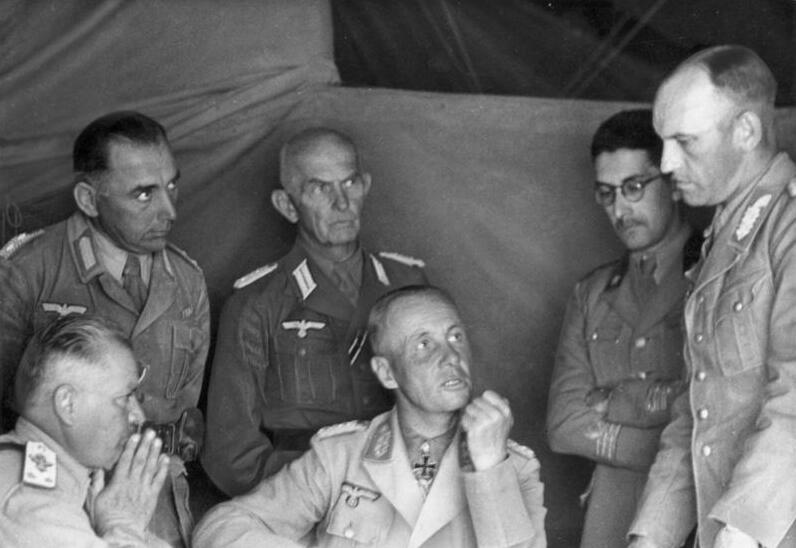
At 10:30 Rommel put himself at the head of the panzer divisions and drove east for the frontier to cut the Eighth Army's supply lines and finish it. He spent two days chasing lorries about the desert, was locked out of Egypt by his own minefields at one point, and lost touch with the fighting behind him. Auchinleck came up from Cairo, replaced Cunningham with Ritchie and ordered the offensive to continue whatever the tank returns said.
— El Duda
While Rommel was away the New Zealanders worked west along the Trigh Capuzzo, took Belhamed and Sidi Rezegh, and on the evening of the 27th joined hands with the 70th Division's sortie at El Duda. Tobruk had a corridor after 230 days. It was cut again three days later and the New Zealand division was badly mauled getting out, but the fortress stayed open.
— Rommel gives up Tobruk
The Eighth Army could replace tanks and the Panzergruppe could not: by early December Rommel had about 40 left, no petrol reserve and the Italian convoys being sunk out of Malta. On 7 December he broke off the investment and pulled back to the Gazala line, and on the 16th abandoned that too. The frontier garrisons at Bardia and Halfaya were left behind and held out until January.
— El Agheila again
The retreat went back across the Jebel with the British following on a supply line that lengthened by 500 kilometres in a fortnight. Benghazi was retaken on 24 December and the Panzergruppe reached El Agheila on the 30th, on the ground it had started from in March. Crusader cost the Eighth Army 17,700 casualties and the Axis about 38,000, most of them Italian prisoners; three weeks later Rommel came back out of El Agheila.