Mediterranean and North Africa · United States and Britain vs Germany
Invasion of mainland Italy and Salerno
3 September 1943 – 16 September 1943
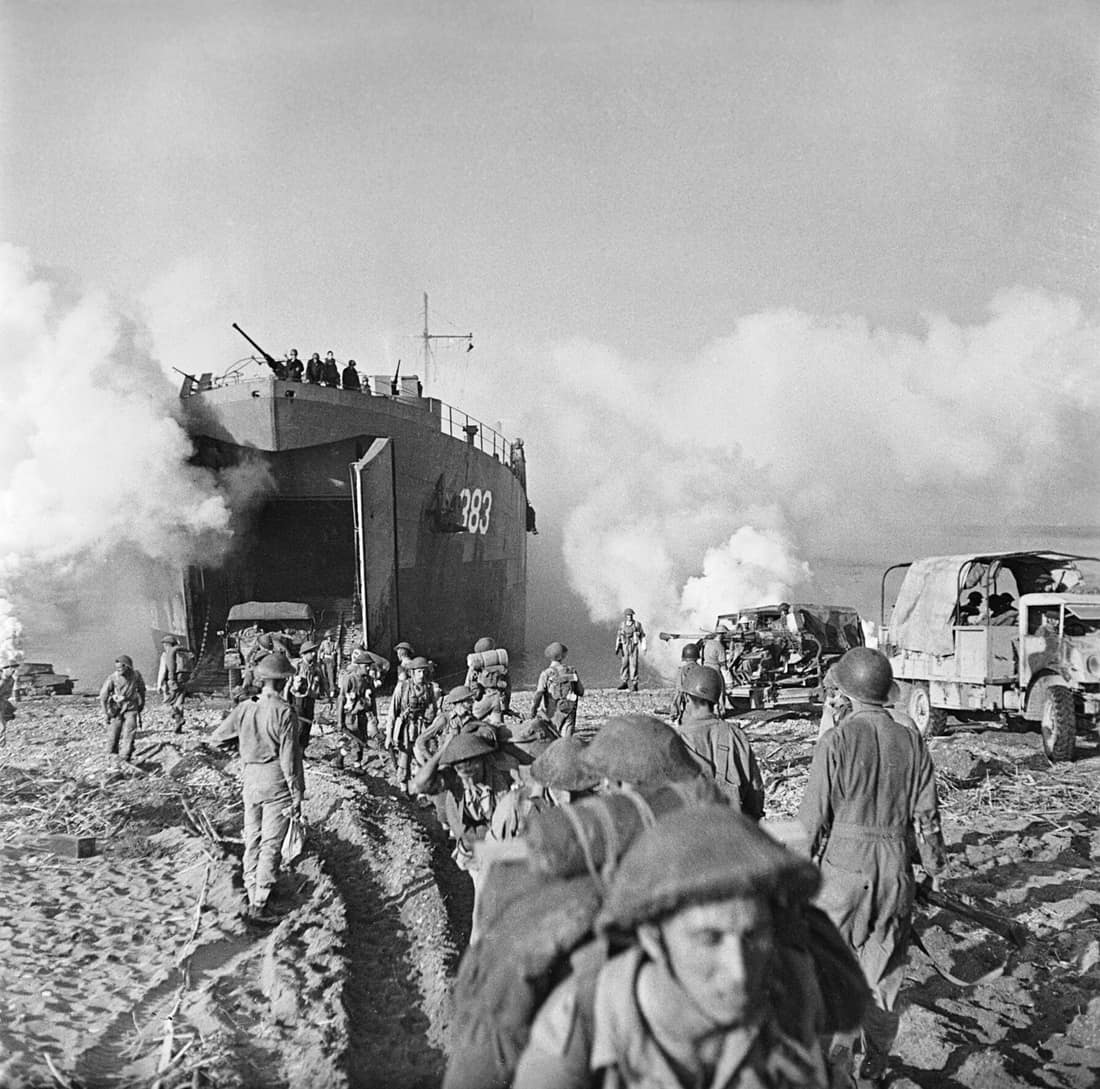
Eighth Army crossed the Strait of Messina on 3 September, and the US Fifth Army landed at Salerno on the 9th, hours after the armistice was announced. A German counterattack nearly split the beachhead before naval gunfire and reinforcements held it.
Explore Invasion of mainland Italy and Salerno on the interactive map · Wikipedia
Day by day
— Baytown
Four years to the day after Britain declared war, two divisions of XIII Corps cross the Strait of Messina at 04:30 behind a barrage from 600 guns that falls on empty beaches. The Germans have already gone north, blowing every bridge and culvert in Calabria behind them. The same morning, in a tent at Cassibile, the Italian armistice is signed in secret.
— Avalanche
Fifth Army comes ashore in the Gulf of Salerno at 03:30, the armistice announced six hours earlier and the troops told the Italians would not fight. The 16th Panzer Division is waiting on the beaches and the American sector goes in without a preliminary bombardment, to keep surprise it has already lost. The two corps land twelve kilometres apart with the Sele river between them, a gap nobody fills; the same night the British 1st Airborne walks ashore at Taranto from cruisers, unopposed.
— The Sele corridor
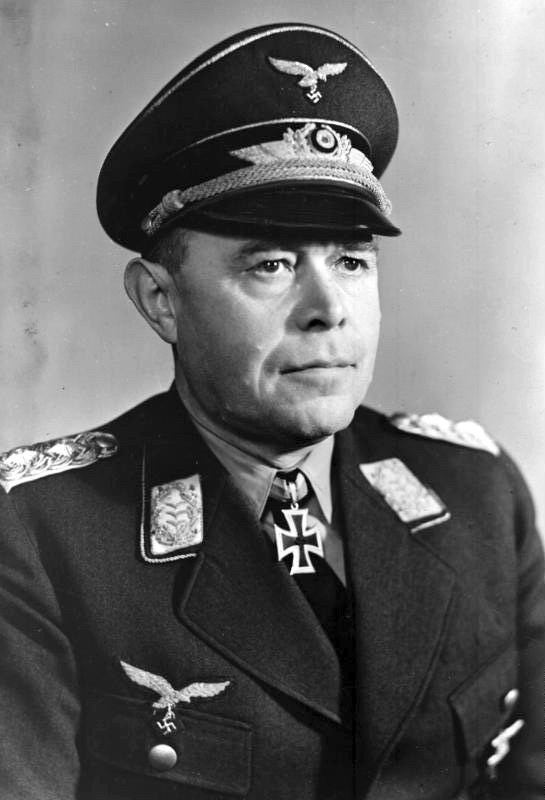
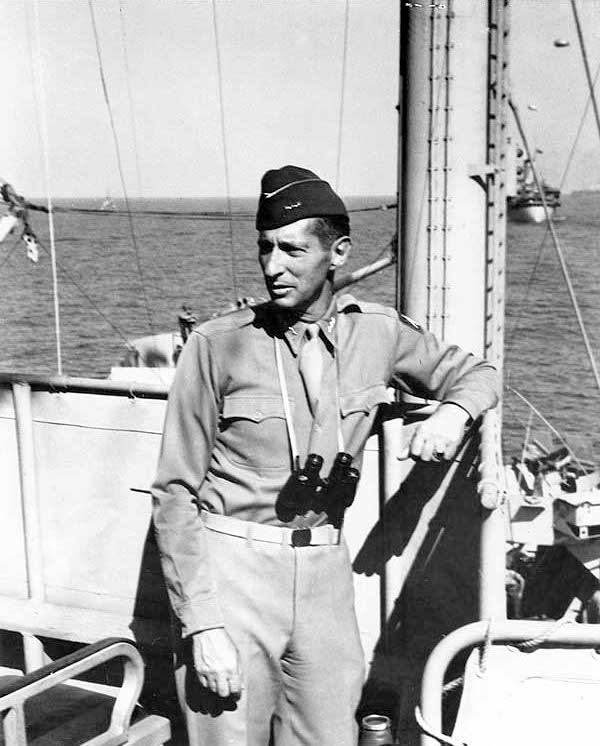
Vietinghoff has six divisions round the beachhead by the 13th and attacks straight down the corridor between the Sele and the Calore, into the seam between the two Allied corps. The 36th Division's forward battalions are broken at Altavilla and Persano and by evening the leading tanks are eight kilometres from the water. Clark's staff draw up plans to re-embark one corps and land it in the other's sector.
— The line holds
Two battalions of artillery are laid out wheel to wheel across the corridor with the divisional band and the clerks in the line beside them, and the attack is stopped in front of them. That night 1,300 men of the 82nd Airborne drop onto the beachhead itself; every gun in the fleet fires all day and 1,900 sorties are flown from Sicily and the carriers. On the 16th the battleships Warspite and Valiant come in and put fifteen-inch shells into the German assembly areas.
— The armies meet
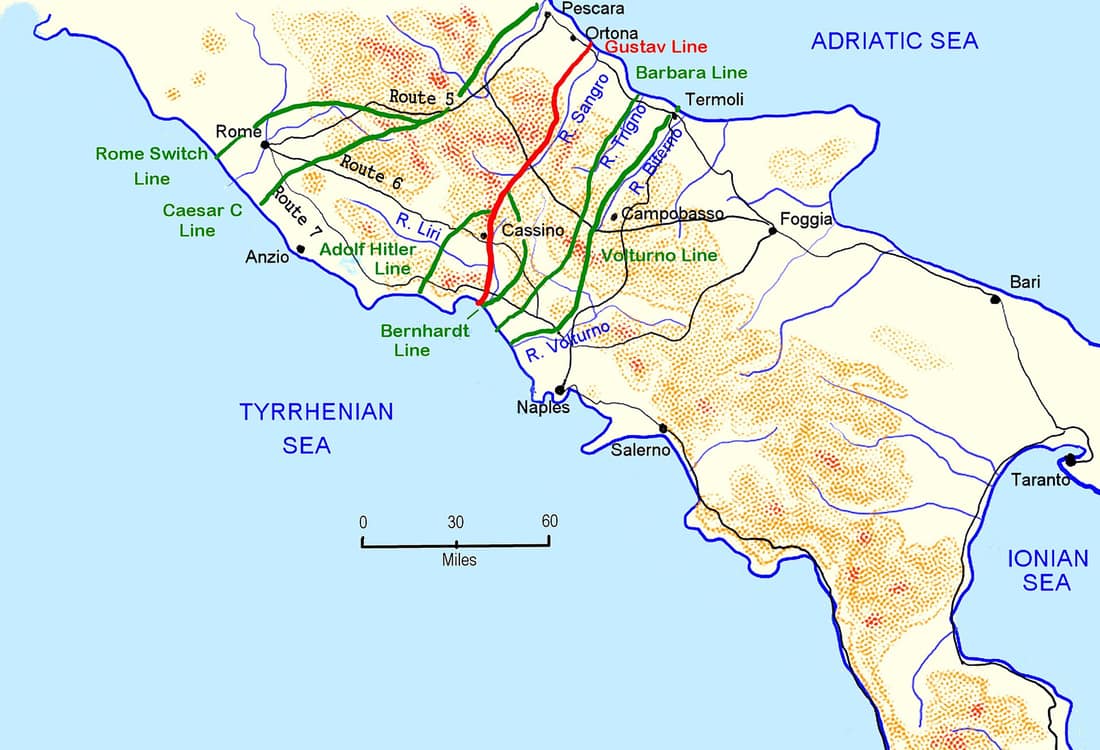
Kesselring accepts that the beachhead cannot be pushed into the sea and orders Tenth Army back to the Volturno, and beyond it to the winter lines. A patrol of the 5th Division coming up from Calabria meets Fifth Army reconnaissance near Vallo della Lucania on the 16th, and the two Allied armies are joined. Salerno cost about 9,000 Allied casualties; Naples falls on 1 October, and the front then sticks for the winter.