Mediterranean and North Africa · United States, Britain and France vs Germany and Italy
Tunisia campaign
17 November 1942 – 13 May 1943
The Allies failed to seize Tunis before winter, and the Axis built up a bridgehead that Rommel's army joined from Libya. After the setback at Kasserine and the breaking of the Mareth line, the Allies closed in from west and south. Some 240,000 Axis troops surrendered in May.
Explore Tunisia campaign on the interactive map · Wikipedia
Day by day
— Djebel Abiod
The leading British column meets German paratroops with armoured cars at Djebel Abiod, sixty kilometres inside Tunisia, and the race for Tunis is over before it is properly begun. Nehring has a bridgehead round Tunis and Bizerte fed by air and sea from Sicily; Anderson has two brigades at the end of a single road from Algiers. The rains start at the end of the month.
— Tebourba
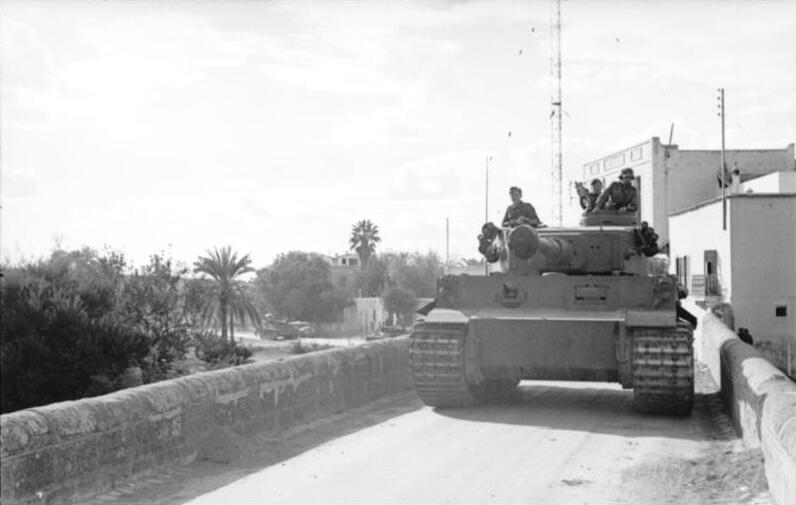
The British and Americans got within thirty kilometres of Tunis and could see the minarets from Djebel Bou Aoukaz. On 1 December the newly arrived 10th Panzer Division attacks at Tebourba and pushes them back off the plain in four days, taking a thousand prisoners and most of the armour of Blade Force. Longstop Hill changes hands four times over Christmas, and on 24 December Eisenhower calls off the winter offensive in the mud.
— Kasserine
Rommel has brought the Panzerarmee 2,500 kilometres back from Alamein and is behind the old French works of the Mareth line; von Arnim holds the north. On 14 February they strike west at the inexperienced US II Corps strung along the Eastern Dorsale, overrun Sidi Bou Zid and force the Kasserine Pass on the 20th before halting short of Thala and Tebessa. The Allied command is reorganised under Alexander, and Rommel leaves Africa on 9 March.
— Mareth
Rommel's spoiling attack at Medenine on 6 March was met by 500 anti-tank guns and lost 52 tanks in a day. Montgomery's frontal attack on the Mareth line fails in turn, so he sends the New Zealand Corps and the 1st Armoured Division 300 kilometres round the desert flank; on 26 March they attack at El Hamma in the late afternoon with the sun and 400 sorties behind them, and the line is turned. The Axis falls back to Wadi Akarit and then to Enfidaville.
— Tunis and Bizerte
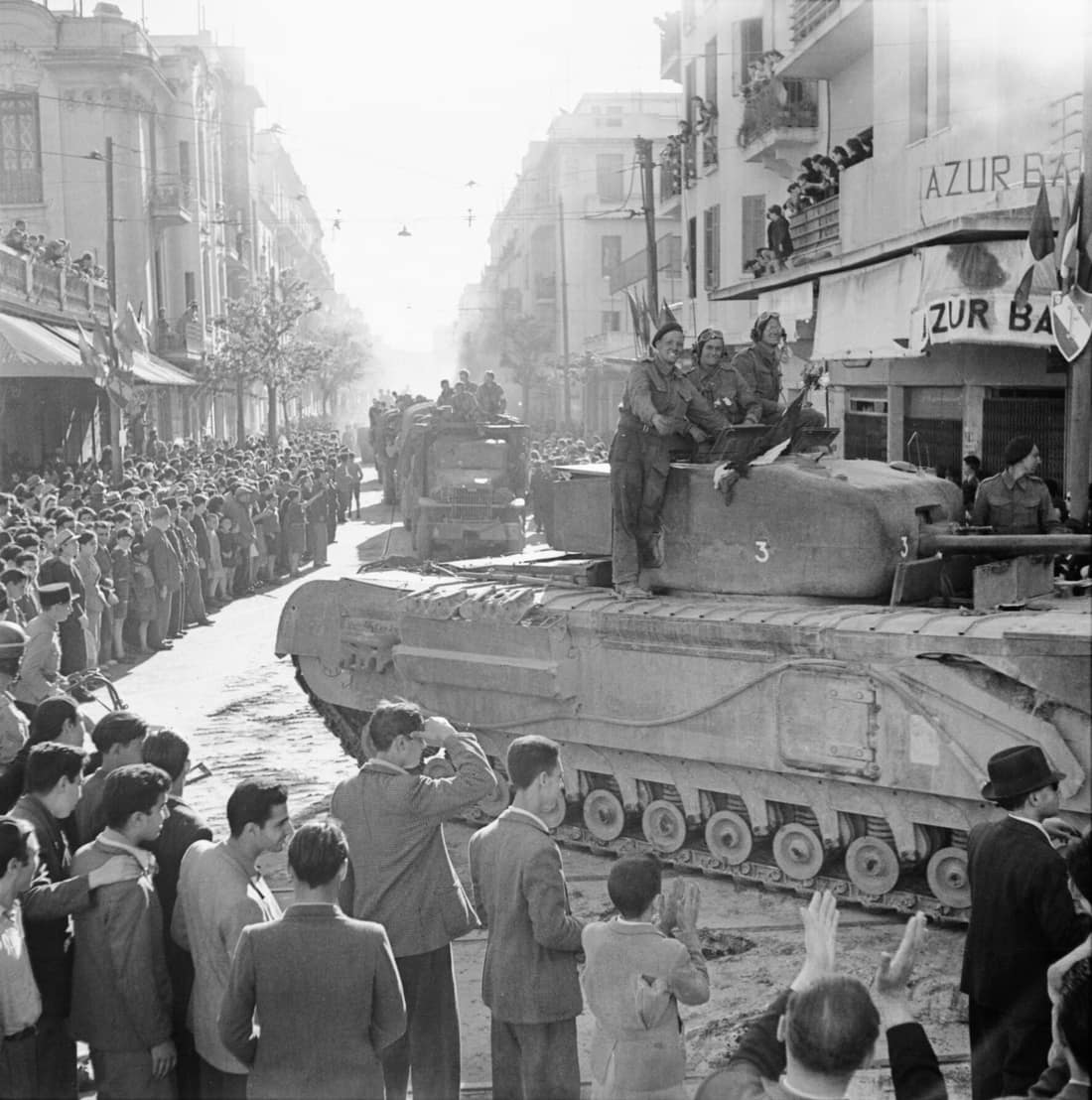
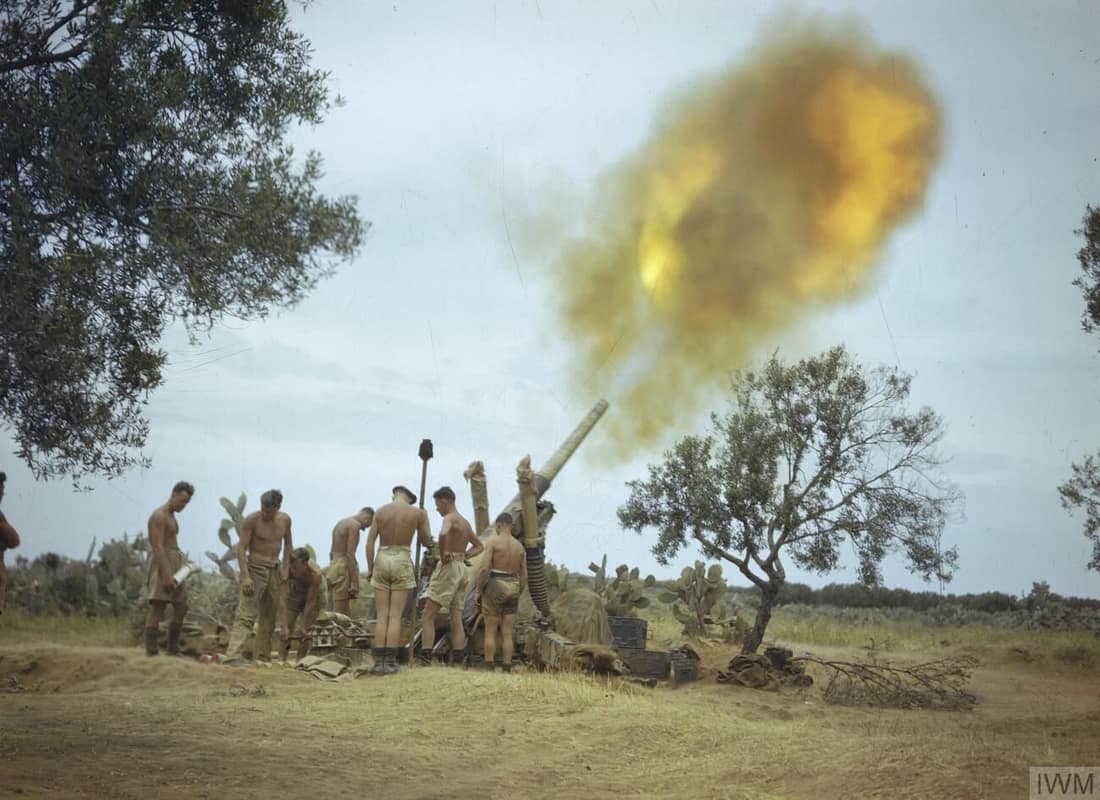
Operation Vulcan and then Strike put the weight on the Medjerda valley: two armoured and two infantry divisions on a 3,000-metre front behind 650 guns. The 7th Armoured Division is in Tunis on the afternoon of 7 May, and US II Corps, brought right across the rear of First Army to the northern sector, enters Bizerte the same afternoon. The Axis armies are cut in two and have neither fuel nor any way out.
— Army Group Africa surrenders
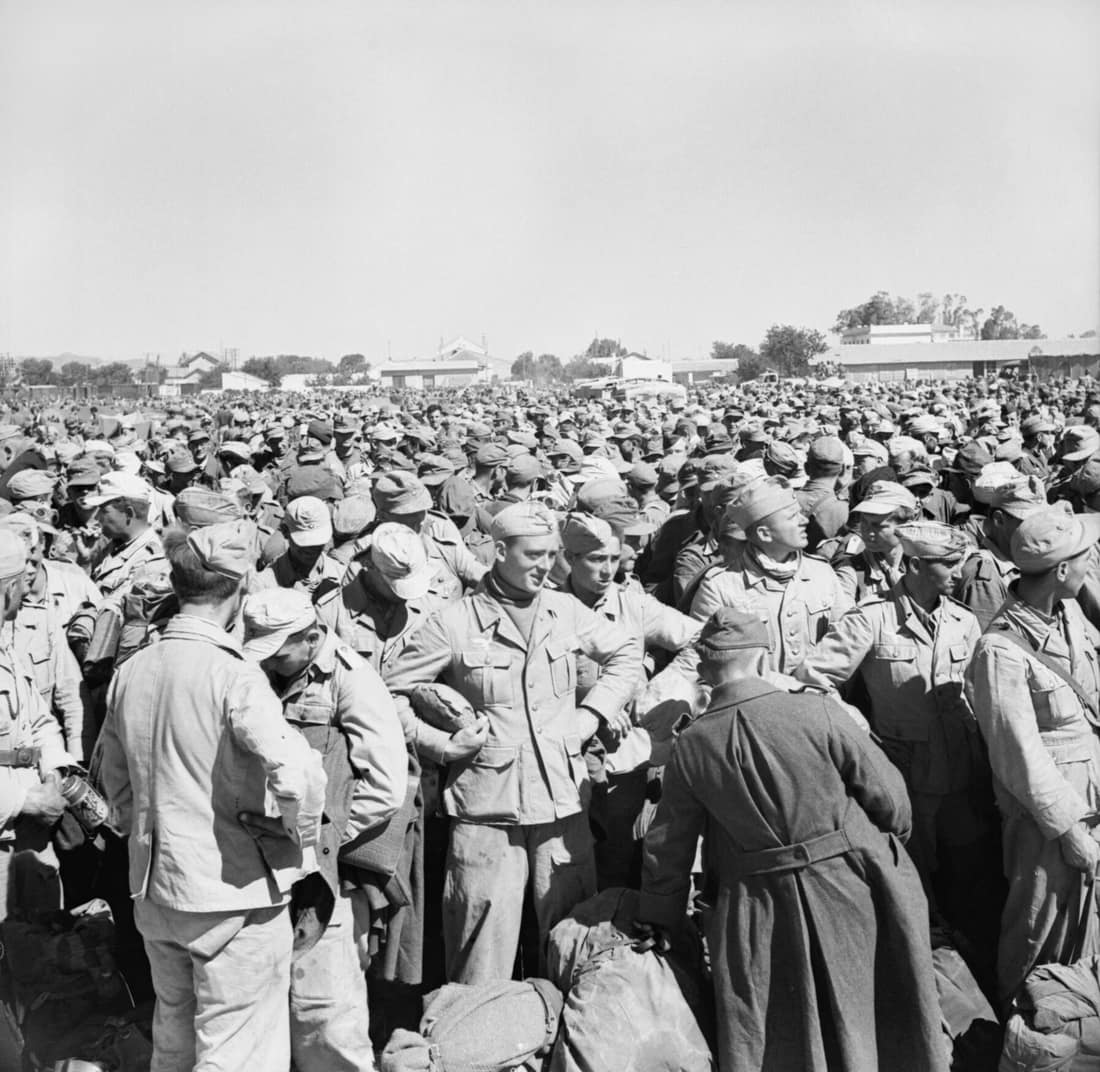
What is left is penned on the Cape Bon peninsula and in the hills round Zaghouan, with the Royal Navy across the sea route in Operation Retribution and orders to let nothing out. Von Arnim surrenders on 12 May and Messe's First Italian Army the next day. About 240,000 prisoners are taken, more than at Stalingrad, and the war in Africa ends after two years and seven months.



.jpg)