Western Europe · United States, United Kingdom, Canada and France vs Germany
Western Allied advance into Germany
22 March 1945 – 8 May 1945
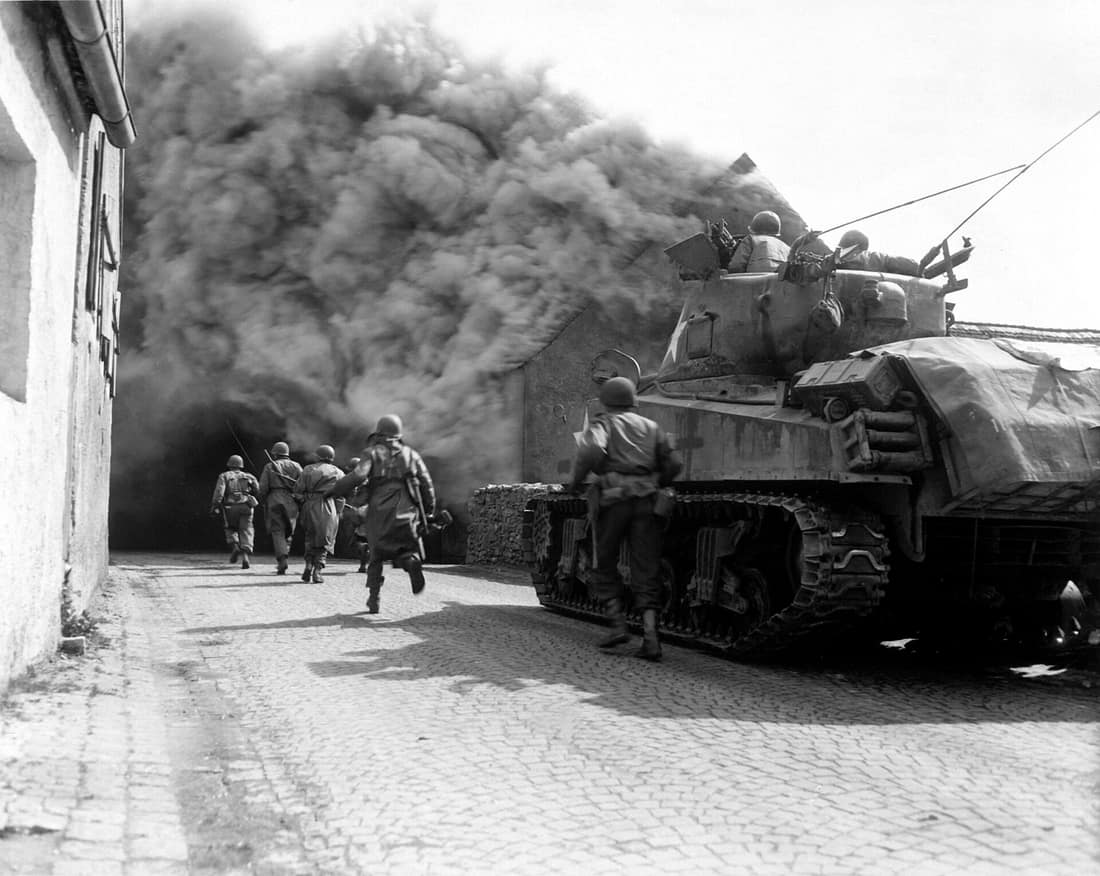
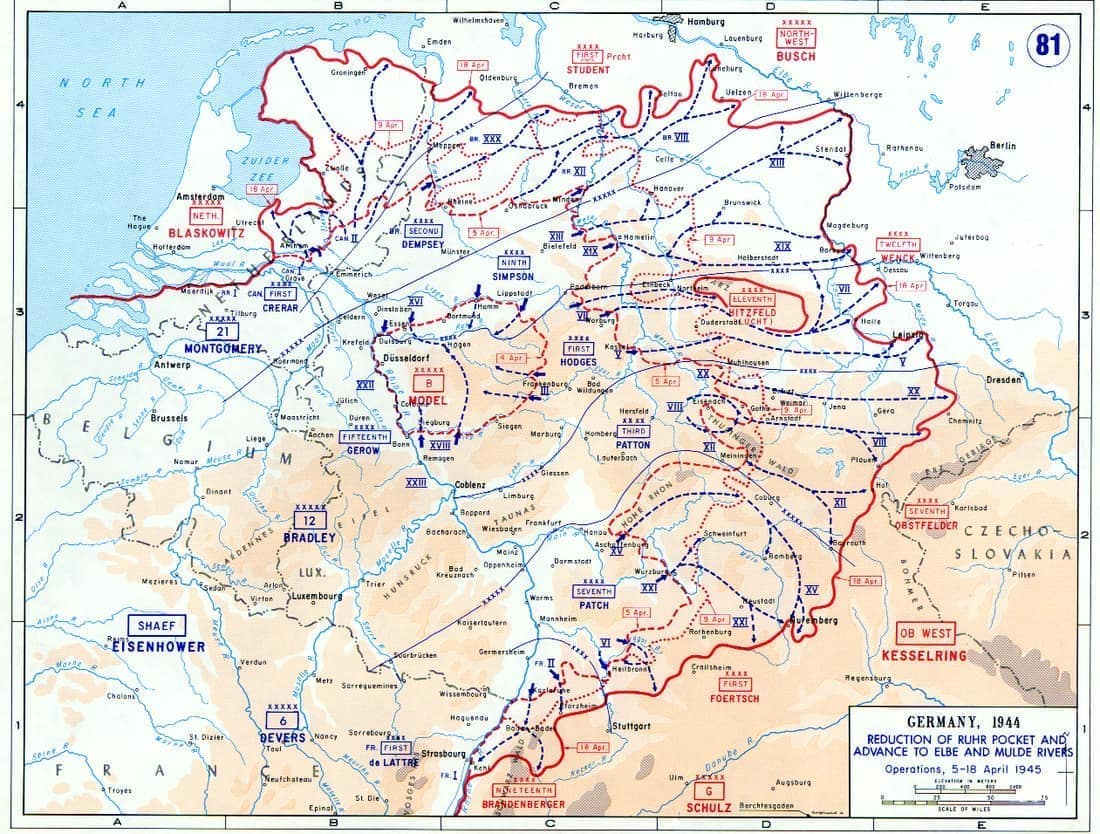
After the Rhine crossings the Allied armies drove across Germany against collapsing resistance, liberating the camps at Ohrdruf, Buchenwald, Bergen-Belsen and Dachau as they went. Eisenhower halted on the Elbe and Mulde, where American and Soviet troops met at Torgau on 25 April. British forces reached the Baltic at Luebeck on 2 May.
Explore Western Allied advance into Germany on the interactive map · Wikipedia
Day by day
— Over the Rhine
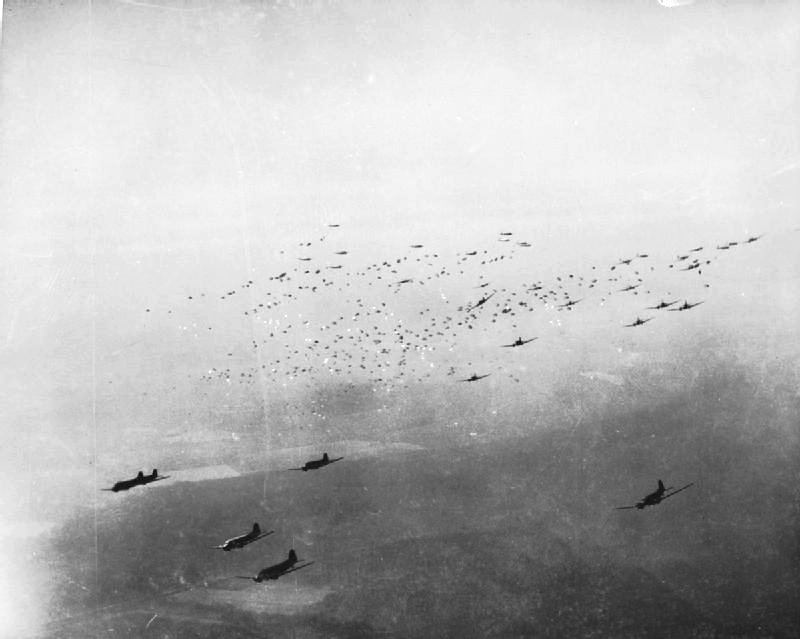
Patton's Third Army crosses at Oppenheim in assault boats on the night of the 22nd, without a bombardment and without telling anyone until it is done. The 21st Army Group's set-piece crossing at Wesel follows the next night. There is little behind the river: the German armies in the west lost most of what they had on the wrong bank of it.
— Ohrdruf
East of the Rhine the armies move at the speed of their fuel columns. Model's Army Group B was shut inside the Ruhr on 1 April. On the 4th the Third Army walks into Ohrdruf, an outstation of Buchenwald and the first camp reached by American troops; Eisenhower comes to see it himself a week later and calls in the press.
— The Elbe
The 2nd Armored Division reaches the Elbe at Magdeburg, 120 kilometres from Berlin, and puts a bridgehead over it. Eisenhower will not go on: the capital is left to the Red Army. The same day the prisoners at Buchenwald take the camp themselves as the guards run, and Third Army troops arrive in the afternoon.
— Belsen
The 11th Armoured Division takes over Bergen-Belsen under a local truce arranged so that the typhus does not get out: 60,000 living prisoners and 13,000 unburied dead. Some 14,000 more die after the liberation, faster than the medical units can be brought up. The huts are burnt in May.
— Torgau
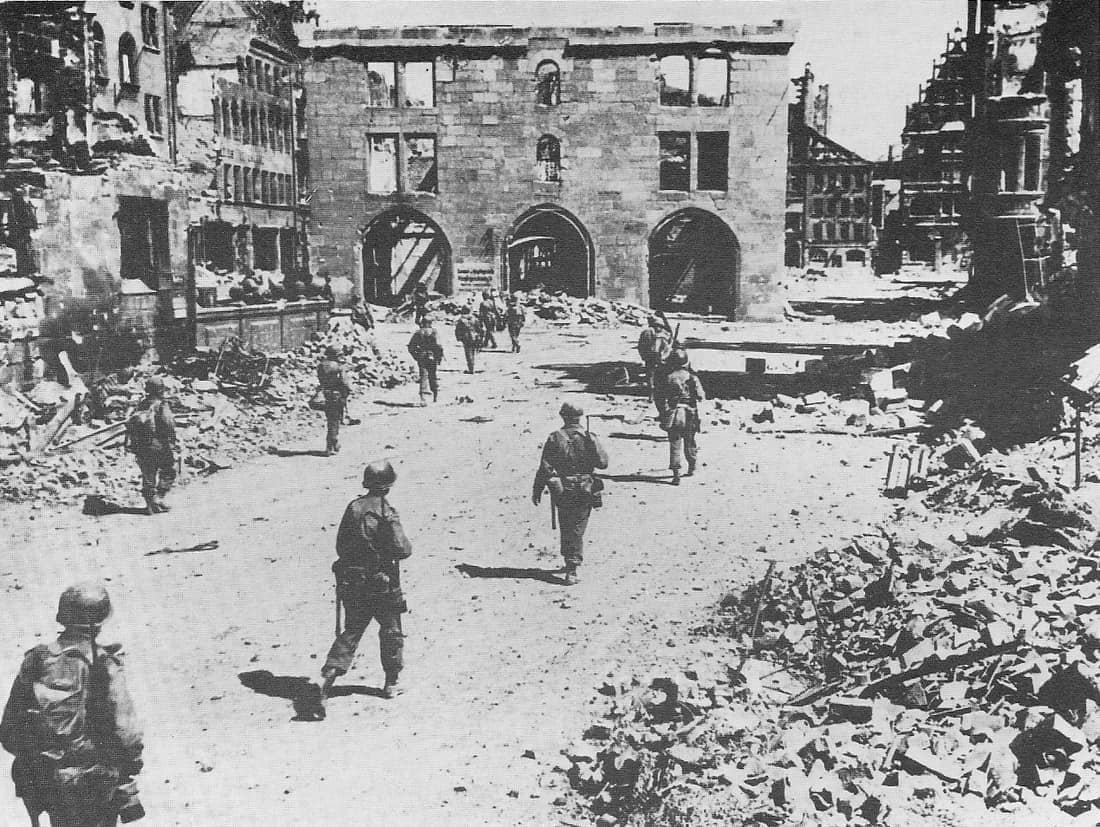
A patrol of the 69th Division meets Soviet troops of the 58th Guards on the wrecked bridge at Torgau on the Elbe, and what is left of Germany is cut in two. Nuremberg fell five days earlier after a week of street fighting. Berlin, sixty kilometres away, is being taken block by block.
— The Baltic
The 11th Armoured Division reaches Luebeck and the sea, cutting off the German troops in Denmark and Norway, and meets the Russians at Wismar. Dachau was liberated on 29 April and Munich fell the next day. The armies in the north-west surrender on Lueneburg Heath on 4 May; the war in Europe ends on the 8th.