Pacific · United States and Philippines vs Japan
Battle of Luzon
9 January 1945 – 15 August 1945
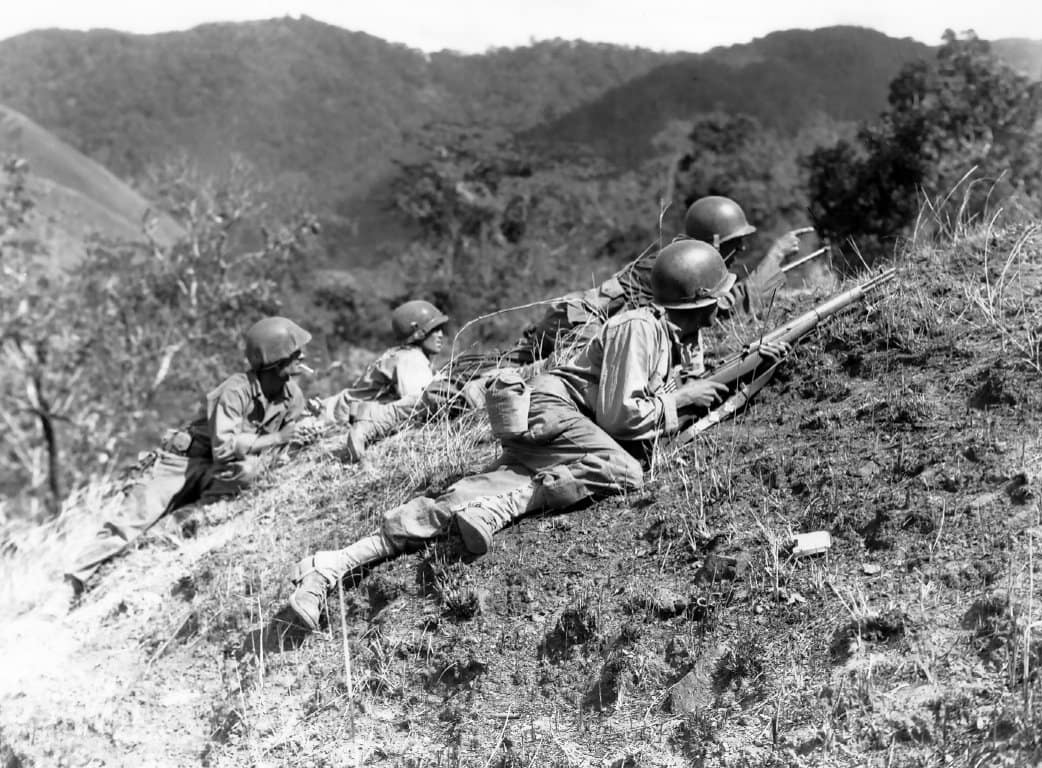
Sixth Army landed at Lingayen Gulf where the Japanese had landed in 1941 and drove south across the central plain to Manila. Yamashita declined to defend the capital and withdrew his main force into the mountains of northern Luzon, where it held out until the end of the war. The campaign involved more American troops than any other in the Pacific.
Explore Battle of Luzon on the interactive map · Wikipedia
Day by day
— Lingayen Gulf
Four divisions of Sixth Army land on the Lingayen Gulf beaches at 09:30, where the Japanese landed in December 1941, and meet almost nobody on the shore. The cost was paid at sea: kamikazes had been attacking the fleet since the 4th and sank or damaged more than forty ships, among them the escort carrier Ommaney Bay. Yamashita has no intention of fighting for the central plain and is pulling his main force into the mountains.
— Down the plain
XIV Corps is across the Agno and past Clark Field, while I Corps turns north-east into the hills against the flank Yamashita has left to slow it. XI Corps lands unopposed at San Antonio on the 29th and seals off Bataan. On the 30th Rangers and Filipino guerrillas march thirty kilometres behind the line and bring more than 500 prisoners out of the Cabanatuan camp.
— Manila
A flying column of the 1st Cavalry Division covers a hundred and sixty kilometres in three days, enters the northern suburbs on the evening of the 3rd and frees the internees at Santo Tomas. The 11th Airborne, landed at Nasugbu on 31 January and dropped on Tagaytay Ridge on the 3rd, comes up from the south. Iwabuchi's naval troops hold the city and the month-long battle for it begins.
— Corregidor
The 503rd Parachute Regiment drops on the parade ground and golf course of Topside at 08:33, a target a few hundred metres across, and a battalion of the 34th Infantry lands on the south shore two hours later. The garrison of about 5,000 blows the tunnel magazines rather than surrender and the island is clear by the end of the month. Manila Bay can be used again.
— Baguio
The 37th Division takes Baguio, Yamashita's summer capital, and finds it wrecked by months of bombing. The Shobu Group falls back on the passes into the Cagayan valley: Balete, held until 13 May, and Bessang, which the Filipino troops of the USAFIP-NL take on 14 June after five months in the mountains. The ration in the Japanese camps is by now a few ounces of rice a day.
— The mountains
MacArthur declared the campaign over on 30 June, but Yamashita is still in the Cordillera with perhaps 50,000 men when the surrender is announced on 15 August. He comes down from the mountains near Kiangan on 2 September. Luzon cost the Americans about 10,000 dead, more than any other campaign in the Pacific, and the Japanese some 205,000.